Pull Up a Chair: Let Me Tell You About This Soup
Okay, so Old-Fashioned Ham and Bean Soup—what a mouthful, literally and figuratively. I think my first real memory of it was at my granddad’s kitchen table with a chipped blue bowl and a chunk of cornbread on the side (he called it ‘sopping bread,’ which stuck in my head forever). I make this pretty much every January, when the fridge is sparse and I’ve got those leftover ham bits staring at me. If you’ve ever tried making something warm on a cold day and ended up accidentally feeding half the neighborhood because—soup makes a mountain—you’ll get this. And don’t worry if it doesn’t come out perfect the first go. Sometimes my carrots go mysteriously missing (could be the cat?). Still tasty.

So Why Do I Keep Making This?
I throw this together when I’ve got a ham bone leftover after the holidays, or when my family makes those polite hints about not another chicken noodle. My kids act like it’s gold—especially if I let them fish out the meaty bits. Plus, it’s just the sort of meal that makes your house smell right. Like, even the dog gets hopeful. It’s forgiving, filling, and sometimes I swear it tastes even better as leftovers (unless someone eats it all first thing—Scott, I’m looking at you).
What You’ll Need (But Don’t Stress Over It)
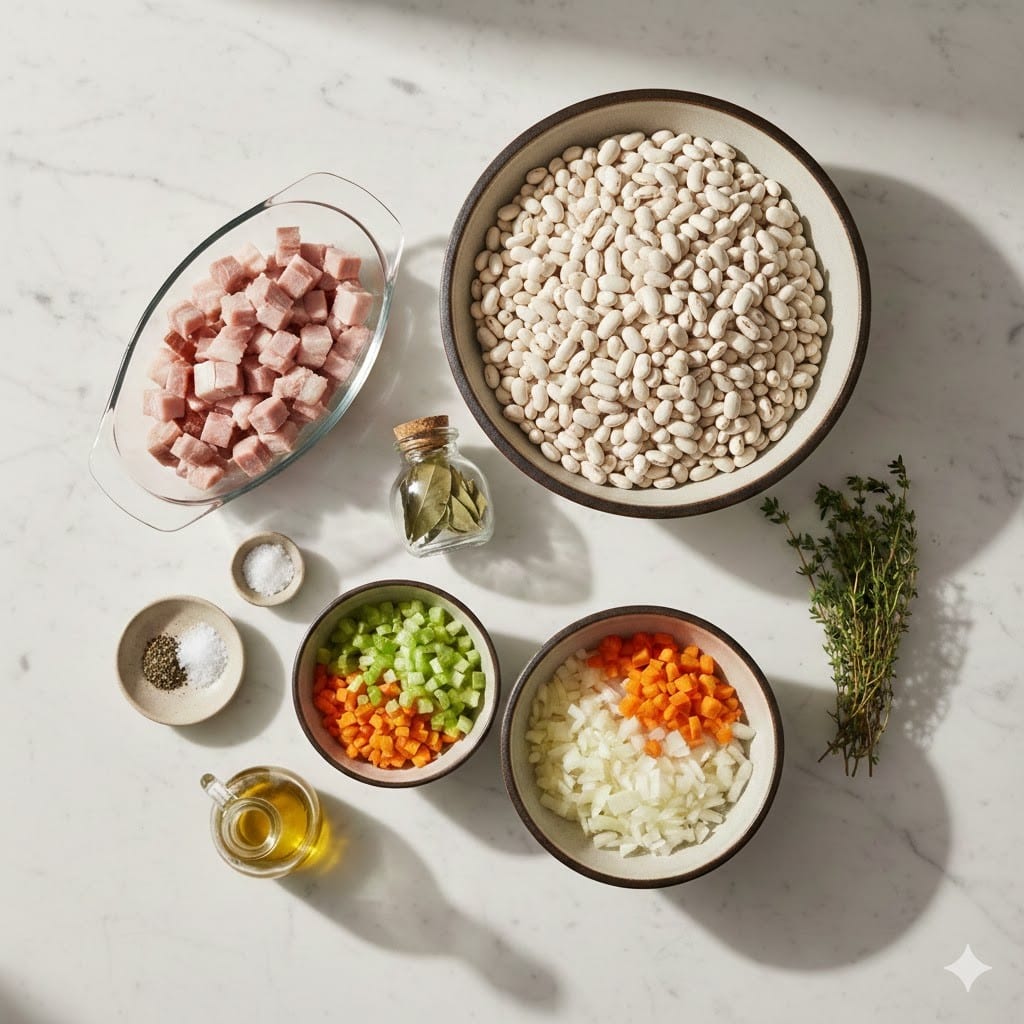
- 1 pound dried navy beans (sometimes I use Great Northern, but navy beans are my staple; canned beans in a pinch, just rinse ’em well)
- 1 meaty ham bone (the more meat, the merrier—no bone? Just chop up about 2 cups of leftover ham)
- 1 large yellow onion, chopped
- 3 carrots, diced (or baby carrots sliced if that’s what’s in the fridge)
- 2 celery stalks, chopped—if you skip this, I won’t tell
- 3 cloves garlic, minced (or a hefty spoon of the jarred kind, honestly)
- 8 cups water (sometimes chicken broth if I’m feeling fancy, or half and half—no rules!)
- 1 bay leaf
- 1 teaspoon dried thyme (or a big pinch if you measure like me)
- Salt and black pepper to taste (go easy until the end because ham is salty)
- Optional: a squeeze of lemon, parsley for serving—I rarely remember the parsley but it looks pretty
How I Do It (In Mostly Orderly Steps)
- Start by sorting through your beans. If you find any weird ones (I have found small rocks before—seriously), pick ’em out and give everything a quick rinse.
- Soak the beans overnight in a big pot of water. Or, if you forget (guilty), use the quick soak method: cover beans with water, bring to a boil for 2-3 minutes, then cover and let sit off the heat for an hour. Drain them after. I once skipped this and, well, let’s just say the aftereffects weren’t pleasant.
- Grab a big soup pot or Dutch oven. Toss in your ham bone, drained beans, chopped onion, carrots, celery, garlic, water (or broth), bay leaf, and thyme.
- Bring it all to a boil over medium-high heat, then lower it to a gentle simmer. Skim foam if you like. Or don’t. Your call. Let it cook, uncovered, for about 90 minutes. Stir sometimes—this is where I sneak a taste and maybe a carrot or two. If the liquid gets low, add a bit more water.
- Take out the ham bone once the beans are about ready. Let it cool a minute (unless your fingertips are asbestos), then pull off the meat, shred it up, and toss it back in. Ditch the bone and any funky fat. (Honestly, this is my favorite part—something satisfying about picking it clean.)
- Fish out that bay leaf—no one wants to bite into that. Season with salt and pepper. Don’t go wild with the salt until the end; ham does some of the heavy lifting.
- Sometimes, if you like it creamier, mash some of the beans against the pot’s side, or use an immersion blender for a second, not too much though… unless you want bean baby food (no judgement). Add a squeeze of lemon if you’re after a little brightness at the end.
- Ladle into bowls. Top with chopped parsley if you remembered it. Sit back and enjoy the fruits of your (low-key) labor.
Notes From a Slightly Distracted Cook
- I’ve realized more than once that bean soup actually thickens a fair amount as it stands—so don’t panic if it seems thin at first.
- Forgot the celery? Added too much carrot? Honestly, it’s all good. Sometimes I toss in a little smoked paprika or hot sauce if it needs pizzazz.
- This freezes shockingly well. But in my place, leftovers are usually raided before they make it to the freezer shelf.
If You’re Feeling Experimental: Some Variations
- Once, I tried adding kale because I read that somewhere; it was… fine. Spinach works better if you must have greens. Or just go classic, seriously.
- For a smoky touch, a splash of liquid smoke or diced smoked sausage will do the trick. Or don’t.
- Substitute ham with leftover smoked turkey leg if you like. Different, but not bad. I did try tofu ham once for a veggie friend; jury’s still out.

Do You Really Need Special Equipment?
I mostly use my big old Dutch oven (she’s a bit battered but faithful). If you only have a regular soup pot, that’ll do. No immersion blender? Mash those beans with a potato masher or big spoon, it’ll work in a pinch. One time I made it in a slow cooker—made the house smell divine, but I missed watching it bubble on the stove.
How to Store (Honestly, It’s Usually Gone by the Next Morning…)
Store in the fridge, covered, for 3-4 days. Soup thickens up as it sits, so add a slosh of water or broth before reheating. Or pack up individual containers for lunches (if you’ve got planners in the house). And yes, freezes for 2-3 months just fine—if you ever have enough left over.
How I Like to Serve It (And a Family Argument)
We always serve with crusty bread (sometimes the 99-cent kind, sometimes homemade—depends on my mood and patience), usually a bit of sharp cheddar on the side, too. Granddad used to insist you had to have sweet pickles with it, which I never totally understood, but hey, maybe try it?
A Couple Tips I Learned the Hard Way
- Don’t try to rush the simmer—beans need their time, or they’ll be tough and sad. I did it once. Only once.
- Always check ham for sneaky little bones before adding shredded meat back to the pot.
- Let it cool a tad before eating; molten bean soup will burn your mouth off. Trust me on this one.
Real Questions I’ve Actually Gotten (Or at Least Imagined I Did)
- Can I use canned beans to save time?
- Yup, just rinse ’em and maybe cut back on the cooking time. It’ll be less “old-fashioned,” sure, but dinner’s dinner.
- Is this low carb?
- Ha! Not really, it’s bean soup after all. But it’s hearty and makes a meal.
- What if my soup is too thick?
- Add a splash of water or broth—stir, taste, repeat. Happens to me more often than I’d admit.
- Can I make this in a slow cooker?
- Yes, toss everything in and leave it on low for about 7-8 hours. Good for busy days, though I miss the stovetop bubbling.
- Why does my soup taste a bit bland?
- Probably needs more salt or a squeeze of lemon. Or your ham was on the mild side. Quick fix: a dash of hot sauce or more pepper always helps.
And, on a completely unrelated note, once I spilled half the soup mid-transfer and discovered cats are definitely not soup fans. Just thought you’d like to know.
Ingredients
- 1 pound dried navy beans (sometimes I use Great Northern, but navy beans are my staple; canned beans in a pinch, just rinse ’em well)
- 1 meaty ham bone (the more meat, the merrier—no bone? Just chop up about 2 cups of leftover ham)
- 1 large yellow onion, chopped
- 3 carrots, diced (or baby carrots sliced if that’s what’s in the fridge)
- 2 celery stalks, chopped—if you skip this, I won’t tell
- 3 cloves garlic, minced (or a hefty spoon of the jarred kind, honestly)
- 8 cups water (sometimes chicken broth if I’m feeling fancy, or half and half—no rules!)
- 1 bay leaf
- 1 teaspoon dried thyme (or a big pinch if you measure like me)
- Salt and black pepper to taste (go easy until the end because ham is salty)
- Optional: a squeeze of lemon, parsley for serving—I rarely remember the parsley but it looks pretty
Instructions
-
1Start by sorting through your beans. If you find any weird ones (I have found small rocks before—seriously), pick ’em out and give everything a quick rinse.
-
2Soak the beans overnight in a big pot of water. Or, if you forget (guilty), use the quick soak method: cover beans with water, bring to a boil for 2-3 minutes, then cover and let sit off the heat for an hour. Drain them after. I once skipped this and, well, let’s just say the aftereffects weren’t pleasant.
-
3Grab a big soup pot or Dutch oven. Toss in your ham bone, drained beans, chopped onion, carrots, celery, garlic, water (or broth), bay leaf, and thyme.
-
4Bring it all to a boil over medium-high heat, then lower it to a gentle simmer. Skim foam if you like. Or don’t. Your call. Let it cook, uncovered, for about 90 minutes. Stir sometimes—this is where I sneak a taste and maybe a carrot or two. If the liquid gets low, add a bit more water.
-
5Take out the ham bone once the beans are about ready. Let it cool a minute (unless your fingertips are asbestos), then pull off the meat, shred it up, and toss it back in. Ditch the bone and any funky fat. (Honestly, this is my favorite part—something satisfying about picking it clean.)
-
6Fish out that bay leaf—no one wants to bite into that. Season with salt and pepper. Don’t go wild with the salt until the end; ham does some of the heavy lifting.
-
7Sometimes, if you like it creamier, mash some of the beans against the pot’s side, or use an immersion blender for a second, not too much though… unless you want bean baby food (no judgement). Add a squeeze of lemon if you’re after a little brightness at the end.
-
8Ladle into bowls. Top with chopped parsley if you remembered it. Sit back and enjoy the fruits of your (low-key) labor.
Approximate Information for One Serving
Nutrition Disclaimers
Number of total servings shown is approximate. Actual number of servings will depend on your preferred portion sizes.
Nutritional values shown are general guidelines and reflect information for 1 serving using the ingredients listed, not including any optional ingredients. Actual macros may vary slightly depending on specific brands and types of ingredients used.
To determine the weight of one serving, prepare the recipe as instructed. Weigh the finished recipe, then divide the weight of the finished recipe (not including the weight of the container the food is in) by the desired number of servings. Result will be the weight of one serving.
Did you make this recipe?
Please consider Pinning it!