So, carbonara. The first time I made it, I was 21, broke, and thought I was being super fancy (I sprinkled dried parsley on top—my Italian friend gasped). Now, years later, it’s still what I whip up when I want something both comforting and just a smidge impressive, but honestly, without fuss. It’s basically my picky-eater kid’s idea of “fancy food,” which is saying something. Also, it’s a brilliant excuse to eat a lot of cheese and bacon and call it dinner. Incidentally, once I tried making it for a date night, and spilled half the spaghetti trying to be graceful. He married me anyway.
Why I Keep Coming Back to Carbonara
I make this whenever the fridge feels a bit empty, or if I need a meal that’ll get cheers from the family with zero effort. Actually, it’s my go-to when I’m running late after work and only have random bits in the pantry. My family goes absolutely wild for this one—even my cousin, who claims he doesn’t like cheese (lies!). If you’re nervous about making eggs into sauce, don’t be—it sounded dodgy to me, too, but that’s what makes it so creamy. (Plus, you can brag it’s authentic when really, it’s just sneaky comfort food in disguise.)
Gather Your Ingredients (and Yes, Cheat if You Need To)
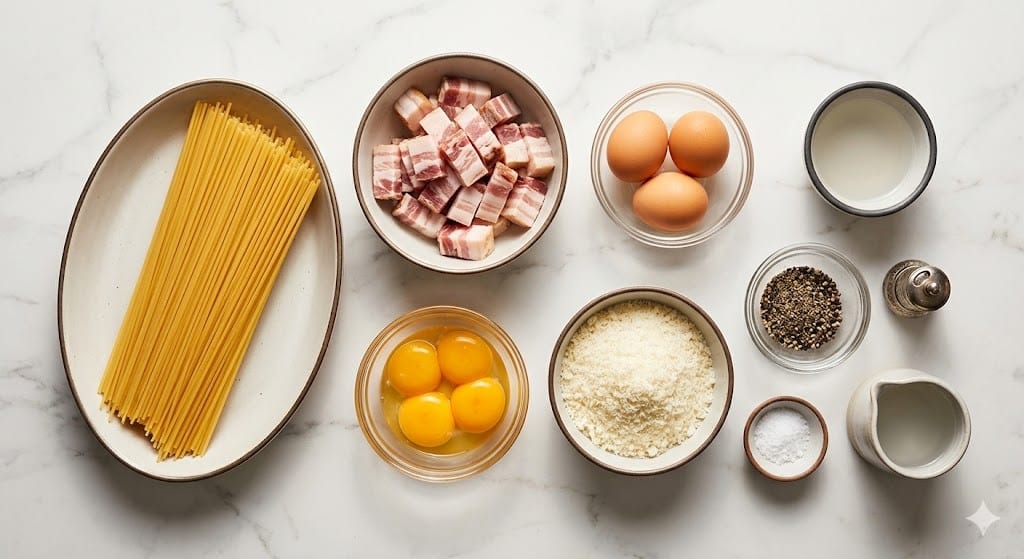
- 350g (about 12 oz) dried spaghetti (I’ve used rigatoni in a pinch, and nobody noticed)
- 125g (a small pack) pancetta or streaky bacon, diced (smoked bacon works too—honestly, I use whatever is cheapest)
- 2 large eggs (some folks use just yolks, but I like to use the whole thing)
- 1 large egg yolk (for extra creaminess—you can skip, but I wouldn’t)
- 60g (a solid handful) freshly grated Pecorino Romano (Parmesan is fine, or whatever hard cheese isn’t growing mold)
- Generous pinch of freshly cracked black pepper (don’t skip this; it’s magic)
- Small handful fresh parsley, chopped (totally optional; my grandmother said it was “for the color”)
- Salt, for the pasta water (I just use whatever’s on hand, sometimes even sea salt flakes)
How I Throw It All Together (Directions)
- First things first, stick a big pot of salted water on to boil. The pasta will need space to dance—don’t cram it.
- While that’s going, chop your bacon or pancetta into little cubes. No need to be precious here. Meanwhile, get your eggs into a bowl. Crack in both whole eggs and the extra yolk. Add most of your cheese, but save a pinch for serving. Toss in a nice grind of pepper—okay, two grinds if you love pepper like me. Whisk it all up. (I sometimes add a spoonful of pasta water if I’m feeling extra “chef-y”.)
- Heat a frying pan with no oil—just trust me on this—and toss in your bacon. Let it crisp up over a low-medium heat, stirring here and there. This is where I usually sneak a taste. If the bacon doesn’t look golden, it’s not done.
- By now your water should be roaring. In goes the pasta. Cook it till it’s just shy of al dente. Bite a piece to check; don’t just trust the box. (This is the hardest part to time. I’ve ruined it by not paying attention… more than once.)
- Scoop out about a mugful of pasta water—don’t forget!—then drain the pasta. Save the water, really, it’s your sauce’s secret weapon.
- Add the drained pasta straight to the frying pan with the bacon, still on low heat. Toss together, let it make friends.
- Okay, now remove the pan from the heat entirely. This is Important: you don’t want scrambled eggs. Pour in your eggy cheese mixture and quickly toss the pasta—use tongs if you’ve got them, or just whatever works. If it’s looking dry, splash in a little reserved pasta water. (Don’t panic if it looks weird at this stage, it always smooths out.)
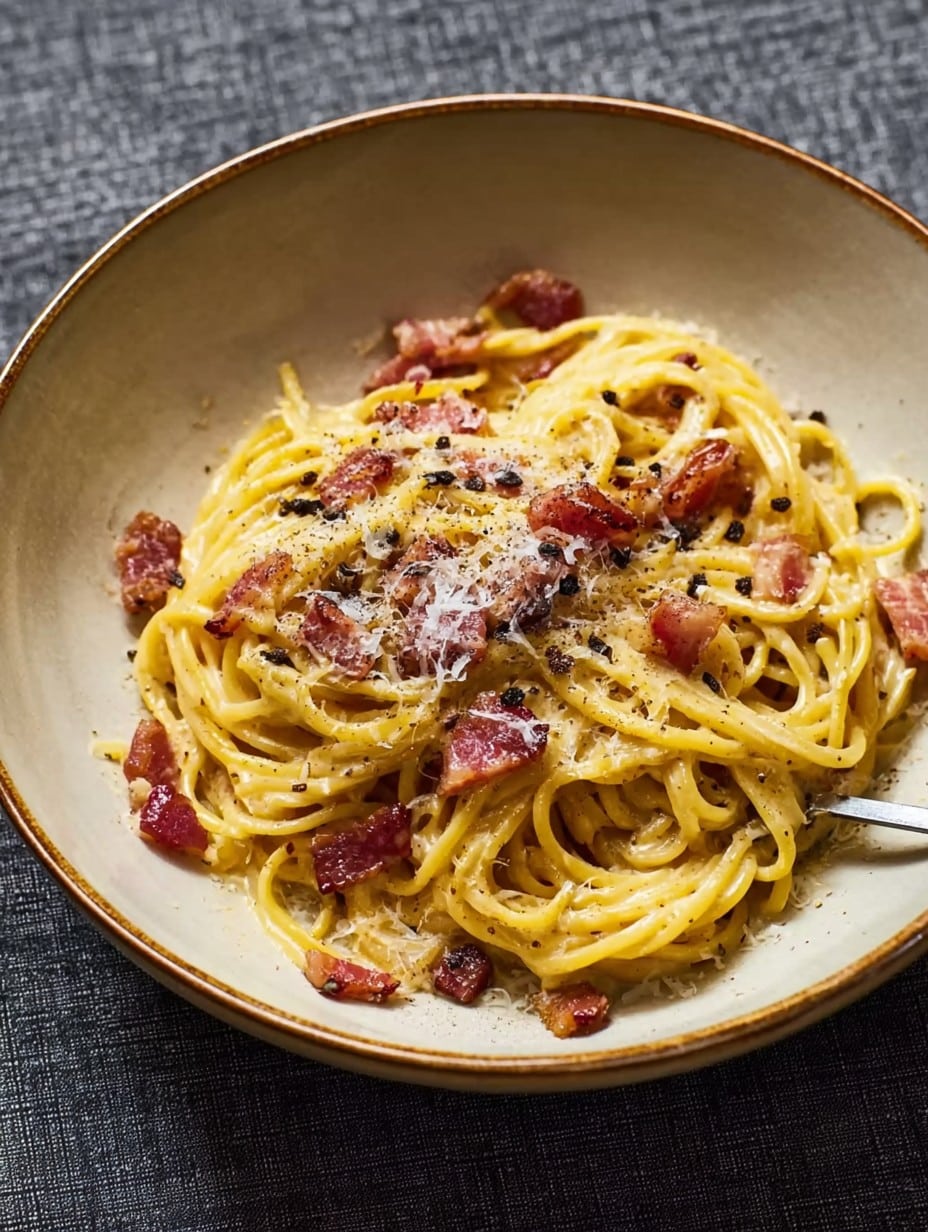
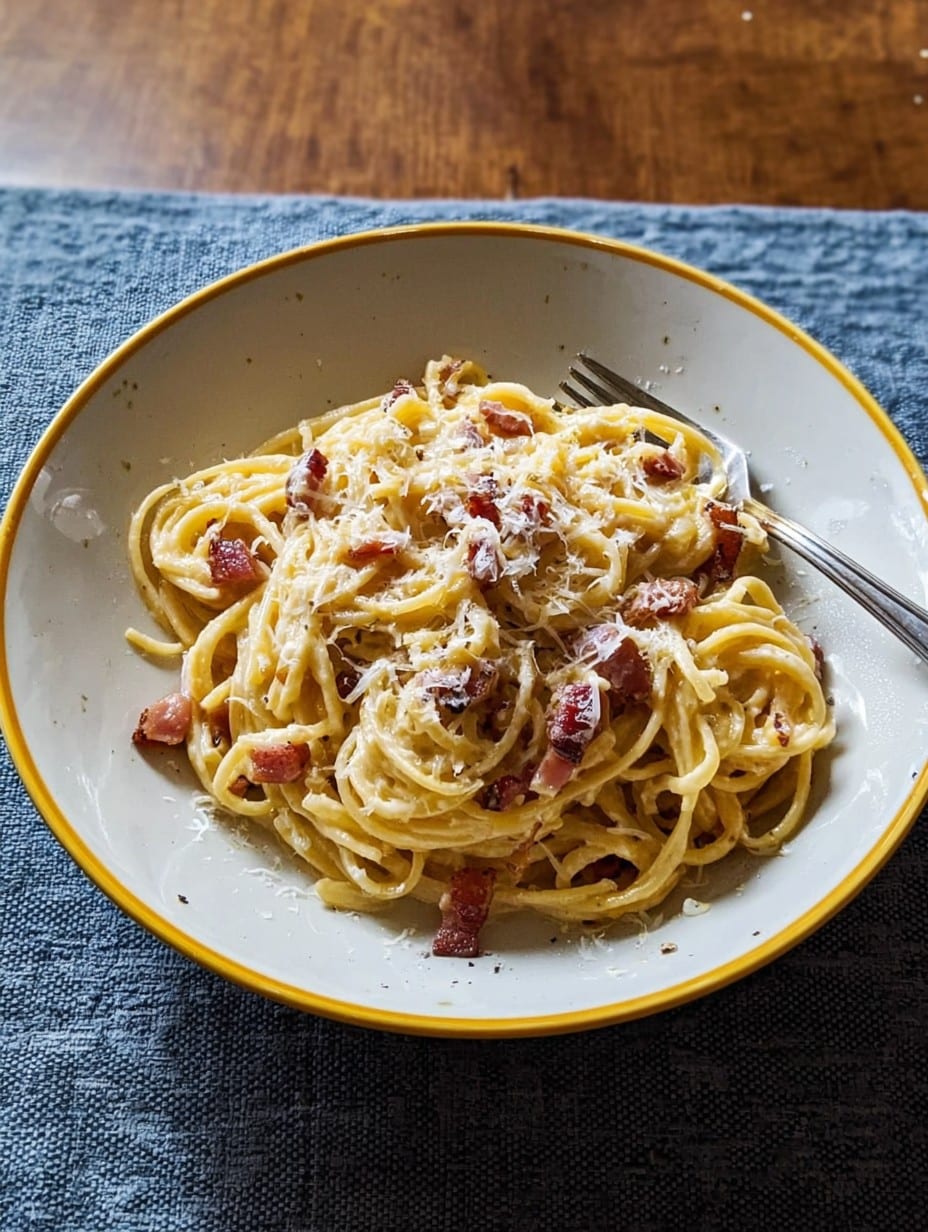
- Everything should come together into a silky, shiny sauce that clings to every strand. Top with extra cheese, more pepper, and that parsley for a flourish if you’re feeling fancy.
Notes from the Trenches (Helpful, I Think!)
- If you use too much heat when adding the eggs, you’ll end up with pasta scrambled eggs (ask me how I know…)
- Pecorino is saltier, but Parmesan is creamier. I’ve mixed them and it’s pretty tasty.
- I once tried using turkey bacon when I ran out of pork. It worked… but wasn’t as flavorful. Not a disaster, just different.
- And don’t skip rinsing your pasta. Wait, actually—never rinse. It takes away that gorgeous starch; learned that the hard way.
What I’ve Tried (Variations—Not All Genius)
- I swapped in peas once (my daughter loved it), but my uncle said peas “aren’t allowed.” Whatever. Do what you like.
- Used linguine instead of spaghetti. It felt fancier, but really, nobody noticed except me.
- Okay, confession, I made a “low-fat” version once with skim milk. Tasted sad. Wouldn’t recommend it.
Do You Actually Need Any Fancy Gear? (Equipment)
- Big pot for boiling pasta—if you’ve only got a saucepan, just cook the pasta in two batches. I’ve done it and it’s fine, just not as fast.
- Frying pan or skillet—the nonstick ones are a bit easier to clean, honestly.
- Tongs are nice for tossing, but, if you’ve only got a wooden spoon, just pile it up and stir. It all works out in the end.
- Grater—just use the side of a box grater, or even buy pre-grated if you must, I won’t tell.
How I Store (Or Mostly Don’t)
If, by wild luck, you’ve got leftovers, just pop it all in a container in the fridge. It’s still decent the next day, although the sauce gets thicker. Sometimes I add a splash of water before reheating—microwave or pan, whatever’s nearer. But honestly, in my house, it never makes it past breakfast (yeah, cold carbonara is a legit snack at 7am in my book).
How We Serve This in My Family (Serving Suggestions)
I usually fling (well, gently place) the pasta in a bowl and bring it to the table, family style. Sometimes we have it with a simple green salad or, if I’m feeling proper, garlic bread. Once, my niece insisted on ketchup with hers—don’t even get me started.
Stuff I Wish I’d Known Sooner (Pro Tips)
- I once tried rushing the egg step and basically got pasta with rubbery egg bits. Slow and steady, it’s worth it.
- Crack your eggs into a separate bowl first—no one likes crunchy surprises (trust me, I’ve fished out eggshells too many times).
- If your sauce is looking gloopy, just add a bit more of that magical pasta water till it looks right.
FAQs—Because My Friends Always Ask
- Can I make carbonara without bacon? Sure, but why would you? (If you must, try mushrooms or smoked tofu. Different vibe, but sure.)
- Is it safe to eat eggs like this? Yep! The pasta’s heat cooks the eggs just enough (don’t worry, you’re not eating it raw).
- I only have dried Parmesan in a shaker. Is that okay? Honestly, it’ll work. Maybe not quite as lush, but it’ll do the trick for a busy night.
- Help, my sauce turned out lumpy! You probably added the eggs while things were too hot. It happens. Next time, try letting the pan cool a little—lesson learned!
- Do leftovers freeze okay? Not really. Pasta gets a bit weird, and the sauce splits. But honestly, if you even have leftovers, share your secrets!
- What wine do you drink with it? I’ll take a glass of something cold and white, but, to be honest, coffee works too if that’s where your evening’s headed.
And if you ever need a little more cheese, just go for it. There’s no such thing as “too much” when it comes to carbonara in my book.
Ingredients
- 350g (about 12 oz) dried spaghetti (I’ve used rigatoni in a pinch, and nobody noticed)
- 125g (a small pack) pancetta or streaky bacon, diced (smoked bacon works too—honestly, I use whatever is cheapest)
- 2 large eggs (some folks use just yolks, but I like to use the whole thing)
- 1 large egg yolk (for extra creaminess—you can skip, but I wouldn’t)
- 60g (a solid handful) freshly grated Pecorino Romano (Parmesan is fine, or whatever hard cheese isn’t growing mold)
- Generous pinch of freshly cracked black pepper (don’t skip this; it’s magic)
- Small handful fresh parsley, chopped (totally optional; my grandmother said it was “for the color”)
- Salt, for the pasta water (I just use whatever’s on hand, sometimes even sea salt flakes)
Instructions
-
1First things first, stick a big pot of salted water on to boil. The pasta will need space to dance—don’t cram it.
-
2While that’s going, chop your bacon or pancetta into little cubes. No need to be precious here. Meanwhile, get your eggs into a bowl. Crack in both whole eggs and the extra yolk. Add most of your cheese, but save a pinch for serving. Toss in a nice grind of pepper—okay, two grinds if you love pepper like me. Whisk it all up. (I sometimes add a spoonful of pasta water if I’m feeling extra “chef-y”.)
-
3Heat a frying pan with no oil—just trust me on this—and toss in your bacon. Let it crisp up over a low-medium heat, stirring here and there. This is where I usually sneak a taste. If the bacon doesn’t look golden, it’s not done.
-
4By now your water should be roaring. In goes the pasta. Cook it till it’s just shy of al dente. Bite a piece to check; don’t just trust the box. (This is the hardest part to time. I’ve ruined it by not paying attention… more than once.)
-
5Scoop out about a mugful of pasta water—don’t forget!—then drain the pasta. Save the water, really, it’s your sauce’s secret weapon.
-
6Add the drained pasta straight to the frying pan with the bacon, still on low heat. Toss together, let it make friends.
-
7Okay, now remove the pan from the heat entirely. This is Important: you don’t want scrambled eggs. Pour in your eggy cheese mixture and quickly toss the pasta—use tongs if you’ve got them, or just whatever works. If it’s looking dry, splash in a little reserved pasta water. (Don’t panic if it looks weird at this stage, it always smooths out.)
-
8Everything should come together into a silky, shiny sauce that clings to every strand. Top with extra cheese, more pepper, and that parsley for a flourish if you’re feeling fancy.
Approximate Information for One Serving
Nutrition Disclaimers
Number of total servings shown is approximate. Actual number of servings will depend on your preferred portion sizes.
Nutritional values shown are general guidelines and reflect information for 1 serving using the ingredients listed, not including any optional ingredients. Actual macros may vary slightly depending on specific brands and types of ingredients used.
To determine the weight of one serving, prepare the recipe as instructed. Weigh the finished recipe, then divide the weight of the finished recipe (not including the weight of the container the food is in) by the desired number of servings. Result will be the weight of one serving.
Did you make this recipe?
Please consider Pinning it!