Alright, Listen: My Cozy Chicken Soup Story
Okay, quick confession—Aromatic Ginger Scallion Chicken Noodle Soup is basically my kitchen’s security blanket. Every time the weather dips or I catch that “I’m all out of ideas for dinner” feeling, I end up here, balancing over a steaming pot and trying not to drop my phone in the broth (yes, that’s happened, let’s not talk about it). There’s just something about the scent of ginger and scallion mixing with the chicken goodness that feels like a hug. Also, is it weird that I can’t chop ginger without thinking of my grandma, who would side-eye me for using anything but a proper cleaver? Anyway, I probably make this more often than I’d admit, and figured it’s high time to write it all down—slightly distracted style, naturally.

Why You’ll Love This (I Think So Anyway)
Honestly I make this soup whenever I need a pick-me-up (or someone in the house inevitably complains about “boring leftovers again”). It’s the kind of meal I crave when I want something that tastes like it took hours, but actually, with a little kitchen hustle, it’s on the table before you know it. My family goes a bit nuts for it because it’s so darn slurpable. I used to burn the noodles (totally my fault for doom-scrolling instead of watching the pot), but even that didn’t stop anyone from polishing off a second bowl. Oh, and it works great with leftover roast chicken—saves me a panic trip to the store on those days I’d rather just not.
Your Ingredient List (And a Bit of Winging It)
- 1 big thumb of ginger (about 3-4 inches), peeled and sliced. I’ve grated it before out of sheer laziness—still tastes great.
- 5 scallions (spring onions if you’re feeling posh), sliced. My neighbor once used shallots instead in a pinch; not authentic but still yum.
- 2-3 cloves garlic, smashed. If you’re a garlic lover (me), toss in an extra clove. Or two.
- 4 cups chicken stock (homemade is best, but stock cubes—heck, even that bouillon paste that lives in the back of the fridge—will do fine. Water with a dash of soy sauce in an absolute pinch is okay too.)
- 2 chicken breasts or thighs, boneless and skinless. I sometimes use a rotisserie chicken when I’ve forgotten to thaw mine. Actually, dark meat = more flavor in my book.
- About 200g (a hefty handful) of dried noodles—egg noodles, ramen, rice noodles, whatever you’ve got. Even spaghetti in desperate times. Don’t tell anyone.
- 1 tablespoon soy sauce (I love the low-sodium kind, but all’s fair)
- A glug (about 1-2 teaspoons) toasted sesame oil. Deep flavor, mmm.
- Salt and pepper to taste. Or skip the salt if your stock is extra salty.
- Optional toppings: chili oil, fresh cilantro, lime wedges, crispy onions, or whatever you find in the fridge that feels vaguely soup-appropriate
Let’s Do This: Directions (Casual and Not-So-Precise)
- Start by heating a decent splash of oil in your favorite big pot (mine is a little wobbly but still does the job). Toss in the ginger and scallions, saving a bit of the scallion for topping if you’re a presentation person. Let them sizzle around for about 2-3 minutes, which always makes the kitchen smell like you really know what you’re doing.
- Add the smashed garlic and give it all a stir. Don’t worry if the garlic browns almost immediately – it sometimes does, and the broth will soak that flavor right up.
- Pour in the chicken stock. Bring it up to a simmer, not a wild boil. Important: don’t wander off at this point, or you’ll come back to a volcanic mess (ask me how I know).
- Now, plonk in the chicken pieces. They’ll poach gently, keeping the soup clear and the chicken madly tender. Let them hang out for about 15 minutes; time to go rogue and taste the broth. Actually, I find it works better if you check the flavor early and toss in a pinch more salt or soy sauce as you like.
- Bail out the chicken, set it to one side. Let it rest for a sec so it stays juicy.
- While the chicken’s cooling, crank up the heat. Drop in the noodles and cook according to the package—but start checking them for doneness a bit early. Overcooked noodles are a heartbreak.
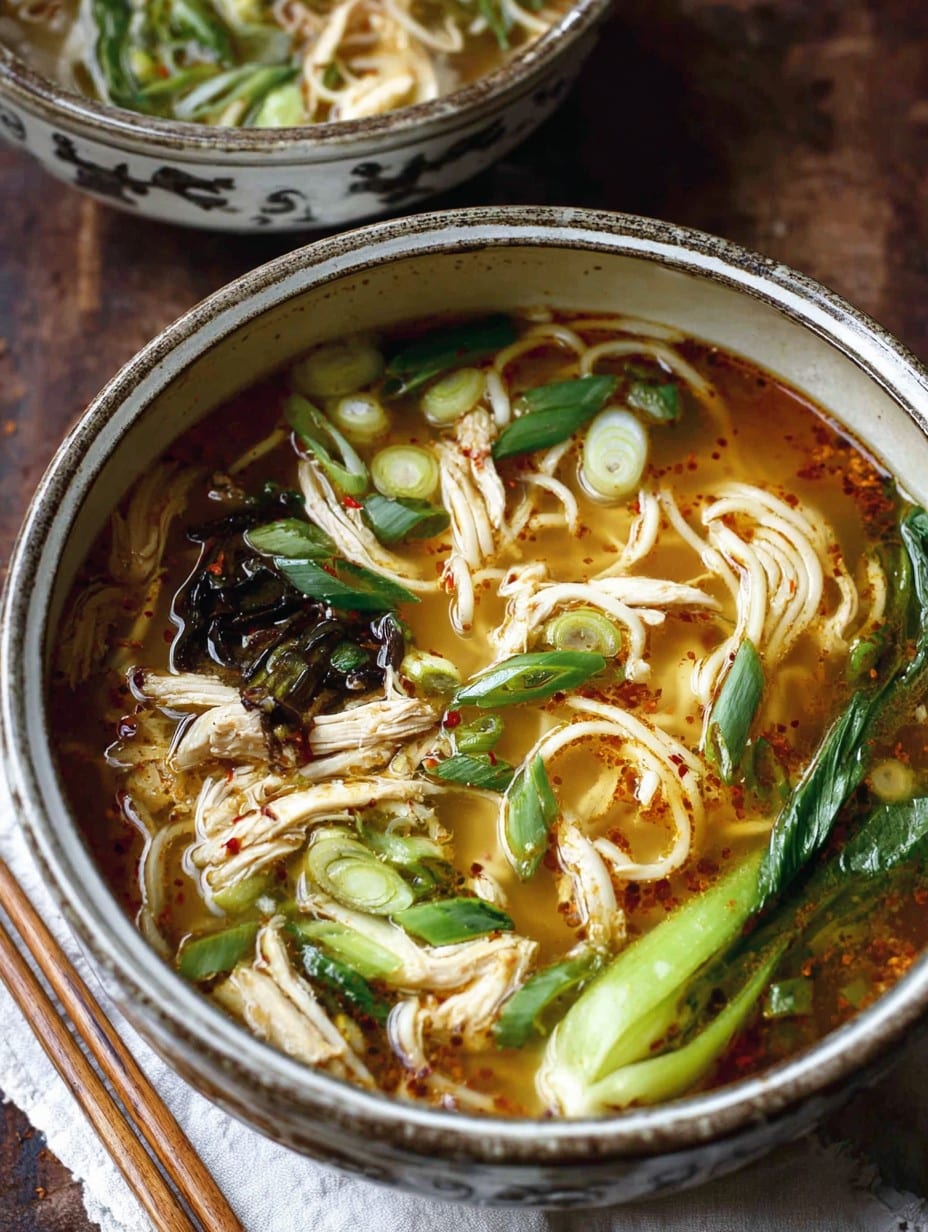
- Shred or slice the chicken, however you like. Dump it back into the pot once the noodles are just cooked, along with a drizzle of soy sauce and that glug of sesame oil. Give it all a good stir. (Sometimes this is where I’ll add a squeeze of lime if I’ve got it, or a scrape of chili oil if I want some pep.)
- Ladle into big bowls, and pile on whatever toppings make you happy today. Big spoon, quick Instagram snap—then eat before it goes cold. Don’t be like me and get distracted, or you’ll need to zap it in the microwave and, well, the noodles just get a bit sad then.
Stuff I Wish I Knew Earlier (Notes)
- If you use pre-cooked or leftover chicken, chuck it in after the noodles are done so it doesn’t get rubbery. Learned that the hard way.
- Sometimes the broth gets cloudy—totally normal. Doesn’t mess up the flavor at all. Actually, slightly cloudy broth = homecooked charm, in my opinion.
- The sesame oil finish really lifts things, but a neutral oil works if the fancy stuff is out. Did that once, still tasty.
Variations I’ve Tried (Plus One Mishap)
- Swapped in tofu cubes for chicken; good if you want to keep it veggie-friendly. My brother didn’t even notice (for once).
- Dropped spoonfuls of miso in with the stock—adds umami, and kind of changes the vibe, but in a good way.
- I once tried adding spinach at the end for color, but it went a bit slimy. Maybe just garnish with herbs instead.
What You’ll Need (But Don’t Panic)
- Large soup pot (mine’s nothing fancy, chipped edges and all).
- A sharp-ish knife. If you’re stuck with a paring knife, just go slower. Actually, kitchen scissors work for the scallions in a hurry!
- Chopsticks or tongs for fishing out chicken—but a fork will do if you’re feeling DIY.
How to Store It (If You Have Leftovers… Riiiight)
In an airtight container in the fridge, it’ll keep up to 2-3 days. Maybe 4 if you’re brave. The noodles will drink up some broth, so add an extra splash of water or stock to loosen things up when you reheat. Though honestly, in my house it never lasts more than a day!
Serving: What Works for Me
I think this soup shines in big, deep bowls with a heap of crispy fried shallots and a dusting of fresh scallion on top. Sometimes I’ll serve a stack of prawn crackers (random, but it works) on the side. On chilly nights, we huddle round the TV with mugs of it—no fussy table required.
Pro Tips I Learned the Hard Way
- Don’t try to rush poaching the chicken, or it’ll go tough and sad. I once cranked up the heat thinking I was clever—nope, regret.
- Always taste the broth before adding more soy or salt. I’ve gone overboard once or twice—recovery method is just add water and pray, to be honest.
Real-Life FAQ
- Can I use bone-in chicken? Absolutely! Just simmer it longer and fish out the bones later (and fish out sneaky cartilage if you’re picky). Bone-in has more flavor, but honestly, whatever’s in the freezer is probably fine.
- What kind of noodles are best? Look, classic egg noodles are fancy, but I’ve used ramen packets (ditch the seasoning), even rice vermicelli. Skipped noodles once when I ran out and just added extra veg. Soup police didn’t show up.
- Will it freeze? Technically yes, but the noodles go mushy. I’d freeze just the broth if you want to prep ahead. Pop in fresh noodles when you reheat. Learned that after a…distinctly unappealing defrosted lunch.
- Is it spicy? Not as written, but a swirl of chili oil sorts that right out!
- How can I make it vegetarian? Swap the chicken for tofu or chunky mushrooms. Veggie stock does the trick. Actually, one friend used jackfruit, but that’s a bit far off-piste for me.
One last (maybe unnecessary) digression: Sometimes I eat this soup standing over the sink with a spoon in one hand and a book in the other. I like the chaos of it, and you know what? Soup’s still delicious. Your table manners are safe with me.
Ingredients
- 2 chicken breasts, boneless and skinless
- 8 cups chicken broth
- 2 tablespoons fresh ginger, sliced
- 4 scallions, sliced (white and green parts separated)
- 2 garlic cloves, minced
- 200g dried noodles (e.g., wheat or rice noodles)
- 1 tablespoon soy sauce
- 1 tablespoon sesame oil
- 1 teaspoon salt
- 1/2 teaspoon white pepper
- Fresh cilantro and lime wedges, for garnish
Instructions
-
1In a large pot, heat sesame oil over medium heat. Add sliced ginger, white parts of scallions, and garlic. Sauté for 2-3 minutes until fragrant.
-
2Add chicken breasts to the pot and pour in the chicken broth. Bring to a boil, then reduce heat and simmer for 20 minutes, or until chicken is cooked through.
-
3Remove the cooked chicken breasts and shred them using two forks. Return the shredded chicken to the pot.
-
4Add soy sauce, salt, and white pepper to the soup. Taste and adjust seasonings as needed.
-
5Meanwhile, cook noodles according to package instructions. Drain and divide the noodles among serving bowls.
-
6Ladle the hot ginger scallion chicken soup over the noodles. Garnish with scallion greens, fresh cilantro, and lime wedges before serving.
Approximate Information for One Serving
Nutrition Disclaimers
Number of total servings shown is approximate. Actual number of servings will depend on your preferred portion sizes.
Nutritional values shown are general guidelines and reflect information for 1 serving using the ingredients listed, not including any optional ingredients. Actual macros may vary slightly depending on specific brands and types of ingredients used.
To determine the weight of one serving, prepare the recipe as instructed. Weigh the finished recipe, then divide the weight of the finished recipe (not including the weight of the container the food is in) by the desired number of servings. Result will be the weight of one serving.
Did you make this recipe?
Please consider Pinning it!!