Cacio e Pepe With Lemon: Like Roman Sunshine in a Bowl
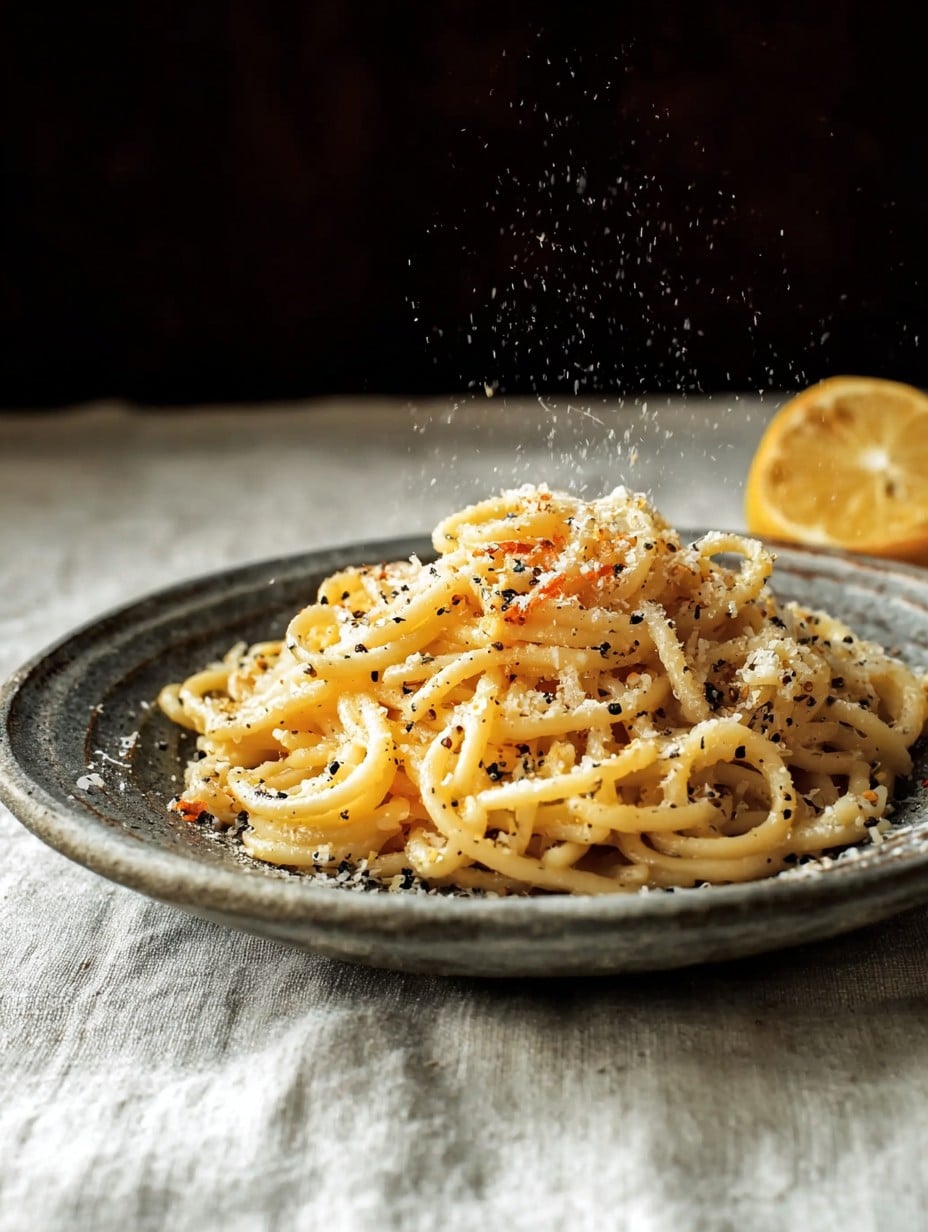
Every time I make Cacio e Pepe with Lemon, I remember this one summer when my friend Sam and I tried (and failed) to make our own pasta from scratch. We made a shocking mess, got flour everywhere, and ended up just boiling some dried spaghetti while laughing about our “pasta fail.” That’s when I realized: sometimes you don’t need to be fancy to make something so comforting. This dish is my go-to when I want big flavor with low effort (and without turning my kitchen into a disaster zone again!). Plus, the lemon zest just makes it sing. My little niece calls it “sunshine noodles,” which, honestly, is a pretty solid name.
Why You’ll Love This (Besides the Obvious Cheese Factor)
I make this when I’m short on time but still want to feel a bit fancy, you know? It comes together faster than you can scroll through your phone trying to decide what to cook. My family goes crazy for this because it’s creamy and bright, but not heavy. My mom used to say, “It’s like mac and cheese got a passport and came home enlightened.” (Weird, but she’s not wrong.) And whenever I’ve tried using pre-ground pepper or cheap cheese, I regret it. But hey, if that’s what you have, it’ll still taste great—promise.
What You’ll Need (But Feel Free To Improvise)
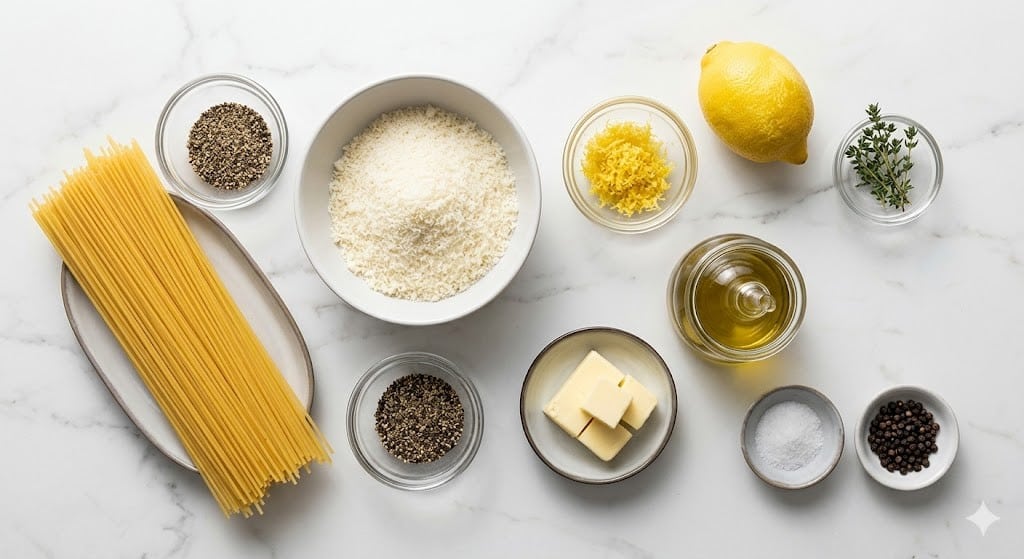
- 12 oz (about 340g) spaghetti (or bucatini; I sometimes use linguine when that’s all I’ve got)
- 2 tablespoons unsalted butter (honestly, salted is fine if that’s what’s lurking in your fridge)
- 1 1/2 teaspoons freshly cracked black pepper (don’t stress; a bit more or less is fine—you do you)
- 1 cup (about 60g) finely grated Pecorino Romano (Parmesan works if that’s what you’ve got, but don’t tell the purists!)
- Zest of 1 large lemon (or two smaller lemons, if that’s what’s rolling around in your fruit bowl)
- 1/2 cup (a generous splash) reserved pasta water
- Pinch of salt, to taste (sometimes I skip this altogether—depends how salty my cheese is)
How to Pull This Off (With a Few Personal Interruptions)
- First things first: bring a big pot of water to a boil. Salt it like the sea—unless your doctor says otherwise.
- Add your pasta. Stir now and then. (This is usually where I start grating cheese, because I’m always a little behind.) Cook until al dente—don’t let it go mushy.
- While the pasta cooks, melt the butter in a big skillet over medium heat. Once bubbly, toss in the cracked black pepper. Sizzle it for about a minute until fragrant—it should actually smell a little bit floral, which still surprises me every time.
- Scoop out about a cup of that starchy pasta water—just in case. (I always forget and panic-pour the water down the sink. Don’t be me!)
- Drain the pasta and add it straight into the skillet with the peppery butter. Add a splash of pasta water (maybe start with 1/4 cup—you can add more in a sec). Toss it all together until glossy. (This is where I sneak a bite—quality control, right?)
- Sprinkle over the cheese, little by little, tossing constantly. Go slow, or it might get clumpy; it always looks weird before it looks good, so trust the process. Add more pasta water as needed to make the sauce creamy—not soupy, just luxuriously silky.
- Grate the lemon zest right in and toss again. Pause and inhale; it smells outrageously good at this point.
- Taste and toss in a pinch of salt if you feel it needs it. Or just more pepper—it’s your show.
- Twirl onto plates and serve immediately. (Though I swear, it’s pretty great cold from the fridge, too. Shhh.)
Notes from Many Attempts (i.e., My Learning Curve)
- If the cheese clumps, it’s probably the pasta water wasn’t hot enough—sometimes I just cheat and microwave a little extra water.
- Actually, I find it works better if you grate your cheese really, really fine. Like, snow-fine. Weirdly satisfying to do, too.
- Parmesan works, but it isn’t quite as sharp. Use whatever you love—or, uh, whatever’s on sale.
Variations I’ve Toyed With (Success Not Guaranteed)
- Once I tossed in arugula at the end; it wilted down and added a peppery kick. Pretty good!
- I tried adding garlic once, but it overpowered the lemon and cheese vibe—not my favorite, but hey, live and learn.
- If I’m out of spaghetti, I’ve used little shells (conchiglie) and it was…fine. Not as silky, though.
Equipment You Technically Need (But I Improvise)
- Large pot for boiling pasta (I’ve totally used a Dutch oven when my big pot was auditioning as a soup cauldron.)
- Box grater or microplane (for the cheese and zest—if you don’t have one, I’ve used a veggie peeler and chopped the zest; works in a pinch)
- Large skillet or frying pan (got by with a saucepan once, not ideal but it worked)
- Tongs, or a big fork for tossing (honestly, I use chopsticks sometimes because why not?)
How to Store (Though It Doesn’t Often Get That Far)
This keeps best in the fridge for about 2 days, sealed up tight. But, in my house, it never lasts more than a day, so I can’t vouch for anything longer. If it starts to dry out, I splash a little water and reheat gently—but honestly, I prefer sneaking forkfuls cold, standing in front of the fridge around midnight.
How I Like to Serve It (Or: The Family Way)
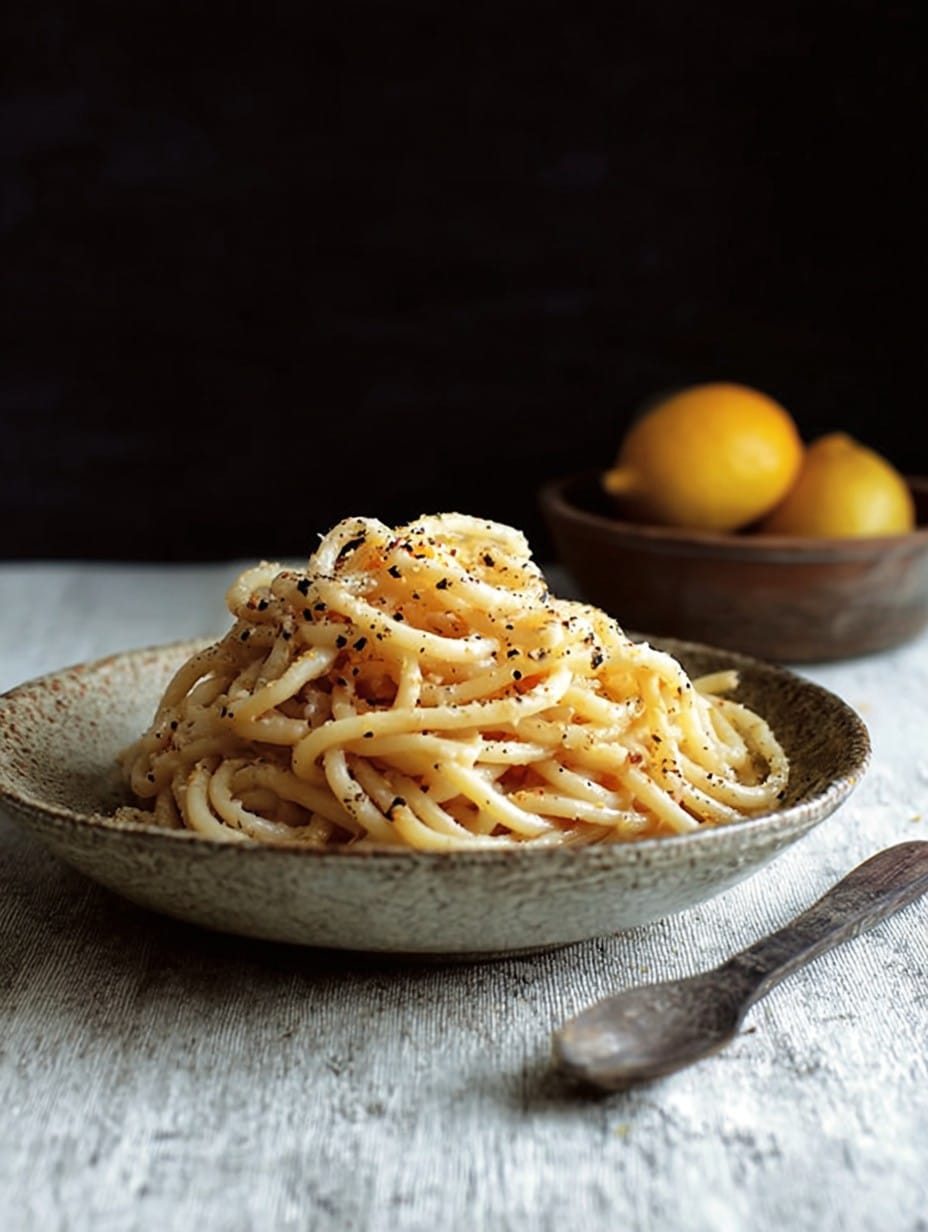
A big pile in a warm bowl, showered with extra cheese and black pepper. Sometimes I’ll throw a handful of fresh parsley on top, if I’m feeling like I need to eat something green. My cousin insists on a wedge of lemon on the side so everyone can add extra zing (she’s right, by the way).
My Hard-Earned Pro Tips
- Don’t rush adding the cheese; I once dumped it in all at once and got a weird, gluey blob. Go slow, stir lots.
- If you forget to save pasta water (happens to all of us), just reboil a little fresh water with a pinch of cornstarch. Works surprisingly well.
- Lemon zest can get bitter if you dig into the white pith—so take it easy, gentle hands!
FAQ (Because Friends Always Ask!)
- Can I make this gluten-free?
Absolutely—just swap in your favorite gluten-free spaghetti. The sauce works fine, though it might not get quite as glossy. - What if I only have pre-grated cheese?
No problem! It won’t melt as smoothly, but it’ll do. I just find some brands a bit weirdly dry. - Do I have to use fresh lemon?
Fresh is best for that bright flavor. But if you only have bottled juice, add just a tiny splash. But the zest really makes the difference! - Can I double the recipe?
Oh yes. Just make sure you’ve got a big enough skillet. (Ask me how many times I’ve tried to fit a mountain of pasta into a tiny pan… rookie errors.) - My sauce is clumpy—what did I do wrong?
It happens! Try reheating gently with more pasta water and stirring well. Sometimes it just needs a little nudge (or, you know, patience).
And if you caught that I said “spaghetti” twice in the equipment section, that’s because it’s just such a classic shape for this dish. Or maybe I’ve had too much coffee today. Anyway, hope you enjoy—let me know if your family declares it their new favorite, or if you wind up eating leftovers cold at midnight like me!
Ingredients
- 12 oz (about 340g) spaghetti (or bucatini; I sometimes use linguine when that’s all I’ve got)
- 2 tablespoons unsalted butter (honestly, salted is fine if that’s what’s lurking in your fridge)
- 1 1/2 teaspoons freshly cracked black pepper (don’t stress; a bit more or less is fine—you do you)
- 1 cup (about 60g) finely grated Pecorino Romano (Parmesan works if that’s what you’ve got, but don’t tell the purists!)
- Zest of 1 large lemon (or two smaller lemons, if that’s what’s rolling around in your fruit bowl)
- 1/2 cup (a generous splash) reserved pasta water
- Pinch of salt, to taste (sometimes I skip this altogether—depends how salty my cheese is)
Instructions
-
1First things first: bring a big pot of water to a boil. Salt it like the sea—unless your doctor says otherwise.
-
2Add your pasta. Stir now and then. (This is usually where I start grating cheese, because I’m always a little behind.) Cook until al dente—don’t let it go mushy.
-
3While the pasta cooks, melt the butter in a big skillet over medium heat. Once bubbly, toss in the cracked black pepper. Sizzle it for about a minute until fragrant—it should actually smell a little bit floral, which still surprises me every time.
-
4Scoop out about a cup of that starchy pasta water—just in case. (I always forget and panic-pour the water down the sink. Don’t be me!)
-
5Drain the pasta and add it straight into the skillet with the peppery butter. Add a splash of pasta water (maybe start with 1/4 cup—you can add more in a sec). Toss it all together until glossy. (This is where I sneak a bite—quality control, right?)
-
6Sprinkle over the cheese, little by little, tossing constantly. Go slow, or it might get clumpy; it always looks weird before it looks good, so trust the process. Add more pasta water as needed to make the sauce creamy—not soupy, just luxuriously silky.
-
7Grate the lemon zest right in and toss again. Pause and inhale; it smells outrageously good at this point.
-
8Taste and toss in a pinch of salt if you feel it needs it. Or just more pepper—it’s your show.
-
9Twirl onto plates and serve immediately. (Though I swear, it’s pretty great cold from the fridge, too. Shhh.)
Approximate Information for One Serving
Nutrition Disclaimers
Number of total servings shown is approximate. Actual number of servings will depend on your preferred portion sizes.
Nutritional values shown are general guidelines and reflect information for 1 serving using the ingredients listed, not including any optional ingredients. Actual macros may vary slightly depending on specific brands and types of ingredients used.
To determine the weight of one serving, prepare the recipe as instructed. Weigh the finished recipe, then divide the weight of the finished recipe (not including the weight of the container the food is in) by the desired number of servings. Result will be the weight of one serving.
Did you make this recipe?
Please consider Pinning it!