Let Me Tell You Why I Love These Fish Taco Bowls
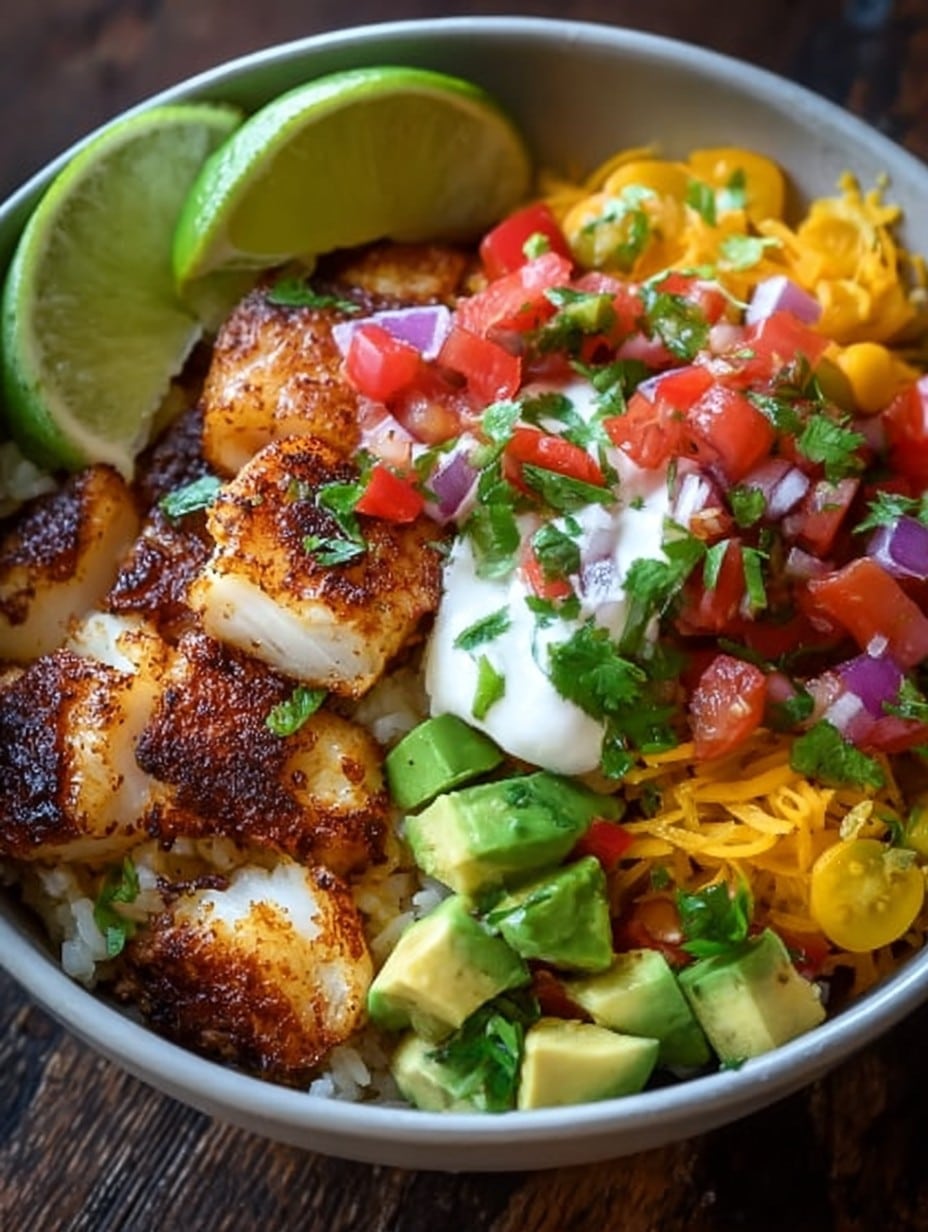
You know those nights when you want something that tastes a little vacation-y, but real life keeps getting in the way? That was me last Tuesday, standing in my kitchen, endless laundry on one side and hungry kids (plus a mysteriously ravenous husband) on the other. I remembered this Low-Carb Fish Taco Bowl thing I picked up from a summer BBQ ages ago—except I’ve kinda tweaked it over the years. Fish tacos in a bowl are my sneaky, slightly healthier, and way less messy solution. Also, there’s way less tortilla-shrapnel to find in the couch cushions, which, frankly, is a win.
Plus, here’s the truth: sometimes I get lazy with garnishes and the whole assemble-your-own situation. This is just as fun (well, almost) but a whole lot easier to get on the table.
Why You’ll Be Addicted Too
I make these fish taco bowls when I want everyone around the table to actually eat with joy; my kids demolish theirs, and I can pretend I’m out to lunch at a cute spot in San Diego (though the view from my window is just Mr. Jenkins mowing his yard again). When I’m low on time, the sheet pan version is a life-saver. (There was one wild attempt where I used leftover tilapia nuggets—would not recommend. Fresh is just better.)
So if you’ve ever thrown up your hands at all those fiddly taco toppings—you’ll love this.
All the Stuff You’ll Need (No Judgment Zone)
- 500g (about 1 pound) white fish fillets (I use cod or haddock, but honestly, any non-oily white fish will do; I’ve even done it with frozen fish pieces, not fancy)
- 2 teaspoons chili powder (or taco seasoning mix, if that’s what’s in your pantry)
- 1 teaspoon ground cumin
- Salt and pepper, to taste
- 2 tablespoons olive oil (sometimes I just go with avocado oil, especially if it’s on sale)
- 2 cups shredded cabbage (Coleslaw mix works! One time I used chopped romaine in a pinch—turns out it’s actually kind of great)
- 1 cup cherry tomatoes, halved (or just dice a big tomato—don’t stress)
- 1/2 cup red onion, thinly sliced (though yellow onion does the trick if it’s all you’ve got)
- 1 ripe avocado, diced (or skip if your avocado is more rock than ripe, sigh)
- 1/2 cup fresh cilantro, chopped (unless you’re a cilantro hater—then parsley is fine. Apparently there are more of you than I realized.)
- 1 lime, cut into wedges (or that bottled lime juice everyone yells about, fine in a pinch)
- 1/2 cup plain Greek yogurt (Sour cream works, and my sister-in-law actually swears by mayo, but… to each their own)
- Optional: 1 jalapeño, sliced (I like mine with a little heat, but my kids protest. Loudly.)
How to Make These Bowls (With a Few Honest Detours)
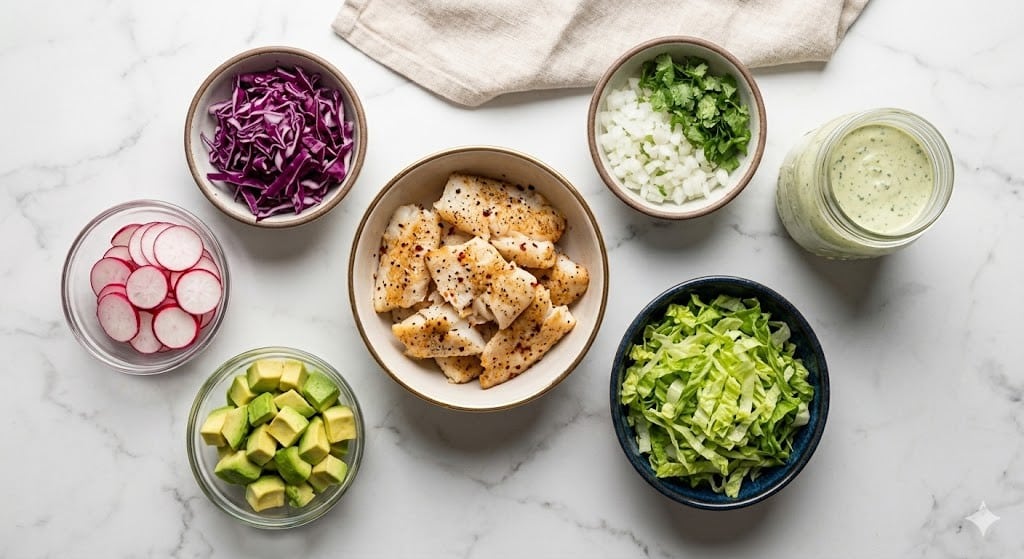
- Prep your fish. Pat those fillets dry (they’re weirdly slippery). Lay them out on a parchment-lined baking sheet or whatever you’ve got. Drizzle with olive oil, then sprinkle with chili powder, cumin, salt, and pepper. I usually pat it in with my hands; yes, you’ll get some under your nails.
- Cook the fish. Pop it under a preheated grill/broiler at high for about 5–7 minutes; flip once halfway through if they’re thick. It’s done when it flakes with a fork (don’t overthink this—if you overcook it, just call it “extra crispy.”)
- Shred and prep the toppings. While the fish cooks, toss your cabbage with a pinch of salt and half the lime juice. Halve those cherry tomatoes, slice up the onion, chop the cilantro, fight with the avocado pit (I still can’t do that fancy chef trick). Sneak a tomato if you want. This is where I start picking at the toppings, can’t help it.
- Mix your sauce. Stir the Greek yogurt with a squeeze of lime and a bit of salt. Sometimes I toss in a pinch more chili powder—depends how the day’s going.
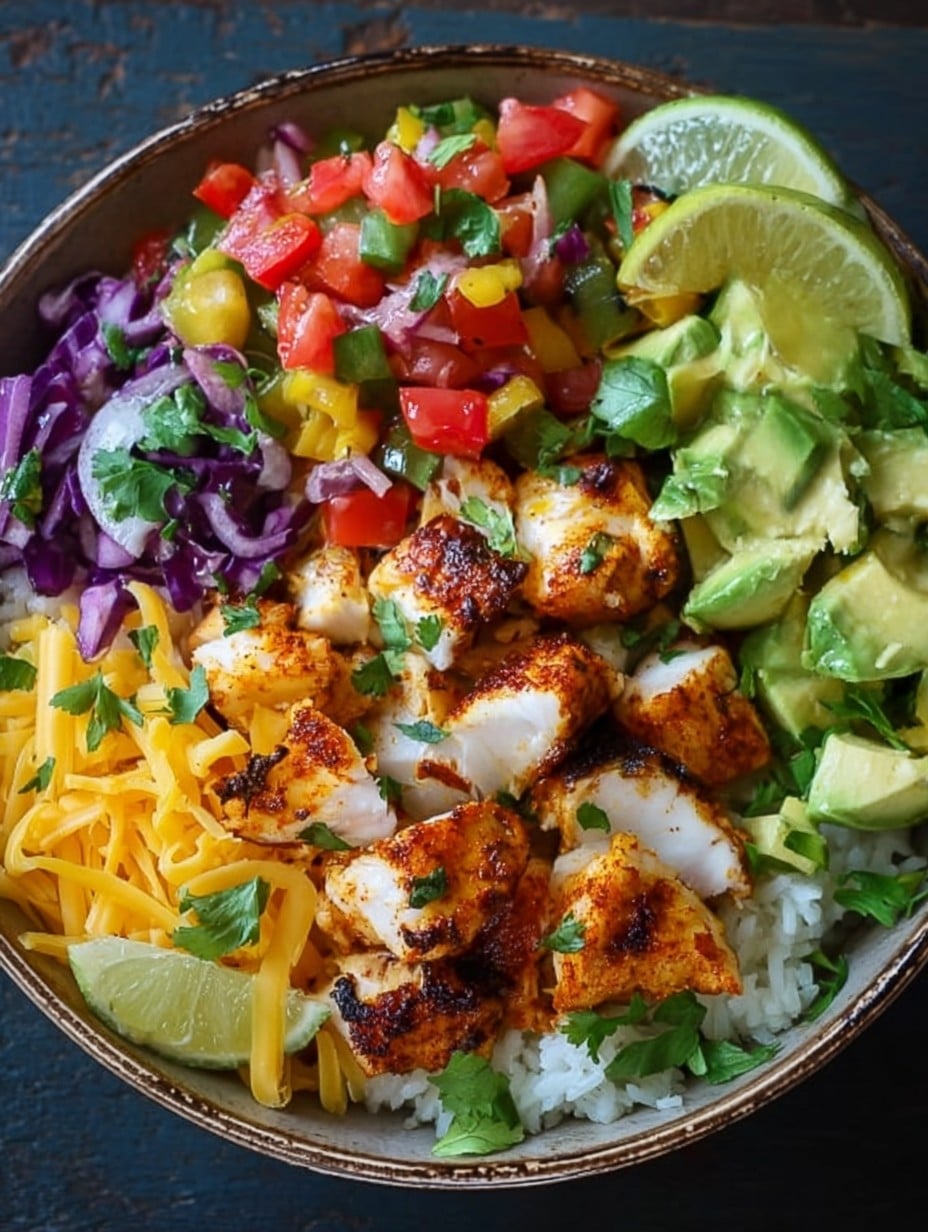
- Assemble. Flake the hot fish up with a fork, then pile everything into bowls: cabbage base, fish, tomatoes, onion, avocado, cilantro, maybe the jalapeño if you’re brave. Drizzle with the yogurt sauce. Best part—everyone can go wild with their own creation.
- Dinner is served. Get everyone to the table before it all disappears! (Trust me, it gets picked at fast.)
Notes, Because Real Life Isn’t a Cooking Show
- Sometimes the fish sticks a bit if you don’t use parchment—don’t panic. Scrape it up, it’ll still taste fine.
- I find it actually tastes better the next day, oddly enough, but only if you keep the fish and toppings separate (soggy cabbage is a crime against dinner).
- If you’re out of chili powder, smoked paprika is fun—just don’t overdo it or everything gets weirdly red.
Variations I’ve Tried (and a Few Fails)
- Once, I swapped in grilled shrimp—honestly brilliant, except I burned half of them. Oops.
- I tried a cauliflower rice base instead of cabbage—pretty filling! But my kids noticed immediately, so proceed with caution.
- One failed experiment: I thought diced pickles would be clever. It was not.
Equipment (But Improvise!)
- Baking sheet (or honestly, any roasting pan works—I once used my pizza pan in a pinch)
- Parchment paper (kind of a lifesaver, but foil is fine too, or just oil up the pan)
- Small mixing bowl
- Sharp knife (mine’s never as sharp as it should be, but it does the trick)
- Cutting board
How to Store These Bowls (Not That You’ll Need To)
Store leftover components in separate containers—the fish, slaw, and sauce each in their own place. They’ll keep for up to 2 days, probably a hair longer. But in my house… leftovers rarely survive. People nibble straight out of the fridge, and next thing you know it’s gone.
How I Like to Serve These (My Two Cents)
I love setting the bowls out with everything in little piles—taco night, but less fussy. My family fights over the last scoop of yogurt sauce, so I double it if I remember. Sometimes I throw crushed pork rinds on top for crunch, which my husband claims is “controversial.”
Honestly Learned Pro Tips
- I once tried skipping the paper-lining step, thinking it’d be fine—ended up with half the fish glued to the pan, so don’t rush that part.
- Let the fish rest for a minute or two before you flake it. Otherwise it sort of mashes instead of flakes. Learned that the hard way.
- If your avocado is unripe, just don’t even bother chopping it (rock-hard bits ruin everything). Instead, add a few extra tomatoes—nobody minds.
FAQs I’ve Genuinely Heard (or Asked Myself, Usually at 6pm)
- Can I use salmon instead? You can, though it’s way oilier and kind of changes the whole vibe. White fish is just lighter, I think. But if salmon’s on sale, why not?
- How do I make it spicier? Toss in extra jalapeños or a pinch of cayenne in the yogurt sauce. Or just buy a spicy salsa—sometimes I do that.
- Do I have to use Greek yogurt? Nope! Sour cream is classic. And apparently, according to my cousin, you can just skip sauce and use salsa. Wild, but it works.
- Is this gluten free? Yes, as long as your chili powder isn’t secretly hiding flour (been burned by weird spice blends before—check the label!)
- What if I don’t eat fish? Try it with chicken, or heck, roasted tofu. Textures a little different, but it does the job.
By the way, I once ate these bowls cold (straight form the fridge, no shame) and I swear it still tasted awesome. Just one of those surprises.
Ingredients
- 500g (about 1 pound) white fish fillets (I use cod or haddock, but honestly, any non-oily white fish will do; I’ve even done it with frozen fish pieces, not fancy)
- 2 teaspoons chili powder (or taco seasoning mix, if that’s what’s in your pantry)
- 1 teaspoon ground cumin
- Salt and pepper, to taste
- 2 tablespoons olive oil (sometimes I just go with avocado oil, especially if it’s on sale)
- 2 cups shredded cabbage (Coleslaw mix works! One time I used chopped romaine in a pinch—turns out it’s actually kind of great)
- 1 cup cherry tomatoes, halved (or just dice a big tomato—don’t stress)
- 1/2 cup red onion, thinly sliced (though yellow onion does the trick if it’s all you’ve got)
- 1 ripe avocado, diced (or skip if your avocado is more rock than ripe, sigh)
- 1/2 cup fresh cilantro, chopped (unless you’re a cilantro hater—then parsley is fine. Apparently there are more of you than I realized.)
- 1 lime, cut into wedges (or that bottled lime juice everyone yells about, fine in a pinch)
- 1/2 cup plain Greek yogurt (Sour cream works, and my sister-in-law actually swears by mayo, but… to each their own)
- Optional: 1 jalapeño, sliced (I like mine with a little heat, but my kids protest. Loudly.)
Instructions
-
1Prep your fish. Pat those fillets dry (they’re weirdly slippery). Lay them out on a parchment-lined baking sheet or whatever you’ve got. Drizzle with olive oil, then sprinkle with chili powder, cumin, salt, and pepper. I usually pat it in with my hands; yes, you’ll get some under your nails.
-
2Cook the fish. Pop it under a preheated grill/broiler at high for about 5–7 minutes; flip once halfway through if they’re thick. It’s done when it flakes with a fork (don’t overthink this—if you overcook it, just call it “extra crispy.”)
-
3Shred and prep the toppings. While the fish cooks, toss your cabbage with a pinch of salt and half the lime juice. Halve those cherry tomatoes, slice up the onion, chop the cilantro, fight with the avocado pit (I still can’t do that fancy chef trick). Sneak a tomato if you want. This is where I start picking at the toppings, can’t help it.
-
4Mix your sauce. Stir the Greek yogurt with a squeeze of lime and a bit of salt. Sometimes I toss in a pinch more chili powder—depends how the day’s going.
-
5Assemble. Flake the hot fish up with a fork, then pile everything into bowls: cabbage base, fish, tomatoes, onion, avocado, cilantro, maybe the jalapeño if you’re brave. Drizzle with the yogurt sauce. Best part—everyone can go wild with their own creation.
-
6Dinner is served. Get everyone to the table before it all disappears! (Trust me, it gets picked at fast.)
Approximate Information for One Serving
Nutrition Disclaimers
Number of total servings shown is approximate. Actual number of servings will depend on your preferred portion sizes.
Nutritional values shown are general guidelines and reflect information for 1 serving using the ingredients listed, not including any optional ingredients. Actual macros may vary slightly depending on specific brands and types of ingredients used.
To determine the weight of one serving, prepare the recipe as instructed. Weigh the finished recipe, then divide the weight of the finished recipe (not including the weight of the container the food is in) by the desired number of servings. Result will be the weight of one serving.
Did you make this recipe?
Please consider Pinning it!