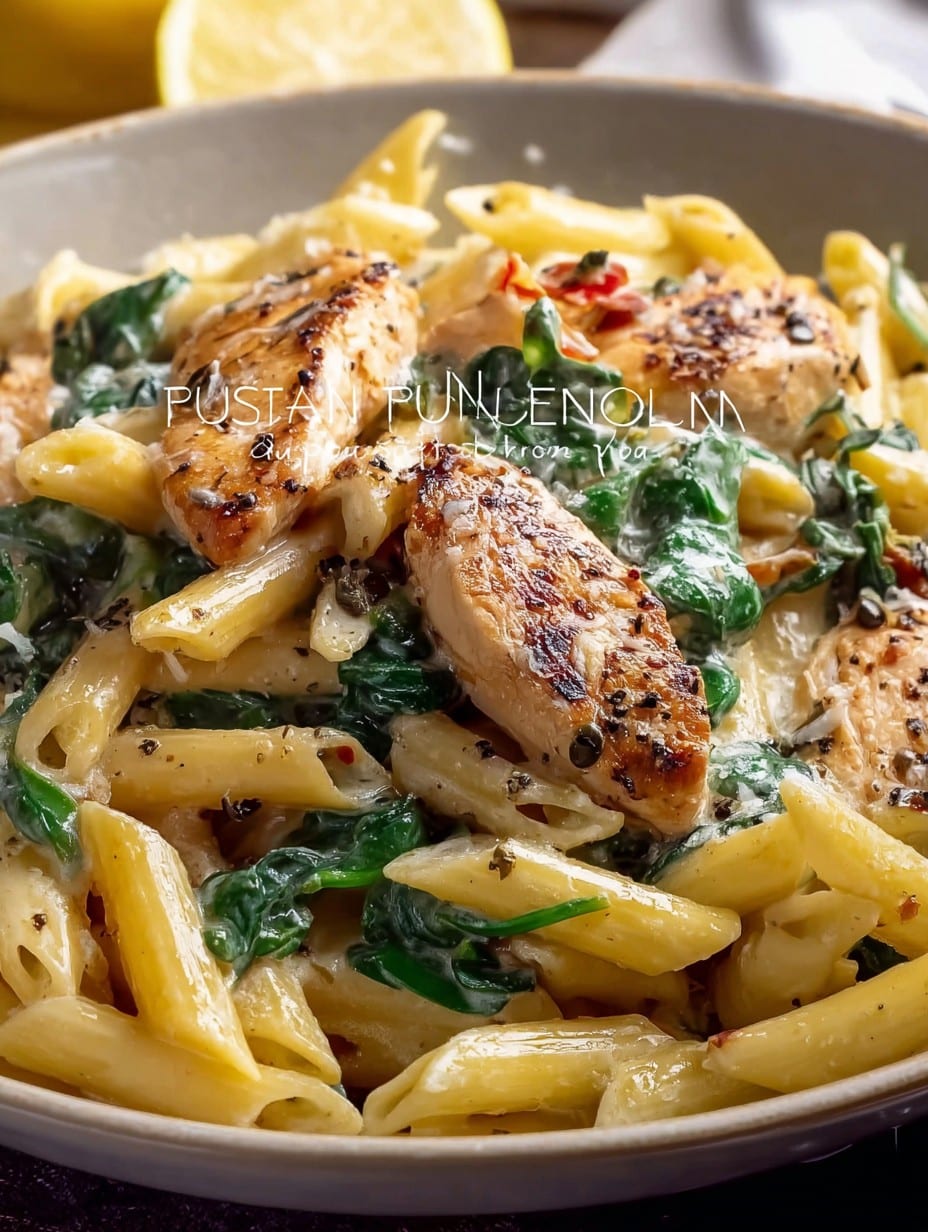
Let Me Tell You About My Pasta with Chicken and Spinach Obsession
Alright, friend—picture this: it’s Thursday night, everyone’s halfway hangry, and you just want dinner done yesterday. That’s exactly how this pasta with chicken and spinach landed in my regular dinner rotation. I honestly started making it by accident (spilled the cream everywhere first try, so don’t do that). But—ever since nailing it, this stuff’s become like the kitchen version of an old pair of slippers. Cozy, not too fancy, but always just right. And let’s be real: we all need a recipe that’s forgiving if we totally zone out for five minutes. So, pour yourself something (wine, tea, fizzy water?) and let’s do this.

Why You’ll Love This Dish (Or Why I Keep Making It)
I make this when my brain refuses to function after a long day—though, warning, you might end up making it on purpose. My family goes bonkers for it, especially if I promise extra cheese on top (which, let’s be honest, I always do because who’s watching?). If you’re fond of sneaking veggies into meals without anyone making a face, the spinach does its part very quietly here. Actually, the only time I almost gave up was when I tried to make a “healthy” no-cream version. Mistake. But I dusted myself off—and now, I stick with what works. And if you’re speedy, it can all come together before you realize the cat’s sitting on the table again.
What You’ll Need (But Not Necessarily Perfectly)
- Pasta (about 300g, or two of those big handfuls): Penne, fusilli—honestly, any shape makes me happy. Grandma swears by De Cecco, but supermarket brand works too.
- Chicken breast or thighs (2 medium pieces or about 350g): I sometimes use rotisserie chicken if I’m avoiding washing another pan.
- Fresh spinach (a large handful—about 120g): Baby spinach is easiest, but I’ve used frozen in a pinch—just squeeze out the water.
- Onion (1 small, chopped): Red or yellow, whatever’s lurking in the bottom drawer.
- Garlic (2-3 cloves, minced): Or honestly, the pre-minced stuff from the jar—don’t tell the food snobs.
- Heavy cream (about 3/4 cup): Sometimes I swap for half-and-half, but full cream’s the winner.
- Chicken stock (1/2 cup): Water and bouillon cube works just fine if you’re out.
- Grated Parmesan (a generous handful): I’ve even used cheddar in an emergency. Don’t judge.
- Olive oil & Butter (a blob of each)
- Salt and pepper (to taste)
- Optional: Red pepper flakes, splash of lemon juice, a grating of nutmeg (my aunt swears by the nutmeg, but I sometimes forget it exists)
Now, How To Make It (And Not Lose Your Mind)
- First off, get a big pot of salted water heating for your pasta. You want it boiling like mad.
- While that’s going, heat a large-ish pan, swirl in olive oil and a knob of butter (there’s no science to the order, but I do butter first for the nice sizzle).
- Cut your chicken into bite-sized pieces—chunks not too tiny, or they get sad and dry—and toss them in the hot pan. Cook till they get golden bits on at least one side. I go for five-ish minutes, but just check inside for doneness.
- Scoop out the chicken onto a plate for a minute. Throw your onion in the same pan. If the pan looks dry, add more oil or, honestly, a splash of pasta water (which is why I don’t drain it until the last sec).
- Once the onion’s soft (about 3 minutes), add the garlic, stir, then tip in your spinach. It’ll look like too much, but trust me, it vanishes fast; stir and it’ll wilt right down. (Don’t freak out—it always looks weird at this stage.)
- Now, the pasta: chuck it in the water if you haven’t already. Set a timer if you’re easily distracted like me. Stir occasionally (pasta wants to glue itself together if ignored).
- When your spinach is down to almost nothing, pour in the cream and chicken stock. Scrape up any good brown bits from the bottom of the pan. Give it a lazy simmer for a couple minutes (this is where I sneak a little taste—strictly quality control, obviously).
- Chicken goes back in. Let it get cozy with everything else for a minute. Season it up good—salt, pepper, maybe a pinch of red pepper flakes.
- Drain your pasta, but keep a mugful of the water. Add pasta to the pan and toss it all together; if it looks too stodgy, trickle in some saved pasta water. Sauce should be creamy but not soup.
- Off the heat, sprinkle in most of the parmesan (save some for the top). Give everything a good toss; let it sit for like two minutes before serving—it thickens as it stands and, honestly, it’s hot enough to scald the roof of your mouth anyway.
Notes from Repeated (and Occasionally Flawed) Attempts
- I once tried subbing in Greek yogurt for the cream. Wasn’t for me. Sort of went tangy-gloopy, if that’s a flavor.
- If you add spinach too early, it gets that murky color no one likes. Wait till the onion’s nearly ready.
- Don’t trust the packet times for pasta. Always taste a piece, or you end up with CSI: Overcooked.
- Actually, now that I think of it, fresh lemon at the end is nice, but I keep forgetting.
Variations That Worked (and One That Didn’t)
- Tried it with sun-dried tomatoes once—magic. Adds a punchy oomph.
- Swapped spinach for kale—liked the chew, hated the prep. Kale just fights back, doesn’t it?
- Once threw in leftover bacon. Survived the experiment—and so did everyone else.
- Added mushrooms instead of chicken one night—was alright, but not quite same magic. Maybe next time with both…
If You Don’t Have Every Tool
Look, I use a big non-stick skillet because it’s easy to clean, but a basic stainless pan works—or even a soup pot if that’s clean and closer to hand, which it usually is for me. No garlic press? Smash it with the side of a knife, no drama. The one thing you really want is a pasta pot, but you don’t need a giant professional one; if you’ve got a saucepan and a prayer, you’re good.
Storing Leftovers (If You Get That Lucky)
This stuff holds up pretty well in the fridge for about 2 days. I think it tastes even better the next day, but honestly, in my house, it never lasts more than a day! (Someone always gets to it for a sneaky midnight snack.) Reheat gently with a little splash of water or extra cream to wake up the sauce; microwave works, but use low power and don’t walk away (learned that the hard way—crusted edges, boo).
Want to Dress It Up? Here’s How We Serve It
Most times, I throw a handful of arugula (or rocket, if you’re across the pond) on the side with lemony olive oil. Occasionally, a hunk of crusty bread makes an appearance, mostly when I don’t burn it. Sometimes we do a totally unnecessary salad starter, but that usually cracks me up—this dish honestly steals the whole show.
What I’ve Learned Not to Rush
- I once tried to add cold chicken right to the cream—split city. Let it warm up first.
- Don’t skip the butter at the start. Makes everything taste like you tried (even if you didn’t).
- Just wait for the pasta to be almost done before draining. If you let it sit in the colander, it’ll go more gluey than you want.
Questions I Actually Get from Friends
- Can I use frozen spinach?
- Yep! Just thaw it and squeeze it out well—otherwise your sauce turns into soup, which is fine if you like drinking dinner, but I usually don’t.
- What’s the best pasta shape?
- Whatever you’ve got, honestly! Penne’s sturdy, fusilli grabs lots of sauce… I used spaghetti once, and it was a bit slip-slidy, but edible! I mean, have fun experimenting—I do.
- Is there a dairy-free swap?
- So I’ve done this with oat cream and it’s ok—not mind-blowing but good if you need the option. Just remember, the flavor’s a bit different, so add extra garlic or herbs for oomph.
- Can I make it ahead?
- Definitely! If anything, I think this tastes better after a night in the fridge. Just don’t forget to reserve that pasta cooking water and maybe freshen it with a little more cream when reheating; oh, and keep the parmesan on the side to sprinkle fresh at the table.
- Does this freeze well?
- Eh, not really my favorite. The sauce gets a little gritty after defrosting. But if you’re less fussy than me, go for it; just thaw gently and add some cream back in, maybe.
By the way, if you ever find stray peas or corn in here, rest assured—I got distracted by a phone call. Happens to the best of us.
Ingredients
- 300 g penne pasta
- 2 chicken breasts, diced
- 2 tablespoons olive oil
- 3 cloves garlic, minced
- 150 g fresh spinach leaves
- 1 cup heavy cream
- 1/2 cup grated Parmesan cheese
- Salt and black pepper, to taste
Instructions
-
1Cook the penne pasta in a large pot of salted boiling water according to package instructions. Drain and set aside.
-
2Heat olive oil in a large skillet over medium-high heat. Add the diced chicken breasts, seasoning with salt and pepper, and cook until golden and cooked through, about 5-6 minutes.
-
3Add the minced garlic to the skillet and sauté for 1 minute until fragrant.
-
4Stir in the heavy cream and bring to a gentle simmer. Add the fresh spinach leaves and cook until wilted.
-
5Add the cooked pasta to the skillet, sprinkle with grated Parmesan cheese, and toss everything together until well coated.
-
6Serve hot, garnished with extra Parmesan cheese if desired.
Approximate Information for One Serving
Nutrition Disclaimers
Number of total servings shown is approximate. Actual number of servings will depend on your preferred portion sizes.
Nutritional values shown are general guidelines and reflect information for 1 serving using the ingredients listed, not including any optional ingredients. Actual macros may vary slightly depending on specific brands and types of ingredients used.
To determine the weight of one serving, prepare the recipe as instructed. Weigh the finished recipe, then divide the weight of the finished recipe (not including the weight of the container the food is in) by the desired number of servings. Result will be the weight of one serving.
Did you make this recipe?
Please consider Pinning it!!