Okay, friend, story time: So last winter, my cousin (the one who always brings her world-famous deviled eggs to Thanksgiving) came over, and I was halfway through making lasagna when—whoops—I realized I’d managed to use up all the sheets for a noodle bake a few days back. Panicking? A little. But then, out of pure stubbornness (and laziness, honestly), I decided lasagna soup was happening that night instead. Now I low-key prefer it. Less fiddling; same cozy vibes. Still tastes like a hug in a bowl. Plus, who actually enjoys scrubbing those baked-on edges from a lasagna pan? Not me, mate.

So Why Do I Keep Making This?
I pull out this recipe when I want classic Italian comfort—without having to, you know, make classic Italian comfort. My family goes absolutely bonkers for it—sometimes I wonder if they’re just relieved I didn’t overcook the noodles (again). And, when you’re craving lasagna but can’t face the layered mess, this is your golden ticket. It’s also fantastic for using up random boxes of broken noodles you’ve got lurking in your cupboard. Oh! And I swear, it tastes better the next day, if you have any left over (but in our house, that’s basically folklore).
Here’s What You’ll Need (Plus, You Can Wing It!)
- 1 lb (about 500g) ground beef (sometimes I use half sausage if I’m feeling ~fancy~)
- 1 onion, chopped (red, white, yellow—dealer’s choice; I honestly grab whatever isn’t sprouting)
- 4 cloves garlic, minced (if I’m feeling lazy, 2 tsp garlic powder works in a pinch—don’t tell Nonna)
- 1 can (28 oz) crushed tomatoes (my gran said “only use San Marzano,” but everything goes in the pot here)
- 4 cups beef broth (or chicken, or veggie broth if that’s what you’ve got—I’ve even used water and added bouillon cubes and survived)
- 2 tbsp tomato paste (optional—I skip it when I can’t find the tube hiding in my fridge)
- 2 tsp Italian seasoning (or toss in oregano, basil, thyme, whatever dried herbs you’ve got—no judgment)
- 1/2 tsp crushed red pepper (optional, but a little heat is nice—I go light for the kids)
- 8-10 lasagna noodles, broken into rough pieces (I’ve used rotini, penne, and even bow-ties when the box was open… tastes just fine!)
- Salt and pepper, to taste
- 1 cup ricotta cheese (sometimes I sub in cottage cheese, which actually works, surprisingly)
- 1 cup shredded mozzarella (or, you know, grab the cheese blend bag—you do you)
- Grated Parmesan, for serving
How To Put It All Together (No Tears, Promise)
- First, grab your biggest soup pot (Dutch oven works, but honestly, I’ve used a massive saucepan and lived).
- Brown the beef over medium heat, crumbling it up. I usually toss the onions in after a few mins—some folks wait, but I figure, why dirty another bowl?
- When the beef’s lost its pink, drain off most of the fat. Add the garlic. Don’t let it burn—just a minute or so. Smells good, yeah?
- Stir in the tomato paste, Italian seasoning, and red pepper if using. Fry ’em up for another minute—that’s where you get the hearty flavor base (I sometimes sneak a spoonful of this stage, it’s that good).
- Pour in the crushed tomatoes and broth. Give it a hefty pinch of salt, too. Bring the whole thing to a good simmer. If it clumps or looks a bit odd, that’s normal, trust me.
- Toss in your broken noodles. Simmer for about 15-20 minutes; I like mine a little al dente, but go longer if your crew likes softer pasta.
- (Off topic: I once lost a whole noodle to the stove gap. It’s still down there, probably fossilized by now. The struggle is real.)
- Once noodles are cooked, taste and adjust seasoning. Maybe more salt? A grind of pepper? Go wild.
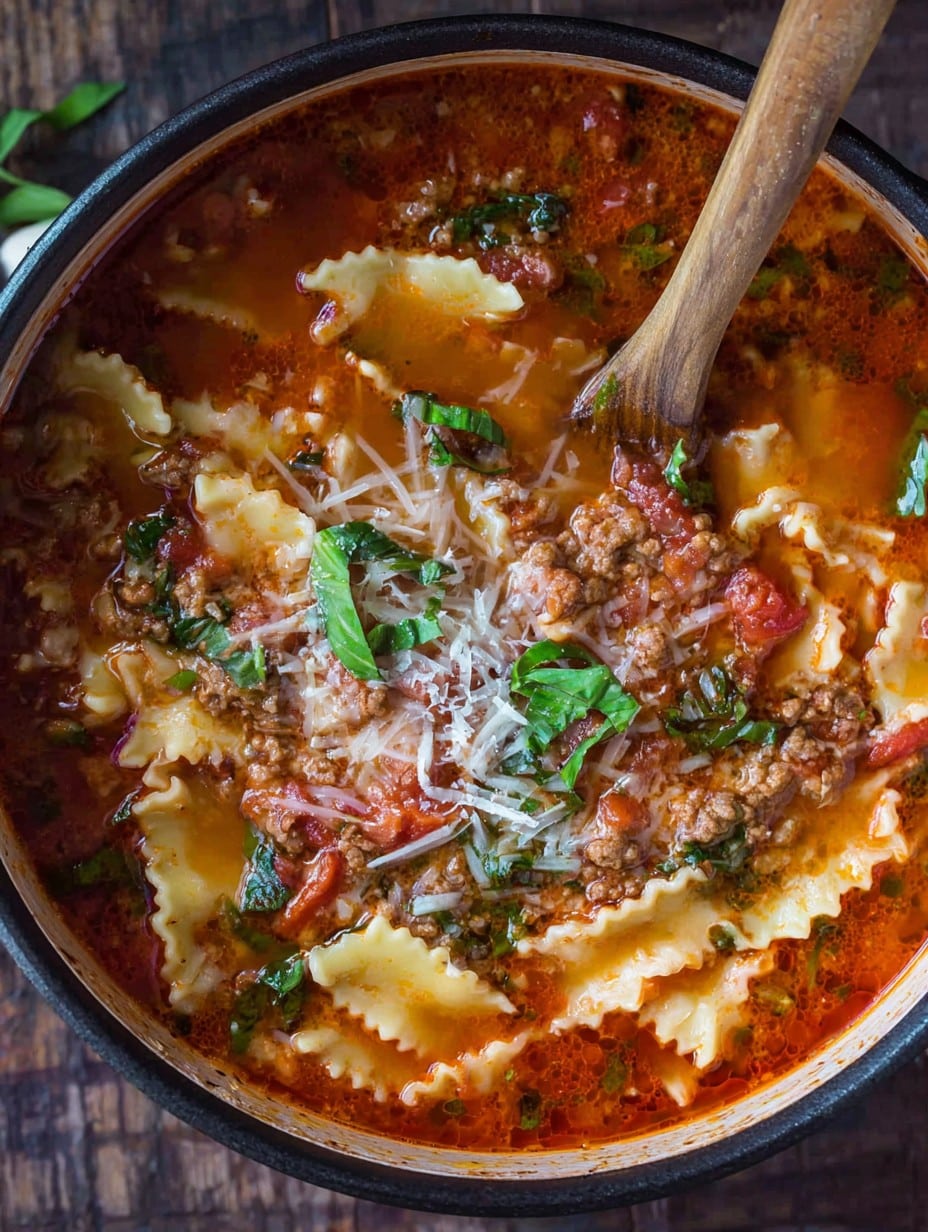
- Ladle the soup into bowls. Top with a good scoop of ricotta, a sprinkle of mozzarella, and a snowstorm of Parmesan—don’t be shy.
Lil’ Notes I Learned The Hard Way
- Keep the noodles a bit undercooked if you plan to reheat—the soup will thicken overnight like some sort of pasta-loving blob.
- Sometimes I just heap all the cheese in the pot and stir, but honestly, it gets a bit too gloopy (live and learn).
- If you’re low on broth, just add water plus a bouillon cube; no one’s gonna know (unless you tell them, which, why would you?).
Variations (and a Few Facepalms)
- Try swapping in Italian sausage for the beef—or go half and half (spicier is really nice in winter!).
- I once tried a veggie version with lentils instead of meat and it actualy turned out pretty tasty, though it’s not quite as rich.
- Don’t use gluten-free lasagna noodles unless you want a texture surprise, just sayin’. Use GF shapes that hold up better instead.
- Want it creamy? Plop a dollop of cream cheese when serving. My husband calls this a “guilty secret.”
Wait, Do I Need Any Fancy Equipment?
Just a big ol’ pot and a ladle. If you don’t have a Dutch oven, your biggest saucepan works. And for grating cheese? In a pinch, I’ve smashed it up with the back of a spoon. Improvisation: it’s an art form.
Keeping Leftovers (If That’s Even Possible)
This honestly gets scooped up so fast that storing it almost seems silly. But, if you do have extra, pop it into airtight containers and refrigerate. It’ll be tasty for up to 3 days. It does thicken, so maybe add a splash of broth or water when reheating. Freezes not-bad, but the noodles do break down a little.
Here’s How I Serve It (Just Like Mom)
Honestly, big bowls, some good crusty bread (the kind that leaves crumbs everywhere), and a green salad if I’m feeling virtuous. Sometimes, if we’re really going for comfort food, I’ll set out a plate of olives or even potato chips (don’t judge me).
If You’re Like Me, You’ll Wanna Know These Pro Tips
- Don’t rush the noodle stage—undercooked pasta is not the vibe. I did this once. Learned my lesson the hard way. Soup full of crunchy noodle bits, not ideal.
- Actually, I find it works better if you cook the soup first, then add noodles late if you’re packing it up for lunch the next day. Stops it turning into stew. Probably should’ve known that sooner, but hey.
- If your cheese clumps weird, sprinkle it on after ladling the soup into bowls, not before.
FAQ—So, People (and My Aunt) Always Ask…
Can I make this in a slow cooker? Sure thing! Brown your meat first, then dump it all in (but wait to add the noodles for the last 20-30 min, or they end up sad and mushy). Learned that the fun way.
What if my soup’s too thick? Honestly, mine gets like this sometimes—just stir in a splash of water or more broth and it’s all good.
Can I freeze this? Yes, but the noodles do get a bit… mushy? Not a deal-breaker, just set expectations.
Does it really taste like lasagna? Look, it’s got all the flavors—cheese, beef, tomato, herbs—but you’ll still need a spoon. It’s not actual lasagna, but it’s close enough when you’re hungry and it’s cold outside.
Is it hard to make? Nah, it’s easier than wrangling actual lasagna sheets and less clean-up. Just don’t get cocky and try to double the recipe in a small pot, trust me on that one!
Ingredients
- 1 lb (450g) ground beef
- 1 tablespoon olive oil
- 1 small onion, diced
- 3 cloves garlic, minced
- 1 can (28 oz) crushed tomatoes
- 4 cups low-sodium chicken broth
- 8 oz (225g) lasagna noodles, broken into pieces
- 1 teaspoon Italian seasoning
- 1/2 teaspoon salt
- 1/2 teaspoon black pepper
- 1 cup ricotta cheese
- 1 cup shredded mozzarella cheese
- 1/3 cup grated Parmesan cheese
- Fresh basil, chopped (for garnish)
Instructions
-
1In a large pot, heat olive oil over medium heat. Add diced onion and cook for 3-4 minutes until softened. Add minced garlic and saute for 1 minute.
-
2Add ground beef to the pot. Cook, breaking it up with a spoon, until browned and cooked through. Drain excess fat if necessary.
-
3Stir in crushed tomatoes, chicken broth, Italian seasoning, salt, and black pepper. Bring to a simmer.
-
4Add broken lasagna noodles to the pot. Simmer uncovered for 15-20 minutes, or until noodles are tender, stirring occasionally.
-
5In a small bowl, mix ricotta, mozzarella, and Parmesan cheeses. Ladle soup into bowls and top each serving with a generous dollop of the cheese mixture.
-
6Garnish with fresh basil and serve hot.
Approximate Information for One Serving
Nutrition Disclaimers
Number of total servings shown is approximate. Actual number of servings will depend on your preferred portion sizes.
Nutritional values shown are general guidelines and reflect information for 1 serving using the ingredients listed, not including any optional ingredients. Actual macros may vary slightly depending on specific brands and types of ingredients used.
To determine the weight of one serving, prepare the recipe as instructed. Weigh the finished recipe, then divide the weight of the finished recipe (not including the weight of the container the food is in) by the desired number of servings. Result will be the weight of one serving.
Did you make this recipe?
Please consider Pinning it!!