Let Me Tell You About This Lemon Custard Cake
Okay, so here’s the thing—this lemon custard cake is the one I go back to when I want to impress without running around in circles (honestly, no one likes a kitchen meltdown at 8pm). I first tried making this after a Sunday market haul when I found way too many lemons for a reasonable human, and, well, now it’s a family tradition. My cousin calls it “sunshine in a slice,” which is a bit much, but hey—it does brighten up a rainy afternoon. Oh, and if you’re wondering if you need to be some sort of pastry wizard to pull this off? Nope. I once made it while half-watching the footy, and it still turned out pretty ace.
Why You’ll Love This (Or At Least, Why I Do)
I whip this up when I’m craving something not-too-sweet but still proper comforting. My family goes a bit bonkers for it—especially my mum, who, for the record, used to think her lemon drizzle was unbeatable (sorry, Mum!). Sometimes, I make it just because the kitchen smells incredible while it bakes. It’s also forgiving—like, if you accidentally overwhisk the eggs a smidge or forget to sift the flour, it’s still going to taste great. And let’s not even talk about the number of times I’ve run out of fresh lemons and just raided the bottle of the stuff from the fridge. Works in a pinch!
What You’ll Need (And What You Can Fudge)
- 3 large eggs, separated (sometimes I get lazy and don’t separate—honestly, it’s fine, just a bit denser)
- 1 cup (200g-ish) white sugar (granulated, but caster is okay—my gran swore by the fancy stuff, but sugar is sugar, right?)
- 1/2 cup unsalted butter, melted (I’ve subbed in margarine when I’m out—don’t tell the food snobs, but it held up)
- 2/3 cup plain flour (all-purpose, or cake flour if you’re feeling posh)
- 1/4 teaspoon salt (I’ve forgotten this before, didn’t ruin a thing)
- 1 tablespoon finely grated lemon zest (around 2 lemons, but I sometimes use a microplane and just eyeball it)
- 1/3 cup fresh lemon juice (bottled works, but is a bit sharper—don’t stress)
- 1 3/4 cups whole milk (I’ve used oat milk in a panic—honestly, not bad, just a tad less creamy)
- Powdered sugar, for dusting (optional, but looks pretty)
How I Actually Make It (With a Few Sidetracks)
- Preheat your oven to 325°F (160°C). Grease an 8-inch (20cm) square pan. I usually forget and have to do it mid-batter—still works.
- In a big bowl, whisk the egg yolks and sugar together until pale and creamy. I sometimes use a hand mixer, but a good old fork will do if you’re patient.
- Add in the melted butter, flour, and salt. Mix until just combined—don’t overthink it. Lumps are okay at this stage (this is where I usually sneak a taste… for science!).
- Stir in the lemon zest and juice. It might look a bit curdled—that’s normal, just keep going.
- Gradually pour in the milk, whisking as you go. Honestly, it’ll look too runny—like you did something wrong. But trust me, that’s the magic.
- In another bowl (or the same one, if you’re not keen on washing up), beat the egg whites until soft peaks form. I once tried skipping this—cake still tasted good, but the texture? Meh.
- Gently fold the egg whites into the batter. It won’t want to mix in. That’s fine—just swirl it through. Patchy is fine.
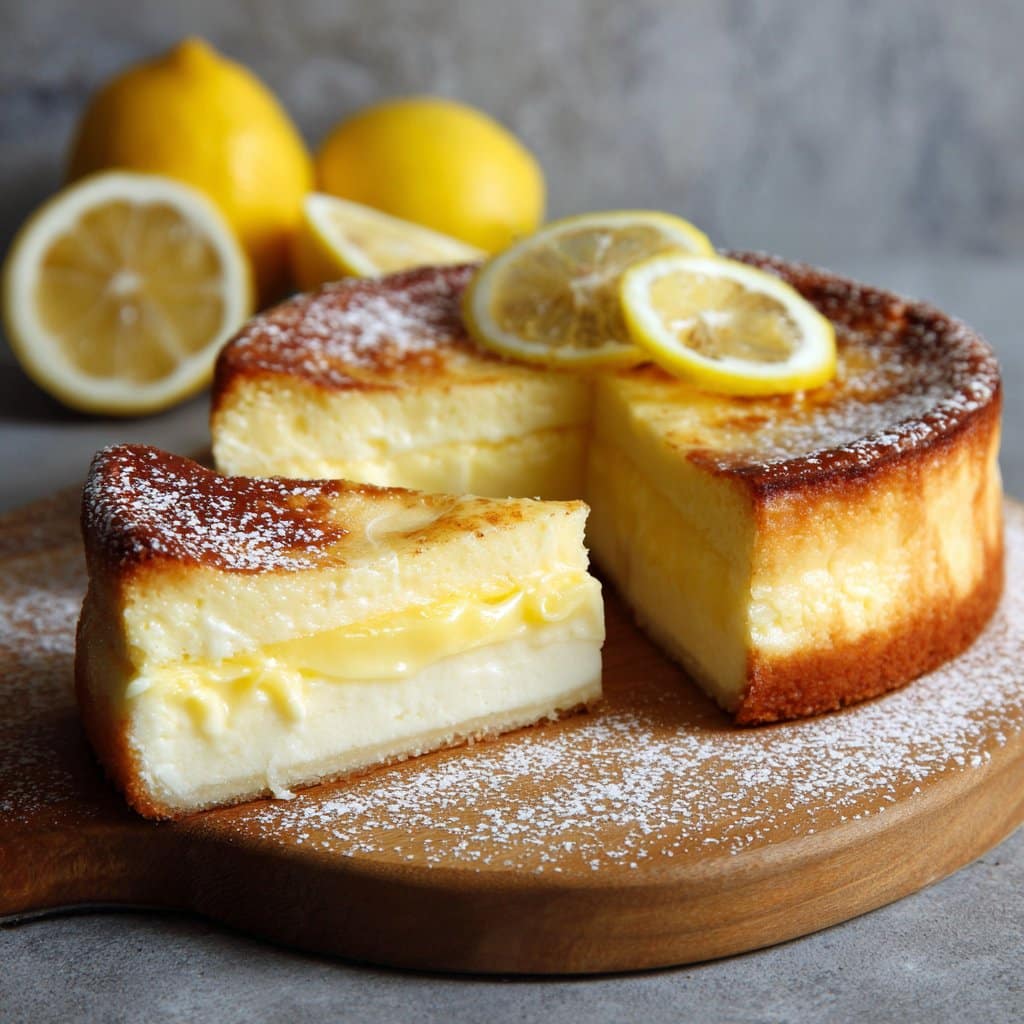
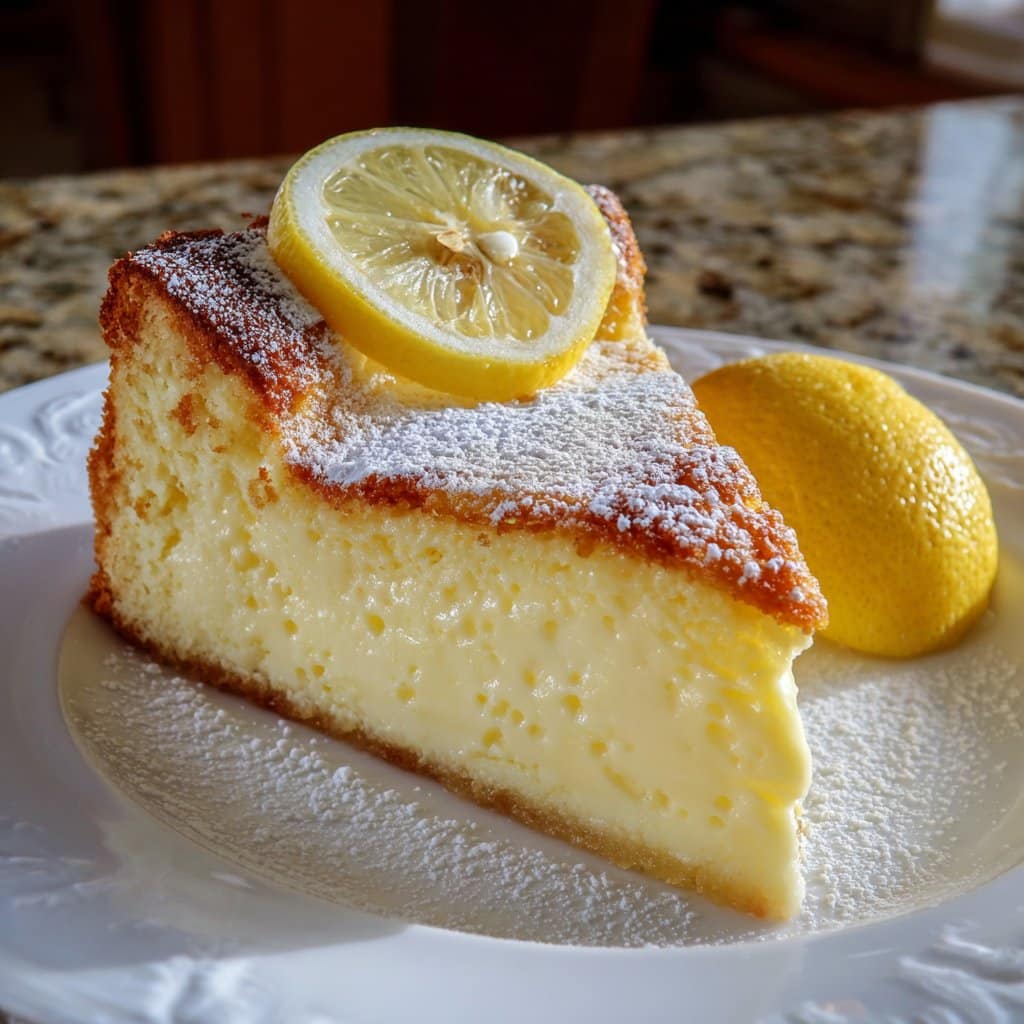
- Pour into your greased tin and pop it in the oven for about 45–50 minutes, until the top is golden and just set. The center will have a wobble—don’t overbake or you’ll miss out on that custardy layer.
- Let cool at least 20 minutes (if you can wait). Dust with powdered sugar, slice, and—if you’re anything like me—eat while standing over the sink, because who needs plates?
Some Notes I Wish Someone Had Told Me
- If it puffs up crazily, it’ll settle as it cools—promise.
- I once added too much lemon zest and it turned out, um, a little too zippy. Less can be more here.
- This cake is even better (I think) the next day, straight form the fridge. But good luck getting any leftovers.
- Sometimes the bottom custard separates a lot, sometimes it’s more blended. Mood of the oven, I guess.
If You Want to Mix Things Up
- I’ve swapped half the lemon juice for orange juice—a bit softer, but still lush.
- Once tried making it with coconut milk instead of regular. Tasted nice, but the texture was oddly chewy—maybe don’t bother.
- Add a handful of blueberries to the batter before baking—kids love it (so do I, if I’m honest).
Gear You’ll Need (or Not)
You really want an electric mixer for the egg whites, but if you’re like my mate Dave and too stubborn, a balloon whisk and elbow grease will do the trick. No square tin? I’ve used a round one, even a ceramic dish—just makes for rustic edges, which nobody complains about unless they’re on Bake Off.
How to Store It (If You Actually Have Leftovers)
Pop any leftovers in the fridge, covered, for up to 3 days. The custard bit firms up, which I kinda like. Though honestly, in my house it never lasts more than a day! Freezing isn’t ideal—the texture goes a bit wonky, almost squeaky. You do you, though.
How I Like to Serve It (And My Family’s Quirks)
I love it with a dollop of thick Greek yogurt or a splash of single cream. My aunt insists on serving it with hot Earl Grey and a slice of sharp cheddar—don’t ask, it’s a Northern thing. Kids tend to just grab it plain with sticky fingers. It’s also pretty neat as a brunch treat, not just dessert.
Things I Wish I’d Known Earlier (Pro Tips, Sort Of)
- I once rushed the baking and cranked the heat—big mistake, the custard layer vanished. Slow and steady wins, trust me.
- If you try to cut it while it’s piping hot, it’ll collapse. (Not that I haven’t tried. Patience is not my strong suit.)
- Actually, I find it works better if you separate the eggs, even if it’s a faff.
Questions I’ve Actually Been Asked (FAQs)
- Can I use bottled lemon juice? Yep! I do it all the time when lemons are, frankly, silly expensive or just sad looking at the shop. Maybe go a bit lighter, as it can be sharp.
- Is it supposed to be jiggly in the middle? 100 percent. Like a good cheesecake. If you overbake, it’ll be more cake than custard.
- What if I don’t have a mixer? Use a whisk and a strong arm! Or, cheat and don’t whip the whites—just know it’ll be more pudding than fluffy cake.
- Can I make it gluten-free? I’ve subbed in a 1:1 GF flour blend with decent results, but it does get a bit more fragile. Maybe chill it first before slicing.
One Last Thing (Because Why Not?)
So here’s where I go off-topic—I once made this cake for a mate’s birthday picnic, and a seagull made off with half the slice right out of my hand. True story. Anyway, if you want a good, homey lemon custard cake recipe, this is it.
For more ideas on baking basics, check out Sally’s Baking Addiction—her tips on custard cakes are brilliant. Or for lemon-obsessed types, the zesting guide on The Kitchn saved me from grating my knuckles more than once.
Ingredients
- 1 cup (200g) granulated sugar
- 4 large eggs, separated
- 1/2 cup (115g) unsalted butter, melted and cooled
- 2/3 cup (80g) all-purpose flour
- 1/4 teaspoon salt
- 1 tablespoon grated lemon zest
- 1/2 cup (120ml) freshly squeezed lemon juice
- 1 1/2 cups (360ml) whole milk, at room temperature
- Powdered sugar, for dusting (optional)
Instructions
-
1Preheat the oven to 325°F (163°C). Grease and line an 8-inch square baking dish with parchment paper.
-
2In a large bowl, beat the egg yolks with the granulated sugar until pale and creamy. Mix in the melted butter, lemon zest, and lemon juice.
-
3Sift in the flour and salt, and mix until just combined. Gradually whisk in the milk until the batter is smooth and well combined.
-
4In a separate clean bowl, beat the egg whites until stiff peaks form. Gently fold the egg whites into the lemon batter in three additions, being careful not to deflate the mixture.
-
5Pour the batter into the prepared baking dish. Bake for 40-45 minutes, or until the top is golden and the center is just set. Allow the cake to cool completely in the pan.
-
6Dust with powdered sugar before serving, if desired. Slice and enjoy!
Approximate Information for One Serving
Nutrition Disclaimers
Number of total servings shown is approximate. Actual number of servings will depend on your preferred portion sizes.
Nutritional values shown are general guidelines and reflect information for 1 serving using the ingredients listed, not including any optional ingredients. Actual macros may vary slightly depending on specific brands and types of ingredients used.
To determine the weight of one serving, prepare the recipe as instructed. Weigh the finished recipe, then divide the weight of the finished recipe (not including the weight of the container the food is in) by the desired number of servings. Result will be the weight of one serving.
Did you make this recipe?
Please consider Pinning it!!