Why I Keep Coming Back to This Cake
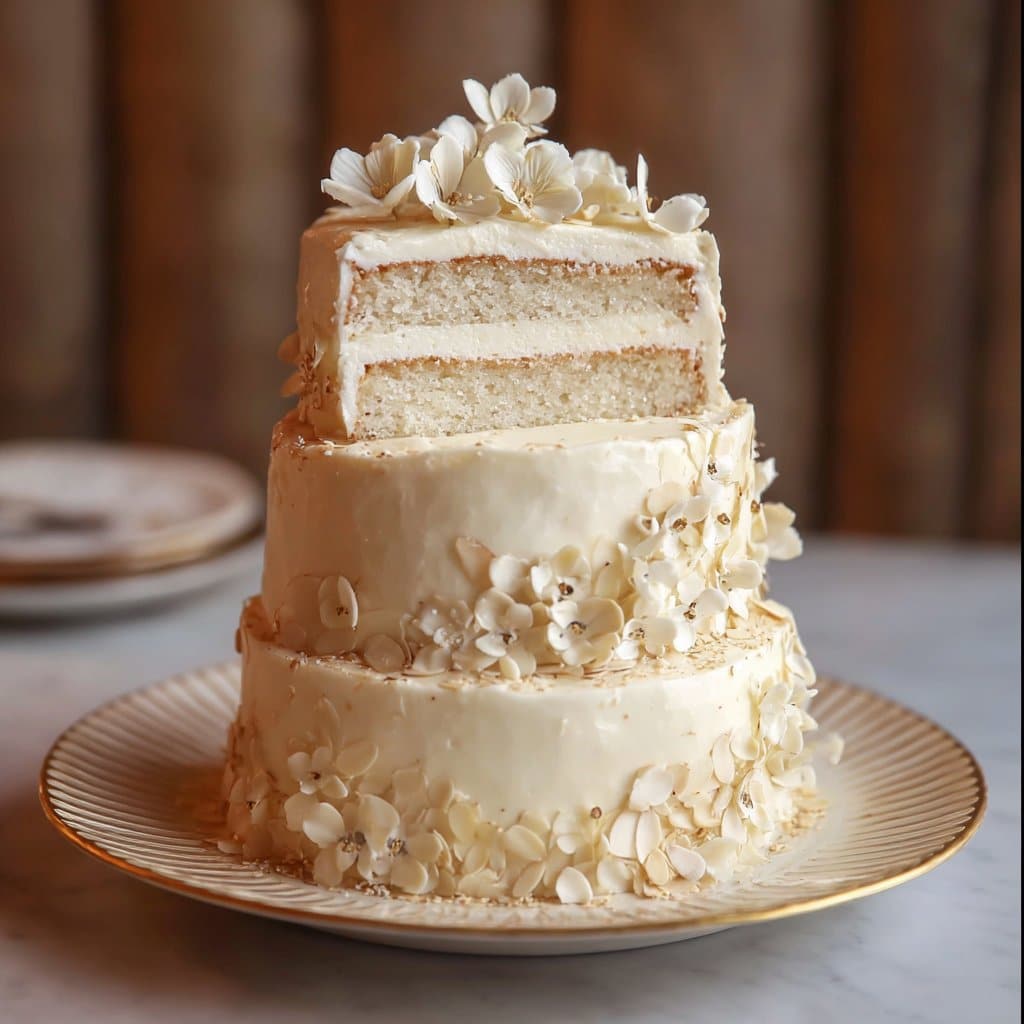
Okay, so I’ll confess—I’ve baked this White Almond Wedding Cake maybe a dozen times (not always with the same amount of success, if we’re being brutally honest here). The first time, it was for my cousin’s big day (she thought homemade would be charming; turns out, she was right). There’s just something about almond extract and a crowd that feels almost cinematic; every time someone slices into it, I get that heart-thumping “oh please let it not collapse” thrill. And, I once caught my uncle sneaking into the kitchen for a midnight slice, which weirdly felt like an honor.
Full disclosure: I’m not the world’s most patient baker… or decorator. So this is my version after lots of trial and error, a few oops moments, and more than one debate about whether sprinkles count as ‘wedding-worthy’.
Why You’ll Love This White Almond Wedding Cake
I usually make this cake when the occasion calls for something a bit extra, but honestly, it’s not above being the star of a random Thursday when I just want cake. My family pretty much demolishes it before it’s fully cooled (they say it’s for quality control). The almond flavor is something special – not too sweet or overwhelming, and even folks who side-eye marzipan end up nabbing seconds. My mother swears it tastes just like those professional bakery cakes (on my better days, anyway). Sometimes I use it as an excuse to use up those fancy silver dragees lingering in the back of the pantry. My singular frustration? I once tried to swap out the almond extract for coconut just to experiment…well, I wouldn’t recommend that unless you want a coconut, not wedding, cake.
What You’ll Need (and How I Sometimes Cheat)
- 2 ½ cups cake flour (plain flour works if you just add a tablespoon of cornstarch per cup—don’t overthink it)
- 2 ½ tsp baking powder
- ¾ tsp salt
- 1 cup unsalted butter – room temp is best, but I’ve zapped it in the microwave (super low, not melted!) when I’m impatient
- 1 ¾ cups sugar (granulated, but I once used caster sugar and it was fine)
- 4 large egg whites (save yolks for custard or, honestly, chuck ’em in an omelette)
- 1 tsp almond extract (sometimes I dial this up; my friend Lisa says 1 ½ tsp is the sweet spot)
- 1 tsp vanilla extract—real or imitation, I can’t really tell the difference when everything’s baked
- 1 cup whole milk (at a pinch, I’ve used almond milk…different vibe but pretty tasty)
- Optional: handful of slivered almonds for on top, or, if you’re extra like me, some edible flowers
My Way of Making the Cake (Percent Perfection, Some Chaos)
- Preheat your oven to 350°F/175°C. Now is the time to line two 8-inch cake tins with parchment. Or just grease ’em up if you’re short on time. Parchment = fewer tears when removing, trust me.
- Sift cake flour with baking powder and salt. I actually skip sifting sometimes—just whisk it together firmly. Works fine for me.
- Cream butter and sugar till it’s fluffier than you expect. Stand mixer does wonders. Hand mixer? Totally fine. Wooden spoon? Makes your arm ache but you could do it.
- Add egg whites, one at a time. If it looks curdled, that’s ok; it sorts itself in the oven (I promise!)
- Mix in almond and vanilla extract, breathing in and getting hungry. Classic move: sneak a taste right now.
- Alternate between adding flour mixture and milk, starting and finishing with flour. So: flour, milk, flour, milk, flour. I go slow, but on Tuesday nights, I’ve dumped it all in and hoped for the best—honestly, it’s still edible, just a tad dense.
- Pour into tins and try to make the tops level (I swirl the pans and call it good). Bake for 25-28 minutes. Sides should gently pull away, and a toothpick or piece of dry spaghetti should come out clean.
- Let cool in the pan for 10 minutes (I sometimes get impatient and rush this, which leads to crumbles—don’t be me), then flip out on racks to cool.
- You can frost it with your favorite buttercream, or just dust with powdered sugar if you’re pressed for time. I do both, depending if I’m feeling fancy or frazzled.
Some Notes from the ‘Oops’ Files
- Don’t panic if your cake is a little pale—that’s how it’s supposed to be! It’s a white almond cake, after all.
- Leftover cake can be gently nuked for ten seconds and it’s almost as good as fresh out the oven.
- If the cakes stick (happens to me every third time), run a knife round the edges and jiggle the pan a bit.
Variations I’ve Tried (for Better or Worse)
- Sometimes, I add a bit of lemon zest for a summery thing—not strictly classic, but it’s tasty.
- Swapping half the vanilla for orange extract: wild, maybe a bit much, but great for Christmas.
- One time, I tried using coconut flour for half the cake flour. Could write a whole saga about why that was a regrettable move (just… don’t).
About Equipment (What If You Don’t Have It All?)
Honestly, if you don’t have a stand mixer, grab your trusty hand mixer (or strong arm and whisk for a proper workout). Two round cake tins are best, but I’ve made this in a brownie pan once and just cut it into squares—nobody seemed to mind. Oh, and if you lost your offset spatula for frosting? Butter knife gets the job done. Sometimes tidiness is overrated.
How I Store Leftovers (When There Are Any)
Just pop leftovers in an airtight tin or wrap in foil at room temp for a day. Fridge for about 3 days longer…if it lasts (rarely does in my house, I’ll be honest). Freezes fine, but slices thaw a bit sticky. If you have a cake dome, you’re living the high life.
Serving: How We Usually Do It
I like this with fresh berries or, if I’m feeling whimsical, a drizzle of homemade raspberry coulis (I use this easy recipe from Sally’s Baking Addiction). My brother claims it’s best with coffee—but I’m more for a big mug of milky tea, especially late afternoon.
Things I’ve Learned the (Kinda) Hard Way
- Don’t rush cooling, or your cake will sag like an old mattress.
- I tried using cold butter once to “save time”—yeah, just…softened is a must.
- And, always use fresh baking powder, or you’ll wonder why it’s more pancake than cake.
Questions Friends Actually Ask
- Can I double this for a big crowd?
- Absolutely! But you’ll need deeper pans or more time—just watch the middle doesn’t go gooey.
- Is almond extract really necessary?
- Well, technically no, but then…it’s just white cake. The extract makes it sing.
- Frosting ideas?
- Classic American buttercream is what I usually throw on (here’s my go-to). But I’ve seen some folks use ermine frosting—for a lighter touch.
- Can I make cupcakes out of this?
- Oh for sure! They’ll bake faster; check in at 16 min or so. (I sometimes overfill and get muffin tops, but who cares?)
- Can this be gluten free?
- I’ve tried it with good-quality gluten-free flour blend and it holds up (sort of), but texture gets crumblier. Still tasty, just different!
Alright, if you’ve got any more questions, message me—seriously, I love talking cake. (Unless it’s 3am. Then I’ll probably just be eating it in the dark, contemplating life.)

Ingredients
- 2 1/2 cups all-purpose flour
- 2 cups granulated sugar
- 1 cup unsalted butter, softened
- 1 cup whole milk
- 6 large egg whites
- 2 teaspoons baking powder
- 1/4 teaspoon salt
- 1 teaspoon pure almond extract
- 1 teaspoon vanilla extract
Instructions
-
1Preheat the oven to 350°F (175°C). Grease and flour two 9-inch round cake pans.
-
2In a medium bowl, whisk together the flour, baking powder, and salt. Set aside.
-
3In a large bowl, cream the butter and sugar together until light and fluffy. Mix in the almond extract and vanilla extract.
-
4Add the egg whites one at a time, beating well after each addition.
-
5Alternately add the flour mixture and milk to the butter mixture, beginning and ending with flour. Mix until just combined.
-
6Divide the batter evenly between the prepared pans. Bake for 30-35 minutes, or until a toothpick inserted into the center comes out clean. Cool in pans for 10 minutes, then transfer to wire racks to cool completely.
Approximate Information for One Serving
Nutrition Disclaimers
Number of total servings shown is approximate. Actual number of servings will depend on your preferred portion sizes.
Nutritional values shown are general guidelines and reflect information for 1 serving using the ingredients listed, not including any optional ingredients. Actual macros may vary slightly depending on specific brands and types of ingredients used.
To determine the weight of one serving, prepare the recipe as instructed. Weigh the finished recipe, then divide the weight of the finished recipe (not including the weight of the container the food is in) by the desired number of servings. Result will be the weight of one serving.
Did you make this recipe?
Please consider Pinning it!!