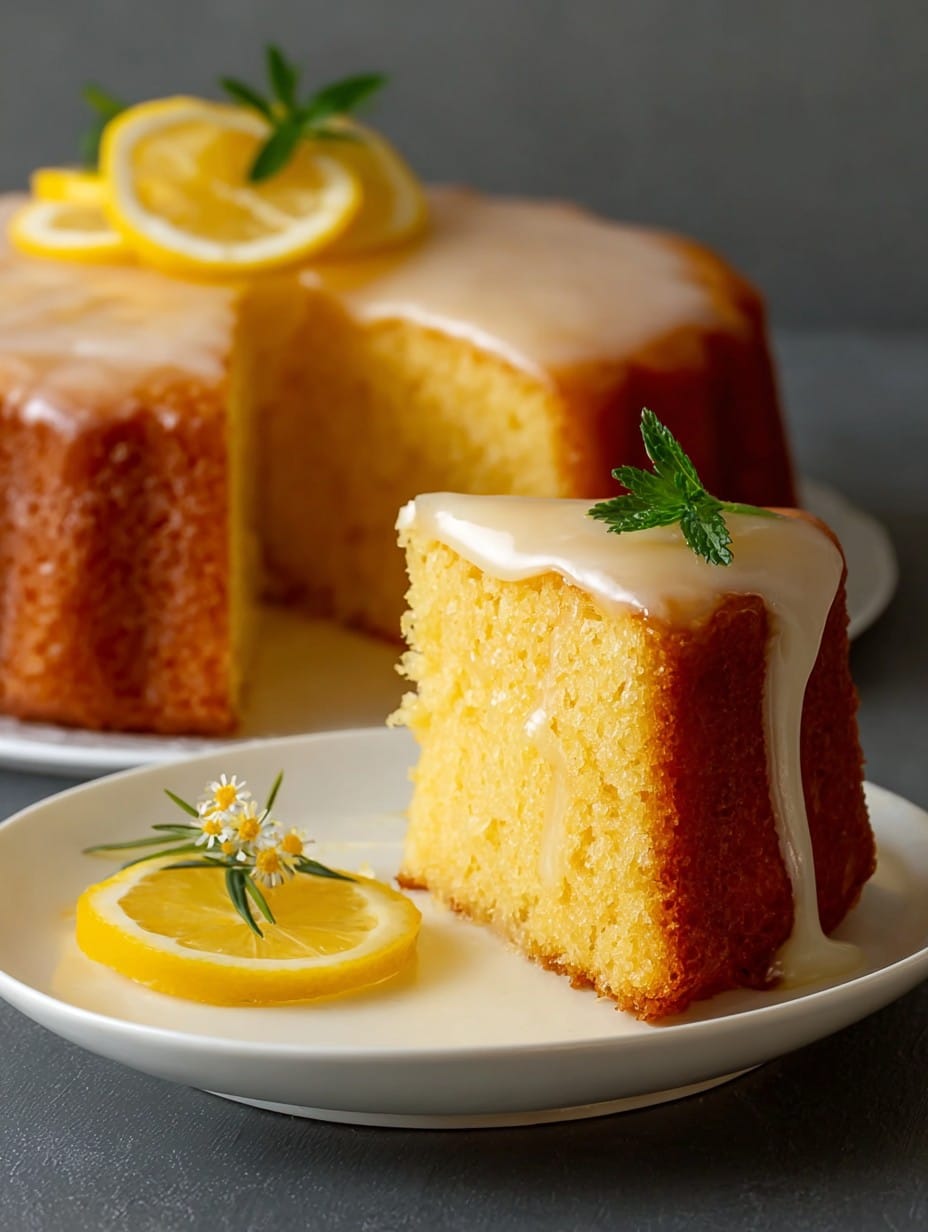
Alright, so let me just set the scene: It’s storming outside, the cat’s giving me the side-eye for not sharing my snack, and I’m in the mood for something bright and zippy. That’s always when I think of making this—a lemon cake to die for. Actually, my Aunt Claire calls it a “sunshine slab” because you could probably cheer up an entire village with just one whiff.
First time I made it, I mixed up the icing sugar with the flour (rookie move)—not my finest hour, but oddly, it still turned out edible! Ever since, I make it whenever the mood’s low or I want to bribe my neighbour into lending me her lawnmower (thanks, Pam). If you love recipes that don’t mind a little chaos in the kitchen, you’re in the right place.
Why You’ll Love This (No, Really)
I usually bake this when it’s been one of those weeks and I need a lemony pick-me-up. My family goes bonkers for it—my cousin Ben always claims the corner piece (the best bit, obviously). If you’re like me and sometimes accidentally zest your knuckles instead of the lemon, just know: it’s worth the hassle. Plus, it’s that cake people nag you for after the party, then you have to awkwardly admit you used instant lemon pudding once because you forgot to buy real lemons (worked a treat, though!).
What You’ll Need (With Real-World Substitutions)
- 180g (about 1.5 cups) plain flour – Sometimes I’m lazy and use self-raising, just skip the baking powder if you do.
- 1.5 tsp baking powder – Or a little less if using self-raising (honestly, I eyeball it).
- Pinch salt – My gran swore by Maldon, but table salt’s fine, too.
- 200g (about a cup) caster sugar – Brown sugar in a pinch makes it super rich, but less lemony.
- 110g (1/2 cup) unsalted butter, room temp-ish – Salted works, just leave out the pinch above.
- 2 large eggs – I’ve swapped for flax eggs (1 tbsp ground flax + 2.5 tbsp water per egg) and it’s surprisingly okay, but go real if you can.
- 2 lemons, zest + juice – I’ve done this with bottled juice (about 6 tbsp) and a bit of extra zest; not as zingy, but no shame.
- 120ml (1/2 cup) whole milk – Oat milk is fine; I tried coconut once… never again.
- 1 tsp vanilla extract – I skip if I’m feeling minimalist.
- For the glaze: 100g (about 1 cup) icing sugar + juice of 1 lemon (add more or less to get the runniness you like)
How I Actually Make This Thing
- Preheat your oven to 180ºC (350°F). Butter and line a loaf tin. No loaf tin? Muffin tray works—just reduce the baking time.
- Cream the butter and sugar together with a wooden spoon (or electric mixer if your arms are tired; mine usually are). Should look pale, maybe a bit fluffy — but if it doesn’t, don’t panic. Still tastes great.
- Add in the eggs, one at a time, mixing well after each. Don’t stress if it curdles; mine usually does at this point. On second thought, maybe add a spoonful of flour after the first egg if you’re worried.
- Fold in lemon zest, vanilla, and salt. The more zest, the zingier—sometimes I get a bit overzealous.
- Mix baking powder into the flour and sift (I rarely bother sifting, but apparently it makes a difference).
- Alternately add the flour mixture and milk into the wet ingredients, starting and ending with flour. Try to not overmix here, but honestly, I’ve thumped it around and it still turns out alright.
- Stir in lemon juice. (This is where I sneak a taste, because, well—lemon cake batter might be better than the cake.)
- Pour that goodness into the tin, smooth it out, and bake for 40-45 minutes. When a skewer comes out with a crumb or two (not gloopy), you’re golden.
- Let it cool for 10-15 mins, then poke tiny holes with a skewer and pour over your runny lemon glaze. A lot will drip off—just scoop that back up, no shame in recycling.
- Cool completely (if you can wait, which, frankly, I never do).
Things I’ve Figured Out (the Hard Way)
- The cake tastes better the next day, but good luck making it last that long.
- Warm cake + glaze = sticky, but also kind of magical (just have napkins handy).
- If it sinks a bit, don’t fret; it’s still fab, just call it “rustic.”
- Lining the tin with parchment seems fussy but actually saves your bake—keeps it from sticking to the pan (more leftover for me!).
Some Wild (and Not-So-Wild) Variants
- I tossed in poppy seeds once—tasty, but got stuck in my teeth for ages.
- Swapped half the lemon juice for lime—very Mojito vibes. Would do again.
- Tried a cream cheese swirl. Looked lovely, tasted odd; not my jam, but you do you.
- Orange instead of lemon? It’s nice, but a bit too sweet for me. Maybe try blood orange for a twist—it’s on my (very long) list.
Do You Even Need Fancy Equipment?
I use a hand mixer, but a big biceps and a wooden spoon do the job well enough. No zester? Potato peeler works—just go gently, don’t grab too much of the bitter white pith. Once used a clean jar to roll the lemons and make more juice—works surprisingly well.

How I Store It (Or, Where Did All the Cake Go?)
Technically, you can keep it in an airtight container at room temp for up to three days. But honestly, I have yet to see it survive past breakfast the next morning. If you’re super dedicated, fridge it—and the glaze gets a bit crisp, yum.
How We Serve It Round Here
Just as is, for maximum lemon punch. Occasionally I get fancy and serve it with Greek yoghurt and blueberries (my niece thinks it’s a “proper pudding” that way). Once, we used it instead of birthday cake—candles, sprinkles, the whole nine yards. Honestly, it’s that good.
Let Me Save You Some Headaches (a Few ‘Pro’ Tips)
- I once tried rushing the cooling and the glaze just ran off and pooled in the corner; patience really is a virtue here.
- The hardest part is remembering to zest before you juice. Not the other way (trust me—scraping a squished lemon is no fun).
- Don’t skip that tiny pinch of salt—it honestly makes the flavour pop.
Burning Questions (FAQs I’ve Actually Been Asked)
- Can I make it gluten-free?
Yeah, I have used a 1-to-1 gluten-free baking flour and it worked better than I expected; might be a little denser, but lemon covers a multitude of sins. - Can I double this recipe?
For sure! Use two pans or one big one, but maybe drop the temp by 10°C and keep an eye on it. Oh, and probably cover it halfway with foil so the top doesn’t go rogue. - Which lemons are best?
Big, bumpy, wax-free ones if you can—weirdly, the unwaxed ones seem juicier. But I’ve used standard grocery lemons and it’s always turned out grand. - What if I don’t have icing sugar?
Blitz regular sugar in a good blender, or check out this trick from Serious Eats. Or, skip the glaze and dust with regular sugar in a pinch (my dad prefers it this way, actually). - Best way to freeze leftovers?
Wrap it tight in clingfilm, then foil. Thaw on the counter. Or, truthfully, set a reminder, ’cause otherwise you’ll forget it’s there.
Oh, in case you want to go down a lemon rabbit hole, I found King Arthur’s Lemon Bliss Cake super inspiring (their tip to poke holes is genius) and BBC Good Food’s classic drizzle cake is always reliable if you want to mix things up. But really, this cake is the one I come back to every single time—I hope you love it, odd wonky punctuation and all.
Ingredients
- 1 1/2 cups all-purpose flour
- 1 cup granulated sugar
- 1/2 cup unsalted butter, softened
- 2 large eggs
- 1/2 cup fresh lemon juice
- 1 tablespoon lemon zest
- 1/2 cup whole milk
- 1 1/2 teaspoons baking powder
- 1/4 teaspoon salt
- 1 cup powdered sugar (for glaze)
- 2 tablespoons fresh lemon juice (for glaze)
Instructions
-
1Preheat the oven to 350°F (175°C). Grease and flour a 9-inch round cake pan.
-
2In a medium bowl, whisk together the flour, baking powder, and salt. Set aside.
-
3In a large bowl, beat the butter and sugar together until light and fluffy. Add eggs one at a time, beating well after each addition. Mix in lemon juice and lemon zest.
-
4Alternately add the dry ingredients and milk to the wet ingredients, beginning and ending with the dry mixture. Mix until just combined.
-
5Pour the batter into the prepared pan. Bake for 35-40 minutes, or until a toothpick inserted in the center comes out clean. Let the cake cool in the pan for 10 minutes, then turn onto a wire rack.
-
6For the glaze, whisk powdered sugar with lemon juice until smooth. Drizzle over the cooled cake before serving.
Approximate Information for One Serving
Nutrition Disclaimers
Number of total servings shown is approximate. Actual number of servings will depend on your preferred portion sizes.
Nutritional values shown are general guidelines and reflect information for 1 serving using the ingredients listed, not including any optional ingredients. Actual macros may vary slightly depending on specific brands and types of ingredients used.
To determine the weight of one serving, prepare the recipe as instructed. Weigh the finished recipe, then divide the weight of the finished recipe (not including the weight of the container the food is in) by the desired number of servings. Result will be the weight of one serving.
Did you make this recipe?
Please consider Pinning it!!