Hey, Have You Tried Pancakes With Cottage Cheese?
I’ve gotta tell you—there’s something about making cottage cheese pancakes that just feels like a win. The first time I whipped these up, I was half-asleep, wearing mismatched socks, and (honestly) a bit skeptical. I mean, cottage cheese? Isn’t that what you find in those sad little salad bar tubs? But trust me, these pancakes are a revelation. They remind me of lazy Sunday mornings at my Nan’s, when she’d let us help measure stuff out and we’d end up with flour everywhere (including, once, the dog). Anyway, if you like your breakfast a wee bit tangy and pillowy, you’re in for a treat.
Why I Keep Coming Back to This Recipe
I make this when my brain can’t handle anything complicated, yet I want to feel fancy—kind of like a short cut to being a grownup. My family goes crazy for these because they’re fluffy but not too sweet (and, bonus, protein-packed so I can pretend I’m being healthy). Oh, and they’re fast. Like, actual breakfast-on-a-school-day fast. I used to hate the messiness of blending cottage cheese into anything, but, after a few splatters, now I just accept it as part of the charm. If you’re looking for something that tastes special but doesn’t require a culinary degree, you’ll love these, too.
What You’ll Need (and a Few Cheeky Swaps)
- 1 cup cottage cheese (I sometimes use ricotta if that’s what’s lurking in the fridge; both work, but cottage cheese is tangier. My grandmother always insisted on Friendship brand, but honestly whatever’s cheap at the store is fine.)
- 2 large eggs (free range if you can swing it, but I’ve used supermarket basics often enough)
- 3/4 cup flour (plain/all-purpose, but I’ve made these with half oat flour before when I felt like pretending to be healthy)
- 1/2 teaspoon baking powder (or, let’s be real, sometimes I just do a small sprinkle and hope for the best)
- Pinch of salt
- 2 teaspoons sugar (brown sugar works if that’s all you’ve got—adds a caramelly note)
- Butter or oil for the pan (I default to butter, but my mate swears by coconut oil)
How I Actually Make Them (Don’t Stress!)
- Grab a medium bowl and dump in the cottage cheese, eggs, and sugar. Give it a good whisk—sometimes I use a fork if all my whisks are mysteriously missing (happens a lot), just break up the curds a bit.
- In another bowl, mix together the flour, baking powder, and salt. If you’re in a rush, I’ve just sprinkled this stuff right into the wet bowl and it didn’t seem to ruin anything.
- Tumble the dry mix into the wet stuff. Stir until it’s just combined; don’t worry if it looks a bit lumpy—actually, I think that’s better. This is where I usually sneak a taste (no shame).
- Heat a skillet or frying pan over medium-ish heat. Add a chunk of butter (you’ll know it’s ready when it sizzles but doesn’t go all brown and angry).
- Scoop the batter onto the pan—maybe 1/4 cup per pancake, or just eyeball it. Let them cook for a couple minutes until you see bubbles on top and the edges look set. Flip ’em. Cook another minute or two until golden. Don’t stress if the first one’s a bit wonky; it’s the sacrificial pancake, and we all have one.
Notes from a Serial Pancake Tinkerer
- If you press the pancakes down too hard, they get sort of dense (learned that the hard way).
- Actually, I find it works better if you let the batter sit for five minutes before cooking, but sometimes I’m too hungry to wait.
- Don’t fret if the batter seems thick—just add a splash of milk if you need to loosen it up. Or water, in a pinch.
- I tried using Greek yogurt instead of cottage cheese once; it was fine, but not quite right. Stick with the cottage cheese (or ricotta, at a push).
Pancake Experiments That (Mostly) Worked
- I once tossed blueberries into the batter—tasted lush, but made flipping a bit tricky. Be gentle!
- Chocolate chips? Sure, but they do make things a bit messy and oddly, sort of distract from the cheese flavor.
- I tried making them gluten-free with almond flour. They kinda fell apart, but drizzled with honey, still not bad.
Kit You Might Need (Or Not)
A nonstick skillet is honestly a lifesaver, but I did manage with a cast iron once—just takes a bit more butter and patience. Don’t have a whisk? Fork does the trick. No measuring cups? I’ve used a mug, just keep the proportions roughly the same. (I once made these at a campsite with a fork and a coffee cup—tasted even better. Maybe it’s the fresh air?)
How To Store Them (If There’s Any Left!)
You can stack these up, let them cool, and pop them in a container in the fridge for a couple days. But honestly, in my house, they never last more than a day. They’re also decent cold with a dollop of jam, I reckon. If you do want to reheat, just microwave for 20 seconds or so—maybe cover with a damp towel to stop them drying out.
What To Serve Them With (The Good Stuff)
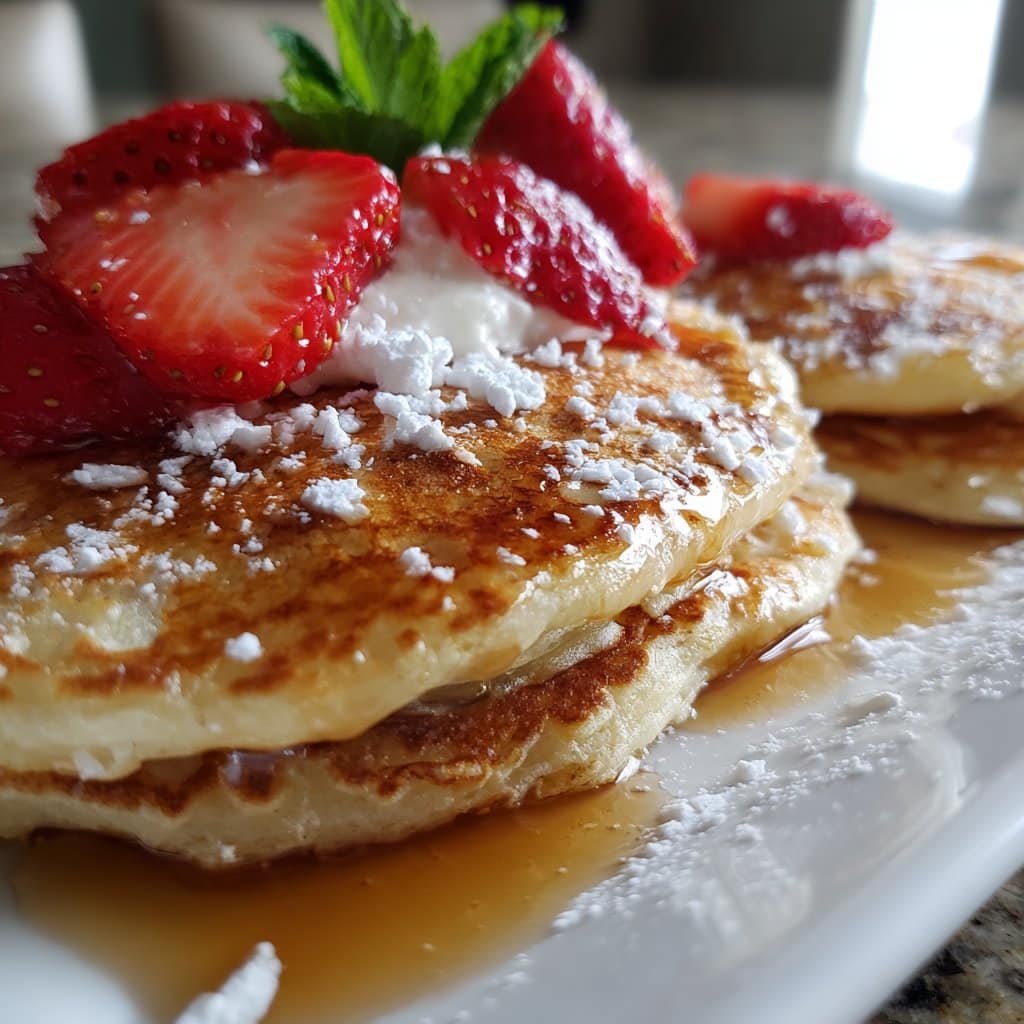
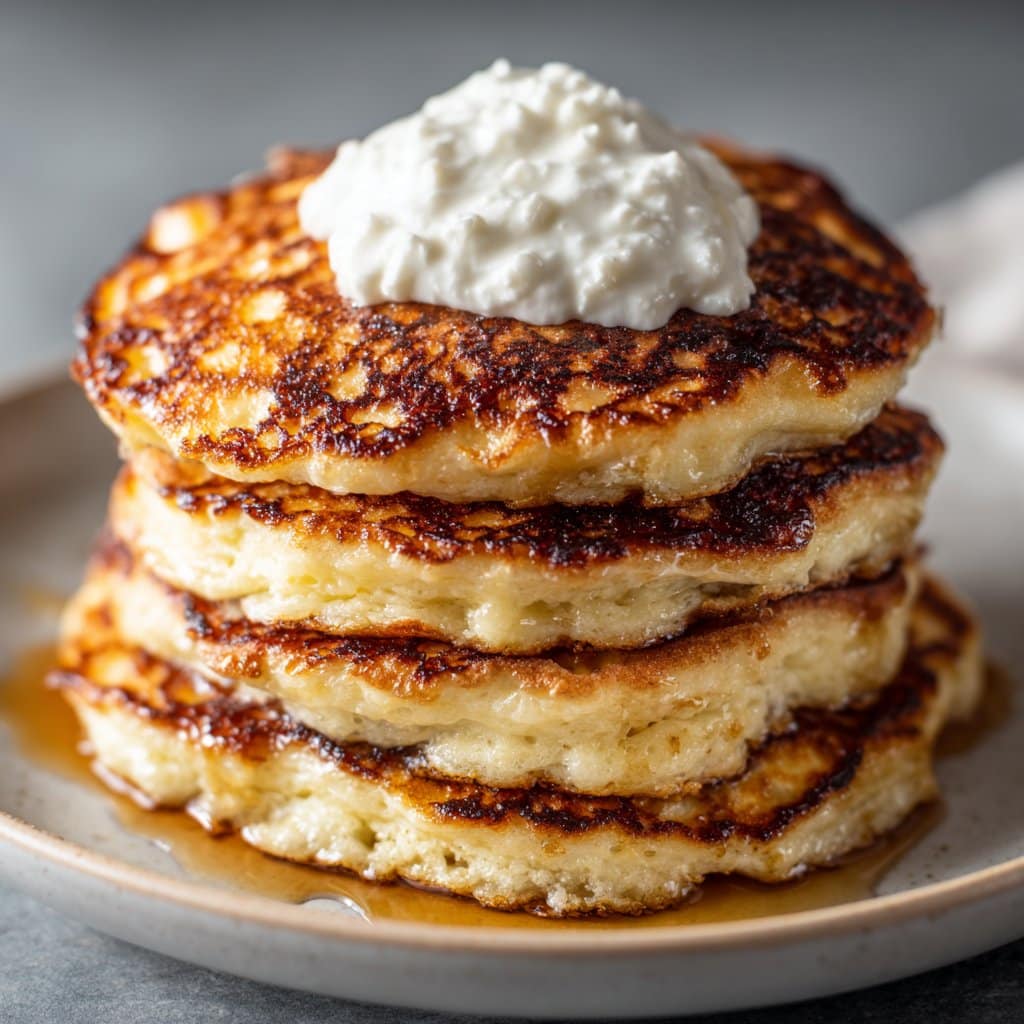
I’m a big fan of a bit of maple syrup and a blob of Greek yogurt on top. Sometimes, if I’m feeling frisky, I’ll throw on fresh fruit (berries are best). My kids love them with a splodge of peanut butter (don’t ask, it’s their thing). On Christmas morning, we even dust them with icing sugar and pretend we’re posh for a minute.
Lessons I’ve Learned (Often the Hard Way)
- I once tried rushing the cooking on high heat—big mistake. Burned outside, raw inside. Go steady, medium heat is your mate.
- Don’t overmix, or you’ll get tough pancakes. Light hand, like folding a letter, not kneading bread.
- And don’t skip the salt, definitely makes everything pop.
FAQ: Real Questions I’ve Actually Gotten
- Can you freeze these pancakes? Sure, just separate them with parchment so they don’t glue together. But I’ll be honest, I rarely have leftovers.
- Do you have to use full-fat cottage cheese? Nope, I’ve used low-fat and it works, but the full-fat is creamier (and, in my opinion, tastier).
- Is there a blender method? Oh, totally—toss everything in and blitz. Sometimes I do, sometimes I don’t. Slightly smoother pancakes, but I sort of miss the cottage cheese bits.
- What if my pancakes stick? Add more butter, drop the heat, and maybe treat yourself to a new spatula (mine always seem to disappear). Or check this Serious Eats pancake guide for extra tips.
- Can I make them savory? Actually, yes—skip the sugar, add some chives and a sprinkle of grated cheddar. Even toss in a pinch of smoked paprika if you’re feeling wild. Serve with a fried egg on top and you’ll thank me.
Well, I guess that about wraps it up—unless you want to chat about why I have three different kinds of maple syrup in my cupboard (it’s a long story). If you want even more pancake inspo, I’ve found some brilliant ideas over at King Arthur Baking. Or if you want a deep dive into cottage cheese’s weird history, Bon Appétit has a fun piece.
Happy flipping! If you make these, let me know how it goes—or if your dog ends up with flour all over, too.
Ingredients
- 1 cup cottage cheese
- 2 large eggs
- 1/2 cup all-purpose flour
- 1/4 cup milk
- 1 tablespoon sugar
- 1/2 teaspoon baking powder
- 1/4 teaspoon salt
- 1 teaspoon vanilla extract
- Butter or oil for cooking
Instructions
-
1In a large bowl, combine cottage cheese, eggs, milk, and vanilla extract. Mix until well blended.
-
2In a separate bowl, whisk together flour, sugar, baking powder, and salt.
-
3Add the dry ingredients to the wet ingredients and stir until just combined. Do not overmix.
-
4Heat a non-stick skillet or griddle over medium heat and lightly grease with butter or oil.
-
5Pour about 1/4 cup of batter for each pancake onto the skillet. Cook for 2-3 minutes until bubbles form on the surface, then flip and cook for another 1-2 minutes until golden brown.
-
6Serve warm with your favorite toppings such as fresh fruit, honey, or maple syrup.
Approximate Information for One Serving
Nutrition Disclaimers
Number of total servings shown is approximate. Actual number of servings will depend on your preferred portion sizes.
Nutritional values shown are general guidelines and reflect information for 1 serving using the ingredients listed, not including any optional ingredients. Actual macros may vary slightly depending on specific brands and types of ingredients used.
To determine the weight of one serving, prepare the recipe as instructed. Weigh the finished recipe, then divide the weight of the finished recipe (not including the weight of the container the food is in) by the desired number of servings. Result will be the weight of one serving.
Did you make this recipe?
Please consider Pinning it!!