The Herb-Crusted Prime Rib Roast has long been a centerpiece at holiday feasts and celebratory gatherings, revered for its robust flavor and tender, juicy texture. This timeless dish elevates any meal, offering a stunning visual appeal and an indulgently savory taste.
Originating from traditional English roast beef recipes, the prime rib roast has evolved over the years, with culinary experts perfecting techniques to ensure maximum flavor and succulence.
By creating a crust of fresh herbs, garlic, and spices on the exterior, the classic roast is transformed into an aromatic masterpiece that's crisp on the outside and beautifully tender within.
This comprehensive guide will walk you through everything you need to know to prepare, cook, and serve a flawless Herb-Crusted Prime Rib Roast. With easy-to-follow steps, expert tips, nutritional information, and beverage pairings, you will have all the knowledge to impress your guests.
If you're curious about the origins and methods of prime rib preparation, this in-depth article from Serious Eats provides a historic and technical overview. Get ready to make your next event unforgettable with the ultimate Herb-Crusted Prime Rib Roast.
Ingredients for Herb-Crusted Prime Rib Roast
- 1 (6-7 lb) bone-in prime rib roast (3 to 4 ribs)
- 2 tablespoons olive oil
- 4 cloves garlic, minced
- 2 tablespoons fresh rosemary, finely chopped
- 2 tablespoons fresh thyme, finely chopped
- 1 tablespoon fresh parsley, finely chopped
- 1 tablespoon kosher salt
- 1 tablespoon freshly ground black pepper
- 1 teaspoon onion powder
- 1 teaspoon Dijon mustard
- 1 teaspoon sea salt flakes for finishing (optional)
Instructions for Making Herb-Crusted Prime Rib Roast
- Remove the prime rib roast from the refrigerator at least one hour before roasting to bring it to room temperature. Preheat your oven to 475°F (246°C).
- Pat the roast dry with paper towels. Using a sharp knife, score the fat cap in a crosshatch pattern without cutting into the meat.
- In a small bowl, combine minced garlic, rosemary, thyme, parsley, kosher salt, black pepper, onion powder, Dijon mustard, and olive oil. Mix to form a thick paste.
- Rub the herb mixture evenly over the entire surface of the roast, pressing gently to adhere the crust.
- Place the prime rib roast, bone side down, on a rack in a large roasting pan. Insert a meat thermometer into the thickest part, avoiding bone.
- Roast in the preheated oven for 20 minutes. Reduce the oven temperature to 325°F (163°C) and continue roasting until the thermometer registers your desired doneness: 120°F (49°C) for rare, 130°F (54°C) for medium-rare, or 140°F (60°C) for medium.
- Estimate roughly 15 to 18 minutes per pound for medium-rare. Begin checking the internal temperature at the 60-minute mark to avoid overcooking.
- Once done, remove the roast from the oven and tent loosely with aluminum foil. Let rest for at least 30 minutes to allow juices to redistribute.
- Sprinkle with sea salt flakes if desired. Slice between the bones into thick steaks and serve immediately.
Nutritional Information
Understanding the nutritional profile of your Herb-Crusted Prime Rib Roast is important, especially for special occasions where indulgence meets mindful eating. A typical 6-ounce serving of prime rib roast provides approximately 450 to 500 calories, depending on the fat trim and proportion of meat to crust.
It contains about 36 grams of protein, making it a high-protein meal suitable for muscle maintenance and satiety. The fat content can range from 30 to 36 grams per serving, with both saturated and unsaturated fats present due to the marbling of the beef.
This dish is also rich in key micronutrients, including iron (essential for oxygen transport), zinc (important for immune function), selenium, and B vitamins such as B12 and niacin, which support energy metabolism.
However, given the high sodium and fat content, it’s best enjoyed in moderation, especially for those monitoring heart health.
For more detailed nutritional breakdowns specific to your cut and serving size, visit resources like the USDA’s FoodData Central at https://fdc.nal.usda.gov/. Remember to balance your meal with vegetable sides and whole grains to round out nutritional variety.
Wine/Beverage Pairings With Herb-Crusted Prime Rib Roast
The Herb-Crusted Prime Rib Roast pairs beautifully with a range of beverages. When selecting a wine, rich reds complement the bold flavors and fatty texture of prime rib.
A classic Cabernet Sauvignon, Bordeaux blend, or Malbec offers the tannic structure required to cut through the richness, while Syrah and Zinfandel provide peppery, fruity notes that harmonize with the herbaceous crust.
If you prefer beer, robust options such as a nutty brown ale, porter, or a slightly bitter stout work well, balancing the savory and herbal elements. For a non-alcoholic pairing, try a tart cherry or cranberry shrub over sparkling water; their acidity refreshes the palate after each bite.
If you enjoy cocktails, a whiskey-based Old Fashioned with a twist of orange will highlight the herb crust’s complexity. Serve beverages slightly chilled — red wines at cellar temperature (about 60°F/16°C) and beers well-cooled — for the ultimate dining experience.
Cooking Tips and Variations
Achieving a perfect Herb-Crusted Prime Rib Roast requires both preparation and a few professional tips. First, always let your meat come to room temperature before roasting, as this ensures even cooking and maximizes tenderness.
When seasoning, don’t skimp on the salt and fresh herbs — a generous crust will protect and flavor the meat during roasting. For a more robust flavor, consider refrigerating the seasoned roast uncovered for several hours, or even overnight, to allow the salt and herbs to penetrate the meat deeply.
If you prefer a less fatty roast, ask your butcher to trim the fat cap to about a quarter-inch thick. For even cooking, a good digital meat thermometer is essential. Insert it into the thickest part of the roast, steering clear of bone for an accurate reading.
Letting the roast rest after cooking is crucial; this step prevents precious juices from escaping when slicing. For those interested in creative variations, feel free to replace rosemary and thyme with other fresh herbs like tarragon or sage.
You can also add crushed peppercorns or a hint of horseradish to the herb crust for extra zing. For a reverse-sear technique instead of the conventional high-heat start, check out methods on culinary sites like Epicurious (https://www.epicurious.com/). This approach can yield an even more tender and flavorful roast.
Serving Suggestions
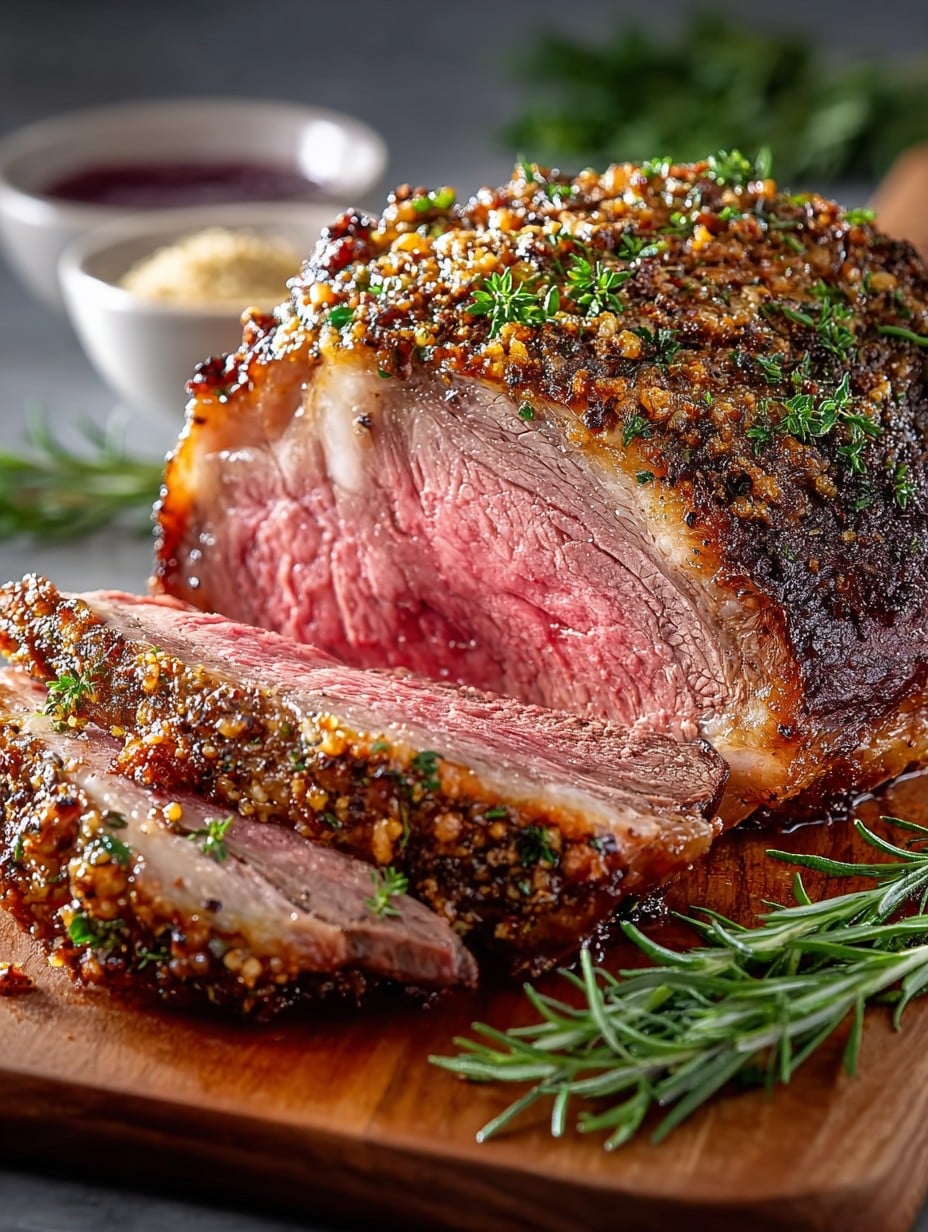
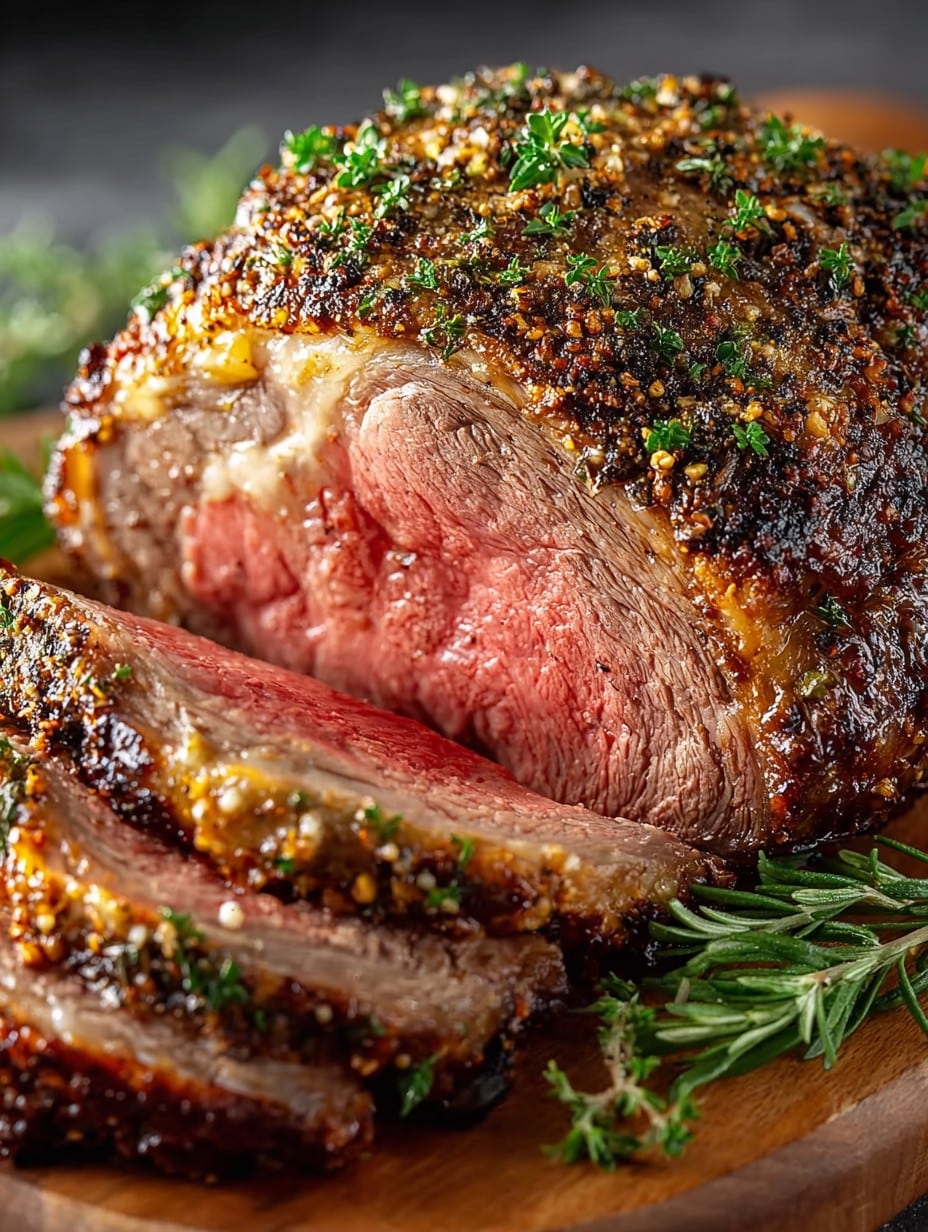
Serving Herb-Crusted Prime Rib Roast is an occasion in itself. For a memorable presentation, slice the roast tableside into generous steaks, letting guests appreciate the beautiful mosaic of pink-centered meat and crusty, aromatic exterior.
Arrange slices on a pre-warmed platter and garnish with sprigs of rosemary or thyme for a touch of greenery. Accompany your roast with classic sides such as creamy horseradish sauce, au jus, or a red wine reduction for moisture and added flavor.
Roasted root vegetables like carrots, parsnips, and baby potatoes make excellent partners, while sautéed green beans or Brussels sprouts bring freshness and color. Consider serving with a buttery mashed potato or a gratin for a traditional, comforting element.
For a lighter touch, a crisp green salad with vinaigrette helps balance the richness of the beef. When serving for a buffet or larger group, carve the roast into slices ahead of time and keep warm under foil.
Encourage guests to enjoy each bite with a sip of their paired beverage to fully savor the range of flavors. Whether for a holiday, birthday, or festive gathering, presenting your Herb-Crusted Prime Rib Roast with thoughtful garnishes and complementary sides will transform an ordinary meal into an extraordinary culinary celebration.
Herb-Crusted Prime Rib Roast Health Benefits
While Herb-Crusted Prime Rib Roast is a dish best reserved for special occasions, it can fit into a balanced and health-conscious diet when enjoyed in moderation. The prime rib roast delivers significant protein, which is vital for muscle repair and maintaining lean body mass.
The fresh herbs in the crust provide antioxidants, vitamins, and minerals; rosemary and thyme, for example, are known for their anti-inflammatory properties and may aid digestion. Prime rib is an excellent source of iron, supporting the body’s oxygen-carrying capacity, and contains zinc, which bolsters immune health.
As with many red meat dishes, moderation is advisable due to the saturated fat and cholesterol content. Opt for leaner servings by trimming external fat and choosing smaller portion sizes. Pair the roast with high-fiber vegetable sides to promote satiety and aid cardiovascular health.
If sodium is a concern, consider reducing the added salt in the recipe. For more on red meat and health, the Mayo Clinic offers a detailed overview: https://www.mayoclinic.org/healthy-lifestyle/nutrition-and-healthy-eating/expert-answers/red-meat/faq-20058467. Enjoyed thoughtfully, Herb-Crusted Prime Rib Roast can be part of a sumptuous yet health-aware meal.
FAQs About Herb-Crusted Prime Rib Roast
How far in advance can I season my Herb-Crusted Prime Rib Roast?
For optimal flavor, season your prime rib roast with the herb mixture up to 24 hours in advance. Seal it in plastic wrap and refrigerate; this allows the seasoning to permeate the meat. Remove and let it come to room temperature before roasting.
What is the best way to ensure my prime rib is cooked evenly?
Let the roast come fully to room temperature before cooking, use a reliable digital meat thermometer, and allow for proper resting after roasting. Consider rotating the roasting pan halfway through for even browning.
Can I use dried herbs instead of fresh for the crust?
Yes, dried herbs can be substituted, but use them sparingly, as they are more concentrated than fresh ones. Start with half the amount called for in the recipe.
What is the ideal doneness for prime rib roast?
Medium-rare (130°F/54°C before resting) is the most popular doneness, ensuring a pink, tender, and juicy interior. Adjust cook time based on guest preferences.
How should I store leftovers of my Herb-Crusted Prime Rib Roast?
Wrap leftovers tightly in foil and refrigerate for up to 4 days. For best results, reheat slices gently in the oven or a covered skillet with a splash of beef broth to prevent drying out.
Herb-Crusted Prime Rib Roast stands as the ultimate showstopper for festive feasts and special gatherings. Its blend of succulent beef and fragrant herb crust brings together the best of tradition and culinary innovation. With this comprehensive guide, you are equipped to master each step, from choosing the right cut and perfecting the herb blend to carving and serving with style. The included tips, pairings, and health notes ensure a balanced, flavorful meal that appeals to any crowd. Make your next celebration unforgettable with this Herb-Crusted Prime Rib Roast — a dish certain to inspire memories and satisfy every guest.
Ingredients
- 1 (5 to 6-pound) bone-in prime rib roast
- 3 tablespoons olive oil
- 4 cloves garlic, minced
- 2 tablespoons fresh rosemary, finely chopped
- 2 tablespoons fresh thyme, finely chopped
- 1 tablespoon kosher salt
- 1 teaspoon freshly ground black pepper
- 1 tablespoon Dijon mustard
Instructions
-
1Preheat your oven to 450°F (230°C). Let the prime rib roast sit at room temperature for 1 hour.
-
2In a small bowl, combine olive oil, minced garlic, rosemary, thyme, kosher salt, black pepper, and Dijon mustard to make a paste.
-
3Pat the roast dry with paper towels. Rub the herb paste all over the roast, pressing it to adhere.
-
4Place the roast, bone-side down, on a rack in a roasting pan. Insert a meat thermometer into the thickest part of the roast.
-
5Roast for 20 minutes, then reduce oven temperature to 325°F (165°C) and continue roasting for 1.5 to 2 hours, or until the internal temperature reaches 130°F (54°C) for medium rare.
-
6Transfer the roast to a cutting board, tent loosely with foil, and let rest for 20 minutes before slicing and serving.
Approximate Information for One Serving
Nutrition Disclaimers
Number of total servings shown is approximate. Actual number of servings will depend on your preferred portion sizes.
Nutritional values shown are general guidelines and reflect information for 1 serving using the ingredients listed, not including any optional ingredients. Actual macros may vary slightly depending on specific brands and types of ingredients used.
To determine the weight of one serving, prepare the recipe as instructed. Weigh the finished recipe, then divide the weight of the finished recipe (not including the weight of the container the food is in) by the desired number of servings. Result will be the weight of one serving.
Did you make this recipe?
Please consider Pinning it!!