Let’s Talk About How This Slow Cooker Korean BBQ Chicken Became a Habit
You know those recipes you kind of stumble on by accident, then suddenly they’re your weeknight hero? That’s this Slow Cooker Korean BBQ Chicken for me. I first made it because I had a pack of chicken thighs and about four hours of not wanting to stand at the stove. I swear, the first time I pulled off the lid and that smell hit—well, if that doesn’t make your day, I don’t know what will. Oh, and if your kitchen looks like mine by the time you’re done (spices everywhere, sticky sauce splatters), just own it. I do!
Why You’ll Probably End Up Loving This Too
I make this when I’ve got a lazy Sunday (or, actually, even when I’m not lazy—just hungry and need to eat while binge-watching). My family goes a little bonkers for this because it’s crazy juicy and the sweet-spicy-smoky thing is basically flavor fireworks. Plus, you dump everything in, forget about it for a while, and boom—dinner’s handled. Not that it always goes perfectly; I once forgot to turn the slow cooker on. Rookie mistake. Still, even after sitting raw for an hour, it came out fine when I remembered. Honestly, it’s hard to mess this one up.
Here’s What You’ll Need (and What I Sometimes Sub In)
- 2 pounds boneless, skinless chicken thighs (sometimes I use breasts if that’s what’s in the fridge—thighs are juicier though)
- 1/2 cup soy sauce (my grandmother insists on Kikkoman, but honestly, any regular soy sauce is fine)
- 1/3 cup brown sugar (I’ve swapped in honey when I ran out and it kinda worked, just less sticky)
- 2 tablespoons gochujang (Korean chili paste—sriracha in a pinch, but it’s not really the same vibe)
- 1 tablespoon rice vinegar (white vinegar works if that’s all you’ve got, but go easy on it)
- 1 tablespoon sesame oil
- 4 garlic cloves, minced (honestly, sometimes I just go heavy with the garlic powder if I’m feeling lazy)
- 1 teaspoon ginger, grated (powdered ginger is totally acceptable, about a half teaspoon)
- 1 teaspoon onion powder
- Optional: a handful of chopped scallions, sesame seeds for garnish
How I Get This Going (Plus Little Things I Always Do)
- Toss all your chicken into the slow cooker. Try not to just dump it in a giant heap; I sort of spread them out so the sauce gets everywhere.
- Mix the soy sauce, brown sugar, gochujang, vinegar, sesame oil, garlic, ginger, and onion powder in a bowl. This is where I usually sneak a taste and tweak. Sometimes it needs more sugar, sometimes more heat—play with it.
- Pour the sauce over the chicken. Give it a little nudge with a spoon so everything’s coated. Don’t worry if it looks a bit… gloopy? It works out in the end, I promise.
- Pop the lid on, set your slow cooker to low for 4-5 hours. High is fine for 2 to 2.5 hours, but I think the low-and-slow method makes it more tender.
- When it’s basically falling apart, shred the chicken right in the pot with two forks. (Careful, it’s hot. I speak from experience—burnt fingers are no joke.)
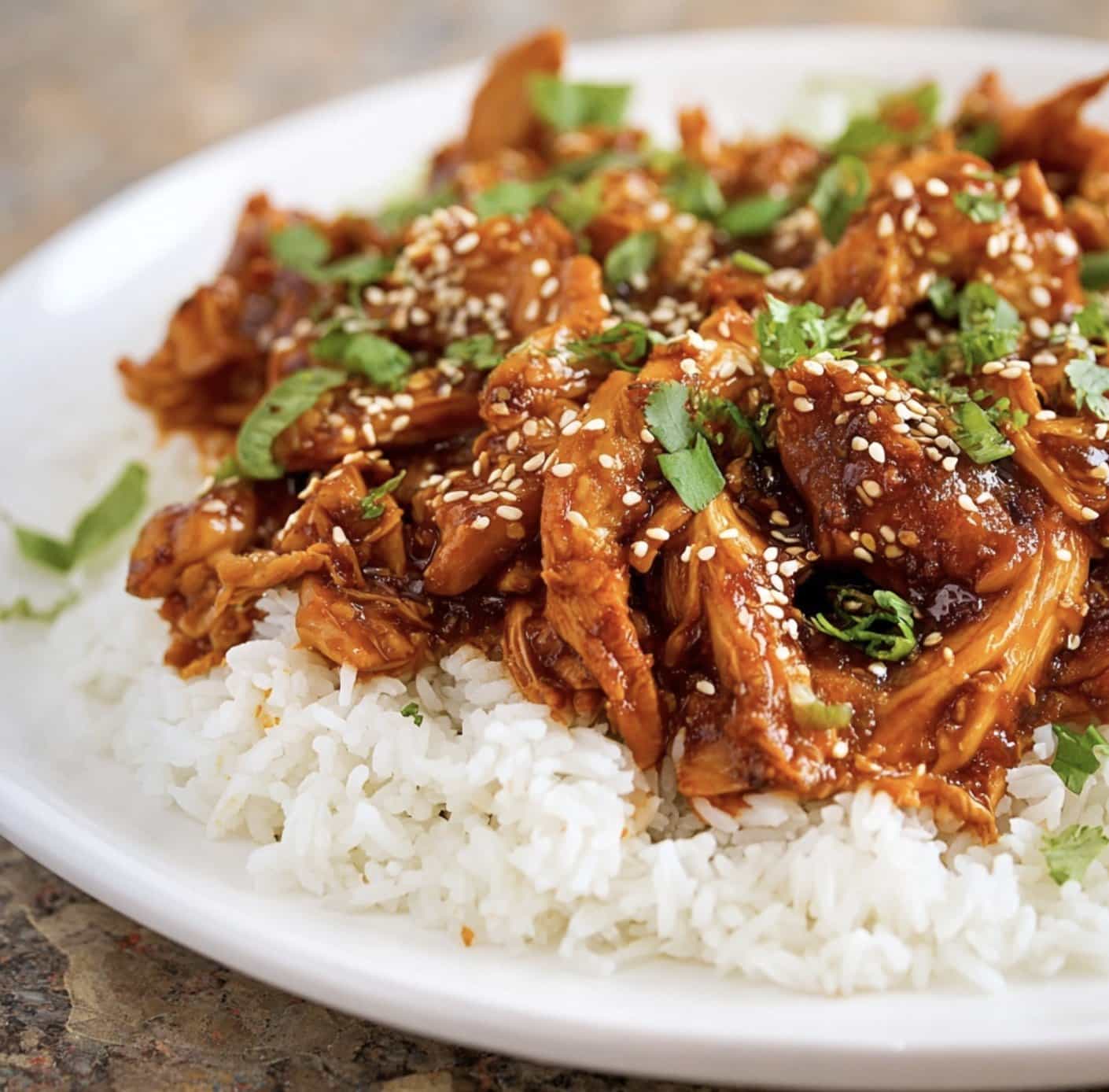
- Let it hang out in the sauce for about 10-15 minutes after shredding. It soaks up so much flavor. Then top with scallions and sesame seeds if you’re feeling fancy.
Stuff I’ve Learned the Hard Way (aka Notes)
- If you’re using chicken breasts, keep an eye out—they dry out quicker. Thighs forgive almost everything you throw at them.
- Once I tried to skip the ginger. Didn’t love the result, but maybe that’s just me. If you hate ginger, maybe just add a splash of lime juice for zing?
- Honestly, this is one of those dishes that tastes even better the next day. Something about the flavors chilling together overnight, I guess.
Variations I’ve Actually Tried (Some Better Than Others…)
- Once tossed in a bag of frozen broccoli about an hour before the end. It worked! Sorta. A little mushy, but not bad.
- Swapped brown sugar for maple syrup. On second thought, I’d skip that next time… it got a little weirdly sweet.
- Used turkey breast instead of chicken. It was a bit dry, but if that’s your jam, go for it.
Do You Really Need Fancy Equipment?
Look, a slow cooker is definitely the move here, but I’ve actually made this in a big Dutch oven on the lowest stovetop setting. Just keep checking the liquid! And if you don’t have a proper slow cooker, I’ve read you can use an Instant Pot on slow-cook mode, but honestly, I haven’t tried that so can’t really vouch for it.
How I (Try to) Store Leftovers
Store any leftovers in an airtight container in the fridge, up to 3 days. Though, honestly, in my house it never lasts more than a day! If you do end up with extra, it’s killer in a sandwich or tossed with some quick-fried rice. Freezing works too—just defrost overnight and reheat gently. Not rocket science.
How We Serve It—And My Personal Favorite
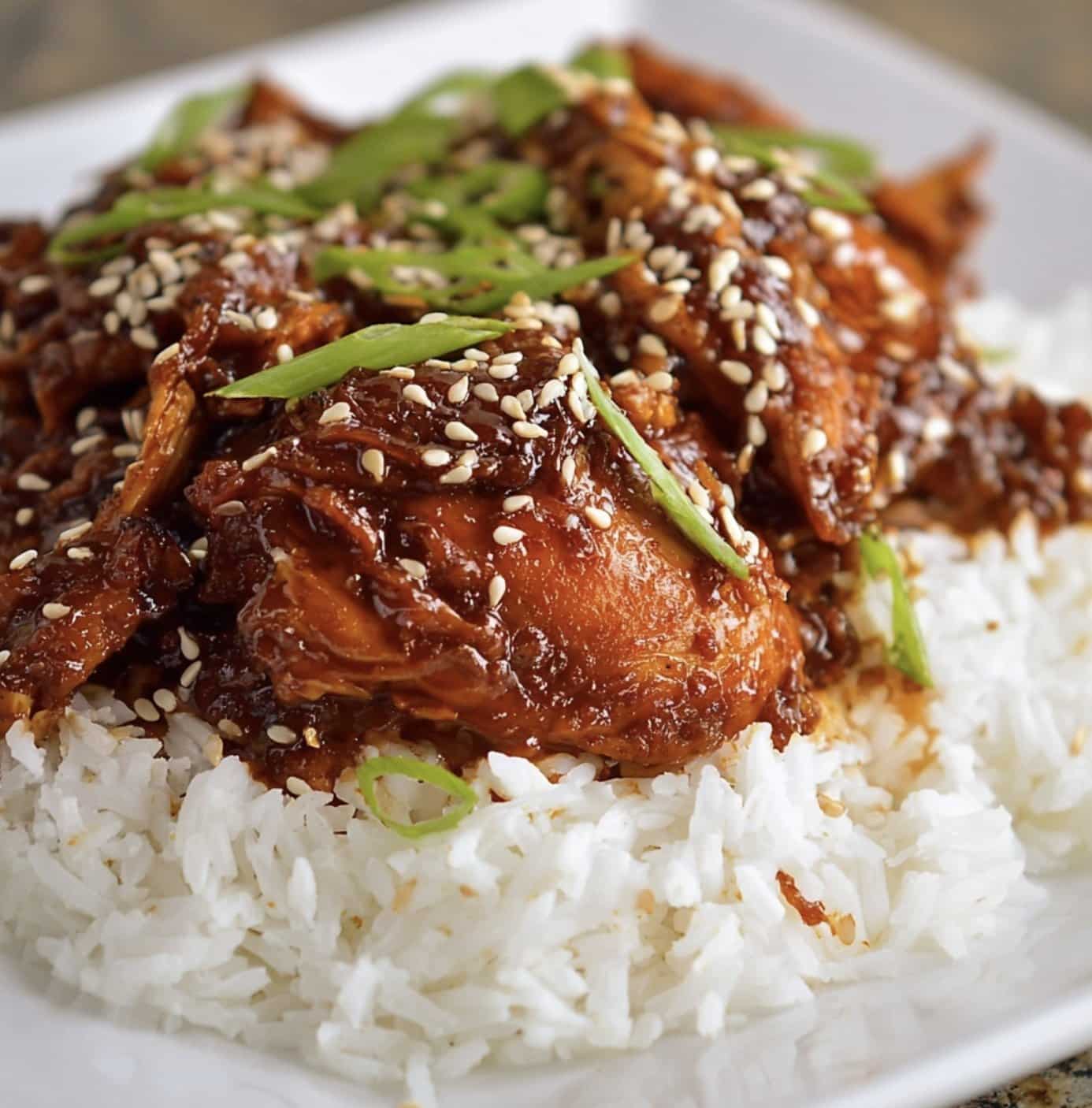
We usually pile this chicken over jasmine rice, then spoon on extra sauce. Sometimes I get a little wild and wrap it in lettuce leaves with rice and cucumber slices, almost like a Korean ssam. My cousin swears by putting it on toasted buns with a slaw (I tried it, not bad at all). You could even do tacos—I’ve seen that on Bon Appetit, actually.
Tips I Wish I’d Known My First Go-Around
- Never rush the shredding step. I once tried to pull the chicken apart too soon—it just kind of crumbled instead of being all juicy and stringy.
- Resist the urge to over-sauce at the beginning. The chicken makes its own juices while cooking, so your sauce will double. Trust the process!
- And yeah, clean-up is much easier if you use one of those slow cooker liners (I didn’t believe the hype til I tried it).
Some Questions I’ve Actually Gotten (and My Honest Answers)
- Can I make this with pork? Yup! Pork shoulder works and might even be better for sandwiches. It just needs a tad more time.
- Is it super spicy? Mmm, not really. Gochujang is more savory-sweet than fiery. But if you’re spice-shy, cut it down and add more brown sugar, or a little ketchup. For more on gochujang, I dig this explanation from Serious Eats.
- Can I prep this ahead? Oh yes. Sometimes I mix the sauce the night before, dump it over the chicken in the morning, and just hit “go.” Easy as pie.
- Does it work for a crowd? Absolutely. Just double up everything (be sure your slow cooker is big enough, though), and give it a little extra time. Or, make two batches if you, like me, have a slow cooker that’s about as big as a shoebox.
- What if I can’t find gochujang? Sriracha will sort of work, but you’ll miss some of the authentic flavor. I’ve ordered it online before; Asian markets are best if you’ve got one nearby.
Anyway, that’s my Slow Cooker Korean BBQ Chicken saga—complete with all the stumbles and shortcuts. If you try it, let me know how it goes (and seriously, if you find a way to make leftovers last more than a day, I’m all ears). Happy cooking!
Ingredients
- 2 lbs boneless, skinless chicken thighs
- 1/2 cup Korean BBQ sauce (bulgogi or gochujang-based)
- 1/4 cup low-sodium soy sauce
- 2 tablespoons brown sugar
- 1 tablespoon rice vinegar
- 1 tablespoon sesame oil
- 4 cloves garlic, minced
- 1 tablespoon fresh ginger, grated
- 1/2 teaspoon crushed red pepper flakes
- 2 green onions, sliced (for garnish)
- 1 tablespoon sesame seeds (for garnish)
Instructions
-
1Place the chicken thighs in the bottom of the slow cooker.
-
2In a medium bowl, whisk together Korean BBQ sauce, soy sauce, brown sugar, rice vinegar, sesame oil, garlic, ginger, and crushed red pepper flakes.
-
3Pour the sauce mixture over the chicken, ensuring all pieces are well coated.
-
4Cover and cook on low for 6 hours, or until the chicken is tender and easily shredded.
-
5Shred the chicken in the slow cooker and stir to combine with the sauce.
-
6Serve hot, garnished with sliced green onions and sesame seeds.
Approximate Information for One Serving
Nutrition Disclaimers
Number of total servings shown is approximate. Actual number of servings will depend on your preferred portion sizes.
Nutritional values shown are general guidelines and reflect information for 1 serving using the ingredients listed, not including any optional ingredients. Actual macros may vary slightly depending on specific brands and types of ingredients used.
To determine the weight of one serving, prepare the recipe as instructed. Weigh the finished recipe, then divide the weight of the finished recipe (not including the weight of the container the food is in) by the desired number of servings. Result will be the weight of one serving.
Did you make this recipe?
Please consider Pinning it!!