Let Me Tell You About This Cake Roll (And My Kitchen Disasters)
I’ll be honest — cake rolls used to scare the socks off me. The first time I tried making one, the whole thing looked about as elegant as a squashed burrito (my brother still brings it up at family dinners, sigh). But after a few laughable attempts, and the occasional accidental cake-for-breakfast scenario, I finally figured out a method that works more or less every time, and actually tastes awesome. Plus, there’s something so cheerful about the swirl, isn’t there? It makes me think of old school birthday parties and my nan’s kitchen, with that radio humming away in the background. Anyway, if you’ve ever thought, “I can’t do a cake roll,” I promise you — you absolutely can. Even if you get distracted and accidentally spill half the sugar on the counter. (Not that I’ve ever done that…)
Why I Keep Coming Back to This Recipe
I make this soft and fluffy cake roll every time my cousin visits — she’s basically obsessed (she’ll eat three slices before I’ve even finished cleaning up). My family goes crazy for this because it’s light but still feels like a treat, and honestly, it’s forgiving. Like, I once forgot the vanilla extract and it was still devoured in minutes. Plus, when I’m feeling a bit fancy, I’ll slather on some homemade jam instead of the usual whipped cream — it’s one of those recipes you can jazz up or down without much fuss. Oh, and if you’re not a fan of cleaning up a pile of mixing bowls, well, you’re in good company. Sometimes I try to use just one bowl, even if it means things get a little rustic. (Messy kitchen, happy baker, right?)
Gathering Your Ingredients (With My Favorite Shortcuts)
- 4 large eggs (room temp is best, but I’ve used cold ones in a pinch — just takes a bit more elbow grease)
- 100g (about 1/2 cup) granulated sugar (sometimes I swap in light brown sugar for a bit of caramel-y flavor, especially if that’s what’s lurking in the pantry)
- 1 tsp vanilla extract (honestly, any brand works — my grandmother swore by Nielsen-Massey, but I just grab whatever’s on sale)
- 90g (about 3/4 cup) cake flour (plain flour works if you sift it a couple times, but cake flour does make it lighter, promise)
- 1/2 tsp baking powder (but don’t stress if you’re out — I’ve skipped it and still gotten a decent rise)
- 1/4 tsp salt (I sometimes just use a pinch and call it good)
- 2 tbsp oil (sunflower or canola is what I use — olive oil tastes a bit odd here, but hey, you do you)
- 2 tbsp milk (whole milk is lovely, but I’ve used oat milk and nobody noticed)
- For filling: 1 cup whipped cream or jam (store-bought or whatever’s homemade; lemon curd is a cheeky favorite)
- Powdered sugar for dusting (not strictly necessary, but it hides any cracks — shh, it’s our secret)
How I (Usually) Make My Cake Roll
- Preheat your oven to 180C (350F). Line a 10×15 inch jelly roll pan with parchment paper. Or, if you can’t find your pan (guilty), use your biggest rimmed baking sheet — just don’t overfill it!
- Separate the eggs. Whites in one bowl, yolks in another (I always get a bit of shell in there, but honestly, who doesn’t?)
- Whip egg whites with a pinch of salt until they’re frothy, then gradually add half the sugar. Keep whipping till you get glossy, soft peaks — this is where I usually sneak a tiny taste, just for science.
- In the yolk bowl, beat the yolks with the rest of the sugar till they’re pale and creamy. Add the vanilla, oil, and milk. Give it a good whisk (or a strong stir with a fork if your mixer dies mid-bake, which has happened more than once).
- Fold in flour and baking powder gently — don’t overmix, or you’ll knock all the air out (I learned this the hard way; ended up with a pancake-rolled cake, which was… interesting).
- Gently fold in the egg whites, a bit at a time, with a soft spatula. Take your time here — actually, I find it works better if you go slow, even if you’re impatient like me.
- Pour batter into your lined pan, spread it out evenly. Give the tray a little wiggle to smooth the top. Bake for about 12–15 minutes, or until the top springs back when you poke it gently. Don’t wander off — it goes from just right to overbaked before you can say “where’s my oven mitt?”
- While it’s still warm, dust a clean tea towel with powdered sugar and flip the cake onto it (parchment side up). Carefully peel off the paper. Roll the cake up, with the towel inside, starting from the short end. This bit always stresses me out, but if it cracks, just pretend it’s rustic.
- Let it cool completely rolled up (this helps it remember its shape — I wish it worked on me!).
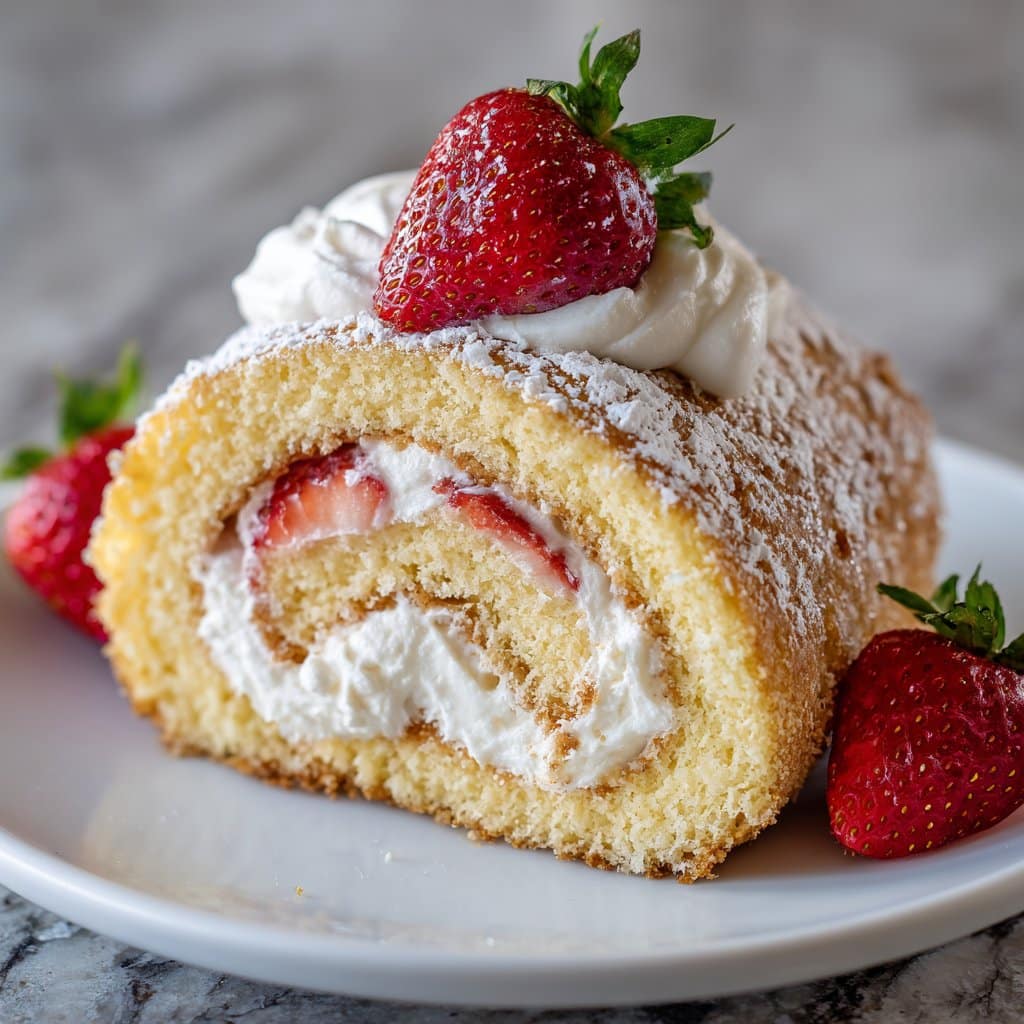
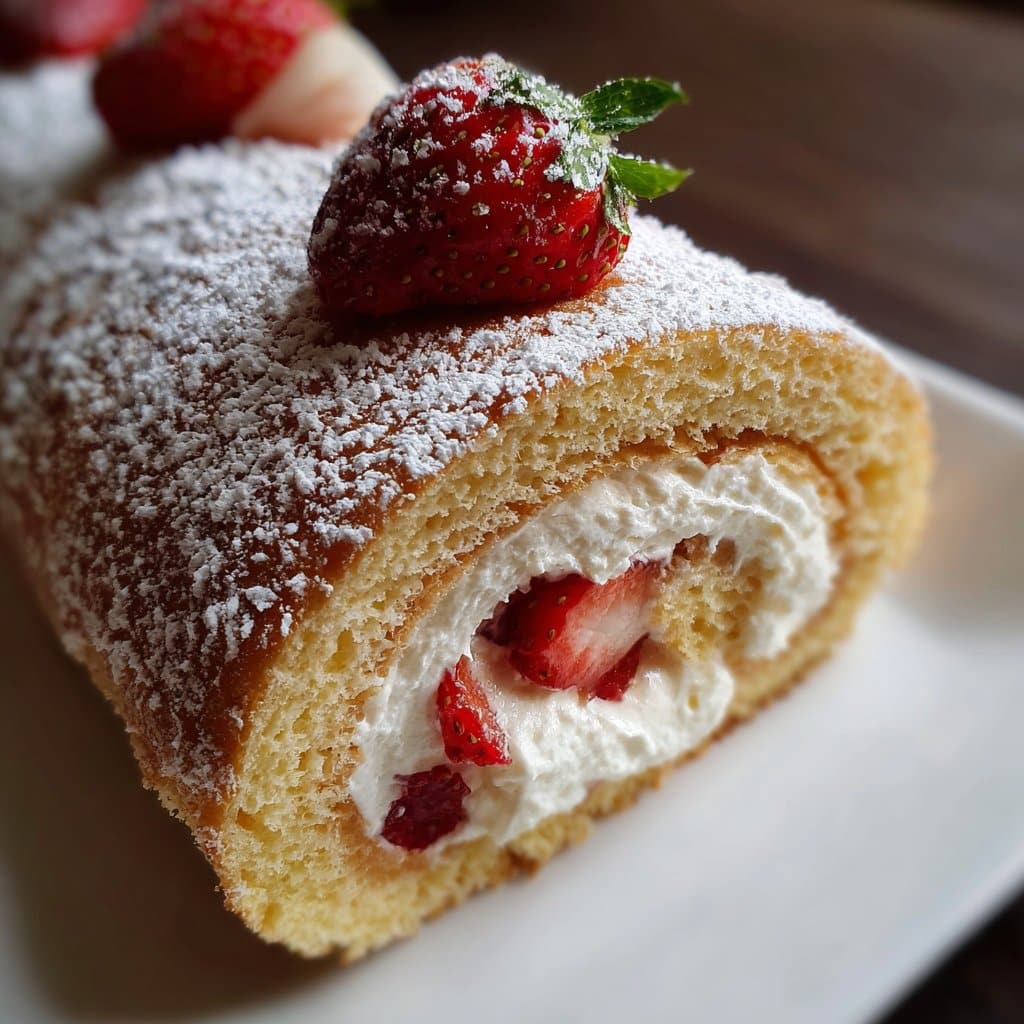
- Unroll, spread your filling, roll it back up (a little tighter this time), dust with more powdered sugar, and voila! Soft and fluffy cake roll, ready to slice.
Things I’ve Learned (Sometimes the Hard Way)
- Don’t skip the tea towel step — I tried just using parchment and the whole thing stuck. Not my finest hour.
- Overbaking = dry cake that cracks like the desert. Set a timer, and actually listen to it.
- If your cake cracks, just cover it with whipped cream and berries. Distraction is an art.
- I think this tastes better the next day, if you can resist, but it’s honestly delicious straight away too.
Ways I’ve Mixed It Up (Some More Successfully Than Others)
- Lemon zest in the batter is lovely for spring — but once I tried orange extract and it was… odd. Maybe stick to zest.
- Chocolate cake roll? Add 2 tbsp cocoa powder and sub out 2 tbsp flour. Works a treat, but don’t overdo the cocoa or it gets bitter (learned that from a midnight snack experiment).
- Fruit jam swirl — sometimes I’ll spread on raspberry jam, or even apple butter in autumn. My uncle prefers Nutella, but then again, he puts it on everything.
What If I Don’t Have the Right Equipment?
Technically, a jelly roll pan is the classic tool for this. But I’ve used a standard baking sheet lined with parchment in a pinch — just watch the baking time, as it might be thinner. And if you don’t have a hand mixer, a good old balloon whisk and some muscle will do. I mean, you might break a sweat, but that’s basically exercise, right?
How Do I Store This (If You Actually Have Leftovers)?
Wrap leftovers tightly in cling film and pop in the fridge; it’ll stay fresh for 2–3 days. Though honestly, in my house it never lasts more than a day — someone always nabs the last piece for breakfast. If you want to freeze it, I’ve done that too: just wrap it well and thaw in the fridge before eating. (If you can wait that long.)
Serving Up — My Favorite Ways
At my place, we slice it thick, pile on extra whipped cream, and sometimes scatter fresh strawberries on top (especially if it’s strawberry season and we’ve picked them ourselves — talk about smug). If you’re feeling extra, a drizzle of melted chocolate or a scoop of ice cream on the side is never a bad idea. My aunt always insists on serving it with tea, but I’m more of a coffee-with-cake person, personally.
Pro Tips (Learned the Hard Way, Naturally)
- I once tried rushing the cooling step and ended up with a sad, sagging cake roll (patience, my friend — just wait).
- Don’t skip sifting the flour if you want it super fluffy. Once, I skipped it and the cake was dense enough to use as a doorstop. Not my proudest bake.
- Actually, I find it works better if you don’t overfill with cream; I know it’s tempting, but you’ll end up with a slippery mess (tasty, but messy!)
FAQ — The Real Questions People Ask Me
- Why did my cake roll crack? Happens to all of us! Usually it’s baked a smidge too long, or it cooled too much before rolling. I just cover mine with extra cream and act like I meant to do it.
- Can I make it gluten-free? Yes, though honestly I find it a bit more fragile. Use a good 1-to-1 GF flour (like this one from Bob’s Red Mill).
- Can I flavor the whipped cream? Absolutely! I sometimes add a spoonful of lemon curd or even a dash of almond extract (though my kids think that tastes like marzipan — you’ve been warned).
- What’s the best way to roll it up? I roll while it’s warm, using the tea towel trick — but if you mess up, just reroll, no big deal. Here’s a nifty video that helped me: Sally’s Baking Addiction’s cake roll guide.
- Do I need to use cake flour? Nah — plain flour, sifted a couple times, works in a pinch. But cake flour does give it that cloud-like texture. Your call!
So, there you go — my soft and fluffy cake roll, with all its quirks, kitchen goofs, and family-favorite variations. If you try it, let me know how it turns out (especially if you invent your own wild filling — I’m still trying to pull off a coconut-lime swirl without it leaking everywhere). Happy baking — and don’t worry if your first one’s a bit wonky. It’ll taste great anyway!
Ingredients
- 4 large eggs, separated
- 100 g granulated sugar (1/2 cup)
- 80 g cake flour (2/3 cup), sifted
- 30 ml milk (2 tbsp)
- 30 ml vegetable oil (2 tbsp)
- 1 tsp vanilla extract
- 1/4 tsp salt
- Powdered sugar, for dusting
- 150 ml whipped cream or jam, for filling
Instructions
-
1Preheat the oven to 180°C (350°F). Line a 10×15 inch baking tray with parchment paper.
-
2In a clean bowl, beat egg whites with salt until foamy. Gradually add half of the sugar and beat until stiff peaks form.
-
3In another bowl, whisk egg yolks with the remaining sugar until pale and thick. Add milk, oil, and vanilla extract, mixing well.
-
4Gently fold the sifted cake flour into the yolk mixture. Carefully fold in the beaten egg whites in three additions until just combined.
-
5Pour the batter into the prepared tray and spread evenly. Bake for 12-15 minutes or until the cake springs back when touched.
-
6Remove from oven and let cool for 5 minutes. Invert onto a clean towel dusted with powdered sugar. Peel off parchment, spread with whipped cream or jam, and gently roll up. Slice and serve.
Approximate Information for One Serving
Nutrition Disclaimers
Number of total servings shown is approximate. Actual number of servings will depend on your preferred portion sizes.
Nutritional values shown are general guidelines and reflect information for 1 serving using the ingredients listed, not including any optional ingredients. Actual macros may vary slightly depending on specific brands and types of ingredients used.
To determine the weight of one serving, prepare the recipe as instructed. Weigh the finished recipe, then divide the weight of the finished recipe (not including the weight of the container the food is in) by the desired number of servings. Result will be the weight of one serving.
Did you make this recipe?
Please consider Pinning it!!