Just a Good Old Roast Chicken (with proper gravy!)
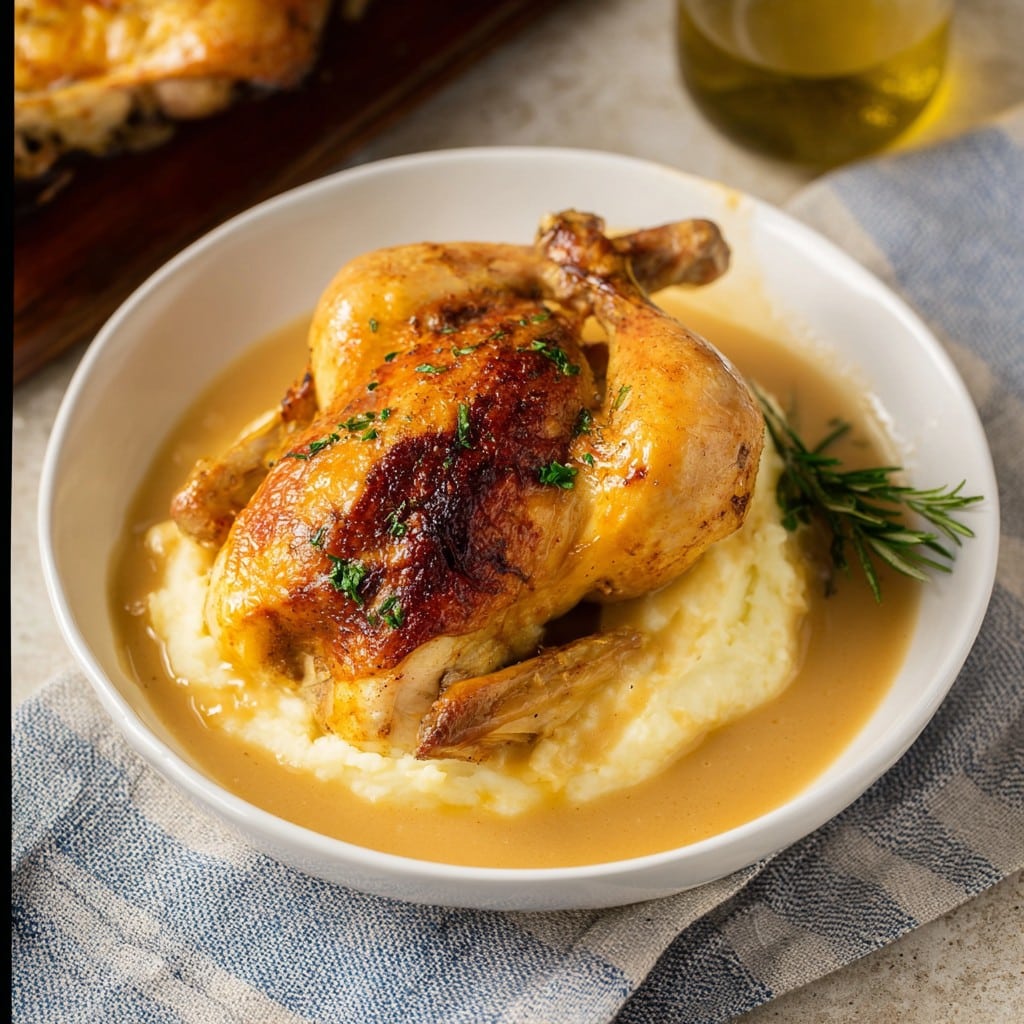
Right, let me set the scene: It’s pouring rain, my socks are soggy, and the only thing I can think about is that golden, crackly-skinned roast chicken I had at Nan’s one Sunday ages ago. She was a stickler for proper gravy – none of that packet business. Years later, after butchering countless birds (and once nearly setting off the smoke alarm, but that’s another tale), I think I’ve landed on what could be called my best roast chicken with homemade gravy. Don’t quote me on perfect outcomes, but the kitchen always smells like happiness (and garlic) when I make it. Plus, I finally stopped burning the bits—mostly.
Why You’ll Love This (According to My Family… and Me)
- I make this whenever I need cheering up (or when we’ve had the sort of day where the dog eats the post again).
- My family basically circles the oven from about the 50-minute mark. They know dinner’s coming and, honestly, it’s a bit like sharks at feeding time.
- The gravy! It’s the reason my kids eat extra potatoes. I used to struggle with lumpy gravy but after some trial and error (lots), I finally cracked it, and now I never skip this step.
- This recipe forgives late starts (popped a chicken in at 7? Dinner’s ready before you’re starving, usually. Unless you forget to turn on the oven. Ask me how I know…)
What You’ll Need (Plus My Usual Substitutes)
- 1 whole chicken (about 1.6kg/3.5lbs) — I go for free-range when it’s on sale, but store-brand does the trick in a pinch
- 2 onions, quartered — or one massive onion if you can only be bothered with one (sometimes I use shallots, they’re milder)
- 1 lemon, halved — or even a lime, once when I was desperate (interesting flavor, kind of nice!)
- 4 cloves garlic, smashed (no need to faff around peeling every last bit, in my view)
- 3-4 sprigs rosemary or thyme — I nick these from my neighbor’s plant (with permission, promise) but dried works too
- Butter or olive oil, enough for a good smear (soft butter with a pinch of salt is my usual choice)
- Salt (a big pinch), pepper (a few grinds), and a handful of whatever herbs you like — parsley, sage, whatever’s left in the fridge
- For the gravy:
- 2 tbsp plain (all-purpose) flour
- 500ml-ish (about 2 cups) chicken stock, but I just use a cube and hot water if stock’s run out (the good stuff makes a difference, though!)
- A splash of white wine — if you’ve got some open. If not, water does the job. (Sherry in a pinch is… a bit weird. Wouldn’t totally recommend it.)
How I Make Roast Chicken With Proper Gravy
- Preheat the oven to about 200°C (390°F). (Do yourself a favor and check it’s actually on. I once figured it out an hour in, chicken still flopping about raw. Eejit!)
- Prep the chicken. Pat it dry with some kitchen paper; honestly, it makes a crispier skin. Stuff the cavity with the lemon halves, garlic, and some herbs.
- Butter that bird. Rub butter (softened or melted, who cares) all over—including under the skin if you can wriggle it in there. Sprinkle on plenty of salt, pepper, and more herbs. It’ll look a bit wild, but trust the process.
- Arrange onions in a roasting pan (this stops stuff sticking) and pop the chicken breast-side up right on top. This is where I usually sneak a nibble of that buttery mess off my hands… no judgment?
- Roast. Into the oven it goes for roughly 1 hour 15 minutes. (General rule is 20 min per pound plus 15ish min at the end.) Sometimes I check after an hour—poke a knife between thigh and body, if juices run clear it’s done, if not give it another 10 min. And keep basting—just tilt the pan and spoon juices over every half hour or so. (Or not. I forget, sometimes. It’s still good.)
- Rest the chicken. Out it comes, onto a cutting board or dish—cover loosely with foil. Leave it at least 15 minutes, but longer is better, especially if you want juicy slices. I use this window to get the gravy sorted.
- Gravy time! Pour off most of the oil from your pan (leave the brown stuck bits and a spoonful or two of the fat). Stir flour right in. It’ll look questionable; just keep scraping it around over a medium hob until it turns golden. Then splash in your wine and stir, then add hot stock slowly, whisking so nothing goes lumpy. Bring to a simmer — scrape up those brown roasted oniony bits, they make it taste proper. Simmer a couple of minutes, salt/pepper to taste. If it’s too thick, add a splash more water. (Too thin? Let it bubble for half a minute longer.)
Stuff I Wish I’d Known (Notes From The Trenches)
- Actually, I find it works better if you don’t rush the resting. Impatience leads to dry chicken and regrets.
- If the gravy lumps, I just attack it with a whisk—that almost always sorts it.
- Birds can look awkwardly pale if you use only oil instead of butter, but the taste is still lovely.
- Sometimes the pan looks burnt after roasting—don’t worry, that’s where the flavor for gravy is hiding. Just scrape it up with a wooden spoon!
If You Want To Mix It Up (Some Eccentric Experiments)
- One time I added whole garlic heads (halved) under the chicken—ridiculously good, super mellow. Can recommend.
- I tried tossing in apples once. It sounded clever, tasted… off. Wouldn’t repeat (but maybe that’s just me!)
- Swap the herbs—sage, tarragon, even dill works for a fresher vibe. My cousin swears by smoked paprika on the rub. Not bad, to be fair.
- Rotisserie chicken method? Haven’t got the gear, but here’s a link if you’re keen to give it a go.
Don’t Have All The Kit?
You technically need a roasting pan—and I always say you need a meat thermometer, but you can totally get away with just poking the chicken, honestly. If you don’t have a whisk for the gravy, a fork and a bit of elbow grease do the job. (My friend used to make gravy in a frying pan, standing over it like a cauldron—looked silly, but hey, it worked.)
How To Store (But Seriously, Good Luck)
I usually stash leftovers (ha, what leftovers) in the fridge, sealed in a box. Lasts up to 3 days, but honestly—never makes it past one in my house. The gravy thickens as it sits, which I kinda like. If you want to freeze, pop just the meat in a freezer bag and make fresh gravy next time, or check BBC Good Food’s freezer advice (super handy, and yes, it’s legit!).
On The Table (My Favorite Way To Serve)
I plonk the chicken on a big old platter, pour the gravy into a battered jug, and pile up roasties and whatever veg I’ve managed. In winter we go a bit mad for Yorkshire puds on the side (not traditional, but nobody cares). Sometimes I’ll heat up a bit of crusty bread just for mopping up gravy… honestly, who needs manners anyway?
Listen Up: What I’ve Learned (Pro Tips From My Own Trips and Slips)
- I once tried skipping the resting step, and the juices ran everywhere instead of soaking in. Never again. Patience is a virtue, apparently.
- Don’t open the oven every 10 minutes “just to check”—all the heat escapes and then you’re eating at midnight.
- Basting makes the skin crispier. But missing one or two baste sessions? No big drama.
Questions Folks Actually Asked Me (FAQ Bits)
- Q: Can you put stuffing inside the chicken?
A: Sure, sometimes I do—if there’s time. But… chicken cooks a bit slower that way, so don’t forget to check for doneness. - Q: What if my gravy is too salty?
A: Oops! Try whisking in a splash of cream or more unsalted stock. Actually, once I just added a potato (weird, but it kind of helped). - Q: How do you get really crispy skin?
A: Fridge-dry your chicken for a bit before cooking (leave it unwrapped for 30 min)—makes a difference. And butter. More butter, better skin. - Q: Forgot to buy wine—problem?
A: Nope. Use water or a bit of apple cider vinegar mixed with stock. Sometimes I just skip it. Chicken’s still delicious. - Q: Can I roast two chickens at once?
A: Yeah, you can—just space them out so air circulates. Might need an extra 15 minutes. Not a bad way to meal-prep, actually.
Alright, I’ll stop now or I’ll start waxing lyrical about roast potatoes (wait, too late…). Hope your kitchen smells as good as mine after this one!
Ingredients
- 1 whole chicken (about 4 lbs)
- 2 tablespoons olive oil
- 1 tablespoon kosher salt
- 1 teaspoon black pepper
- 1 lemon, halved
- 4 garlic cloves, smashed
- 2 sprigs fresh rosemary
- 2 sprigs fresh thyme
- 1 cup low-sodium chicken broth
- 2 tablespoons all-purpose flour
- 2 tablespoons unsalted butter
Instructions
-
1Preheat the oven to 425°F (220°C). Remove the giblets from the chicken and pat the chicken dry with paper towels.
-
2Rub the chicken all over with olive oil, salt, and black pepper. Stuff the cavity with lemon halves, garlic cloves, rosemary, and thyme.
-
3Place the chicken breast-side up on a rack in a roasting pan. Tie the legs together with kitchen twine. Roast for 1 hour and 20-30 minutes, or until the skin is golden and a thermometer inserted into the thickest part of the thigh reads 165°F (74°C).
-
4Transfer the chicken to a carving board and let it rest for 15 minutes. Meanwhile, discard the herbs and garlic from the pan.
-
5Place the roasting pan on the stove over medium heat. Whisk in flour and cook for 1 minute. Gradually add chicken broth, whisking to remove lumps. Simmer until thickened, then whisk in butter. Season gravy with salt and pepper to taste.
-
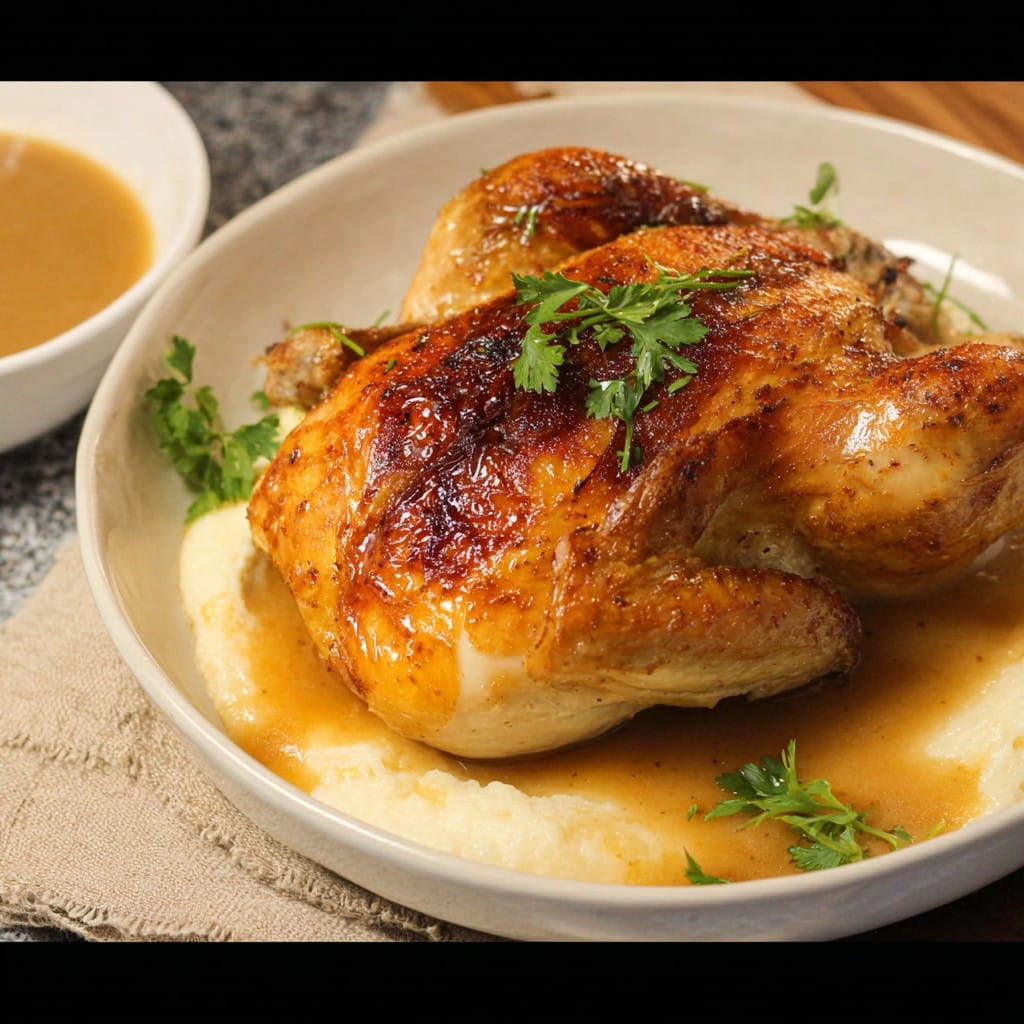
6Carve the chicken and serve with homemade gravy.
Approximate Information for One Serving
Nutrition Disclaimers
Number of total servings shown is approximate. Actual number of servings will depend on your preferred portion sizes.
Nutritional values shown are general guidelines and reflect information for 1 serving using the ingredients listed, not including any optional ingredients. Actual macros may vary slightly depending on specific brands and types of ingredients used.
To determine the weight of one serving, prepare the recipe as instructed. Weigh the finished recipe, then divide the weight of the finished recipe (not including the weight of the container the food is in) by the desired number of servings. Result will be the weight of one serving.
Did you make this recipe?
Please consider Pinning it!!