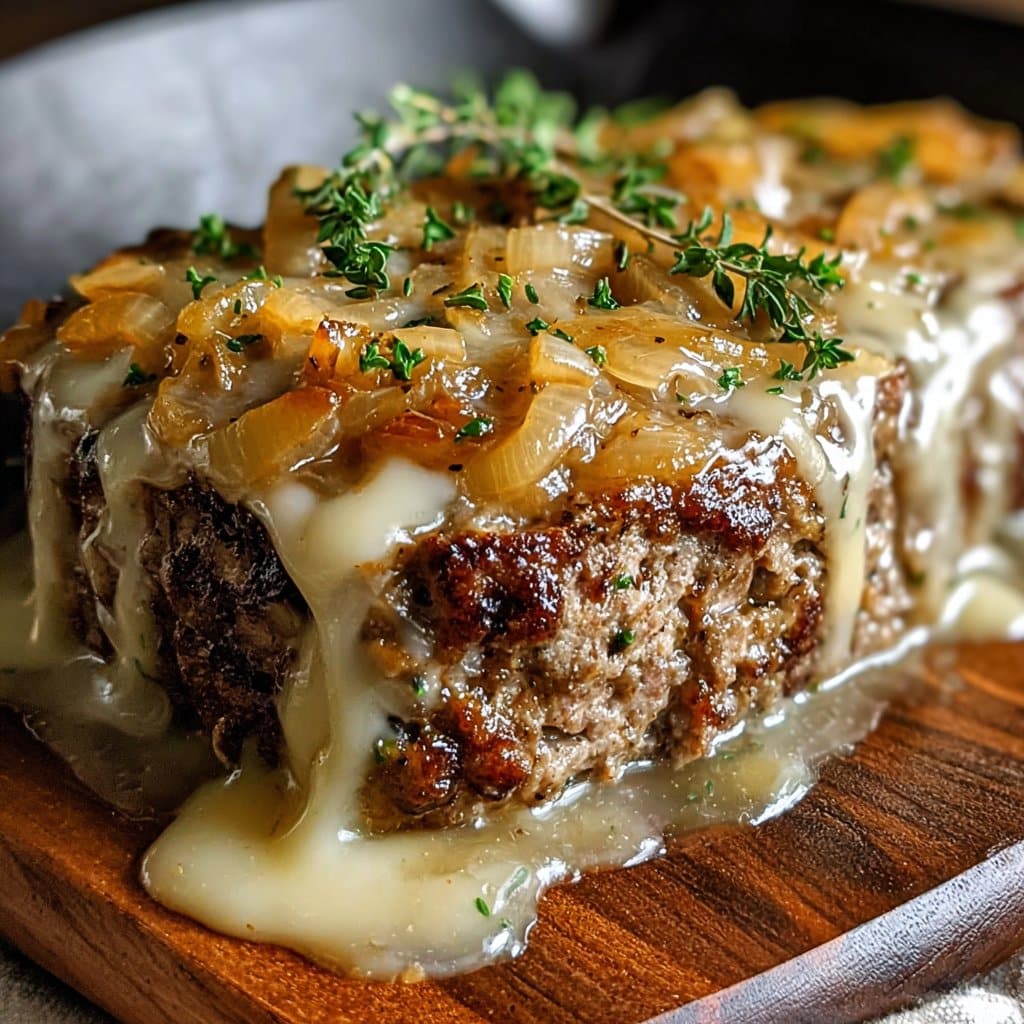
Alright, so French Onion Meatloaf. I have to tell you—last winter when the power flickered off right in the middle of this recipe, I thought dinner was doomed. But nope! The meatloaf sat there, smelling just like the world’s best soup had a secret kid with comfort food, and by the time the oven was back, it was somehow even better. My partner still teases me about my frantic flashlight meat-shaping, but hey, crisis meatloaf is a thing now in my house.
Why You’ll Love This (Or Maybe Just Forgive It?)
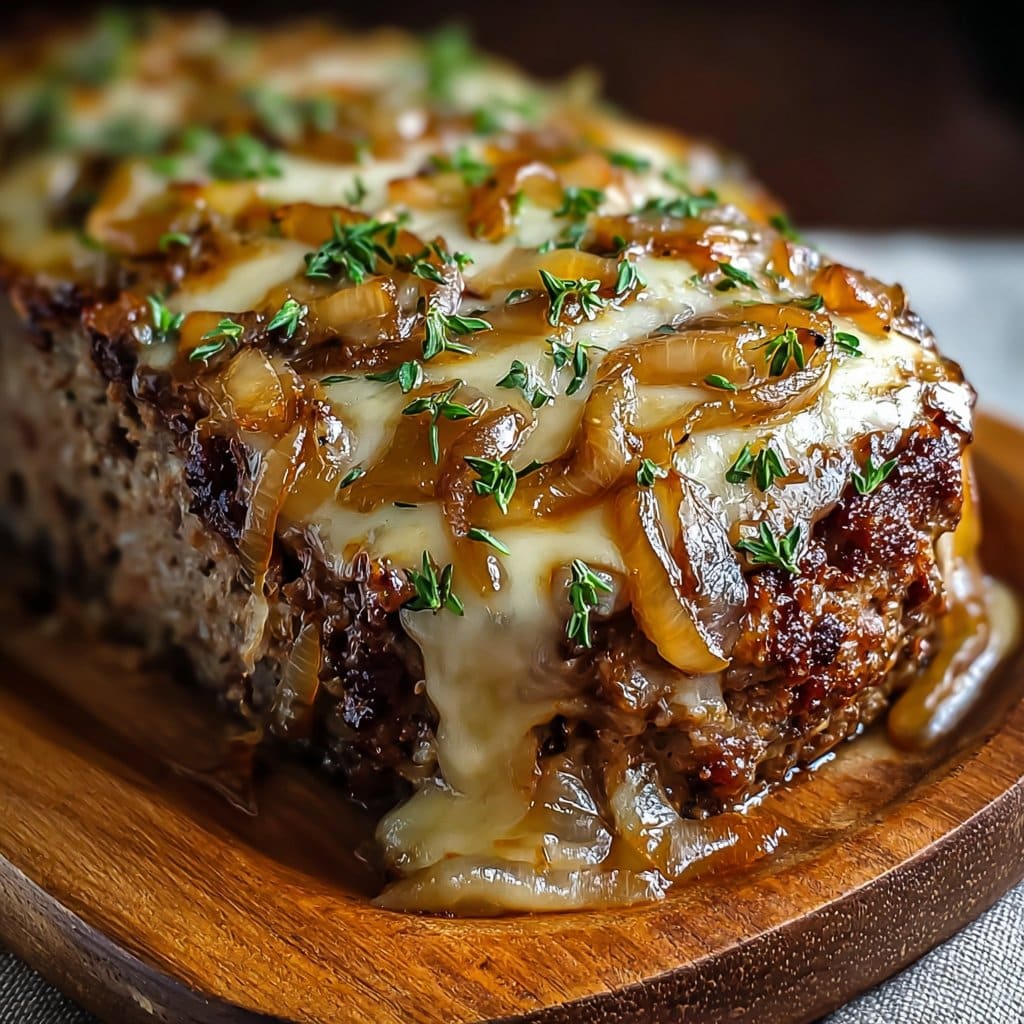
I make this whenever nostalgia (or one too many onions in the pantry) strikes. My family goes nuts for it because it’s got all that deep, caramelized onion flavor and, let’s be honest, a thick belt of gooey cheese across the top never hurts. Sometimes I nearly cry chopping onions, but every slice is worth it when the kitchen smells like I live in a Paris bistro (well, almost). And listen—sometimes I wing the seasoning, forget the thyme, or use whatever cheese I’ve got, and they still ask for seconds. So if you’re put off by tricky steps, don’t be.
Ingredients (And Cheeky Substitutions)
- 2 large onions (I use yellow, but red looks fancy if you’re feeling it)
- 2 tablespoons butter (or the dregs of the olive oil bottle—shhh, won’t tell)
- 2–3 cloves garlic, minced (half the time I use the jarred stuff; don’t judge)
- 900g ground beef (I sometimes mix in a handful of pork if I have it leftover. Grandmother swore by 80/20 beef, but I just buy whatever’s on sale)
- 1 packet French onion soup mix (or 3 tbsp homemade if you like to get fancy—here’s a solid DIY version)
- 2 eggs
- 3/4 cup breadcrumbs (my friend Laurie uses crushed saltines, it’s fine)
- 1/3 cup milk (sometimes I forget the milk, actually, and it’s still juicy)
- 1–2 teaspoons fresh thyme (dried is fine, or just skip if you hate buying new herbs)
- 1 cup shredded Swiss cheese (or Emmental, or a random Cheddar if that’s what there is—nobody complains)
- Salt and pepper, to your taste (I basically never measure, so you do you)
This Is How I Actually Do It
- Preheat the oven to 180C (350F). Find your trusty loaf pan—or just form the meatloaf right on a baking tray if you’re feeling rustic. I’ve done both. No sweat.
- Slice the onions into thin half-moons. Melt the butter in a big ol’ skillet over medium-ish heat and tumble in the onions.
- Breathe. Give the onions at least 15-20 minutes to get soft and golden, stirring now and then. (At 10 minutes, they look terrible; stick with it.)
- Toss in the garlic and thyme for a minute. The smell? Stupendous.
- Meanwhile, mix together ground beef, soup mix, eggs, breadcrumbs, milk (if you remember it), a decent pinch salt, and pepper in a large bowl. Go hands-in—spoon mixing never quite does it. This is where I sneak a taste if I’m feeling brave, but, you know, raw eggs, so tread carefully.
- Scoop up half the beef mix, press it into the loaf dish, press a trench along the middle. Spoon half your onions there. Sprinkle a good handful of shredded cheese. Top with the rest of the beef mix and seal it up—a little ugly is fine! Smear the rest of the onions over the top (they’re basically a lazy glaze now, which I love). Finish with more cheese (never too much, am I right?).
- Bake for about 55–65 minutes, or until it looks gloriously browned on the edges and doesn’t wobble suspiciously in the middle. If your cheese gets too brown but the loaf is still raw-ish, cover with foil.
- Let it sit at least 10 minutes before slicing so it’s less likely to fall apart. Or just serve it with a spoon and call it rustic. We’re not on TV.
Random Notes I Wrote on Recipe Cards
- Sometimes I make mini meatloaves—faster, but they dry out if you even blink too long. I learned that the hard way.
- If you accidentally dump in too much soup mix, add a splash more milk. Salvaged it for me once when I misread my own scribbles.
- Don’t skip the onion-caramelizing step, no matter what the internet ‘hacks’ say—a microwave just isn’t the same, trust me. Found out the grim way one rushed Tuesday.
If You Wanna Try Tweaking It…
- Once I swapped in turkey for half the beef—lighter, sure, but it needed more oomph. Would probably double the soup mix next time (if there is a next time?)
- Tried adding Worcestershire sauce but couldn’t really taste it, so I just stick with old faithfuls now.
- Folks tell me mushrooms are good in here, but… never got around to it. Might be worth a go if you’re feeling wild.
What You (Kinda) Need
A loaf pan or, more often in my house, a battered sheet tray lined with foil. Technical? Not really. I sometimes grab a glass baking dish—doesn’t matter much, honestly. A skillet for the onions is non-negotiable, unless you like sadness. But if you don’t have a loaf pan, just shape it with your hands and hope for the best. Works most times, scouts honor.
How I Actually Store It (Or Don’t…)
Cooled leftovers go in a lidded container in the fridge. If you have any, that is—mine usually disappears by lunch next day. Supposedly it keeps 3–4 days, but that’s a theory I haven’t managed to test. Cold slices are, dare I say, great tucked into a sandwich. Reheats okay in the microwave, though the cheese gets a bit rubbery (still good enough for me).
How I Like To Serve It
Mashed potatoes are classic, but I’ve actually started piling it on toasted sourdough with a spoonful of those leftover onions—a bit messy but worth it. Green beans or a salad on the side if you’re pretending to be healthy. My uncle insists on ketchup, and I just try to look away… although once or twice I did swipe his plate for a bite.
Lessons Learned (The Hard Way)
- Don’t rush the onion step or you’ll get sad, soupy meat. I did this once when a movie was about to start and, yeah, regrets.
- More cheese is rarely, like, ever a problem. But if you put the cheese on too soon, it can burn before the meat is cooked. So cheese halfway through, if you remember.
- Actually, I find it works better if you let it rest before slicing; otherwise, you get a crumbled mess. I have no patience but try to stick to that (not always successful…)
Questions I’ve Actually Gotten (Go Figure!)
- Does this freeze well? Eh, sort of. It gets drier, but if you wrap it really well (plastic + foil), it’ll do (here’s a helpful guide I use). But honestly, I like it better fresh.
- Can I make it gluten free? Yep, just use GF breadcrumbs or crushed-up rice cakes in a pinch (sounds weird, but it’s worked for me once when I ran out of everything else).
- How do I get it out of the pan in one piece? Great question—sometimes I don’t. Lining with parchment helps, but honestly, even if it splits it still tastes awesome.
- Can I use a slow cooker? Friend swears by it, but I’ve never tried. The edges won’t brown, and that’s my bit, so…I guess maybe?
So there you have it—my slightly cobbled, very honest French Onion Meatloaf. If you want more ideas on caramelized onions, Smitten Kitchen’s French Onion Soup post is great reading while the loaf bakes, or hold tight and relive every time you frantically google cooking times (we’ve all been there). Happy eating!
Ingredients
- 2 lbs ground beef
- 1 cup caramelized onions
- 1 packet (1 oz) dry French onion soup mix
- 2 large eggs
- 3/4 cup breadcrumbs
- 1 cup shredded Gruyère cheese
- 1/4 cup milk
- 1 tablespoon Worcestershire sauce
- Salt and pepper to taste
Instructions
-
1Preheat oven to 350°F (175°C). Grease a loaf pan lightly.
-
2In a skillet over medium heat, cook onions until caramelized, about 10-15 minutes. Set aside to cool.
-
3In a large bowl, combine ground beef, caramelized onions, French onion soup mix, eggs, breadcrumbs, milk, Worcestershire sauce, salt, and pepper. Mix until just combined.
-
4Press half of the meat mixture into the prepared loaf pan. Sprinkle with half of the shredded Gruyère cheese, then top with the remaining meat mixture. Sprinkle the rest of the cheese on top.
-
5Bake uncovered for 60 minutes, or until the meatloaf is cooked through and cheese is melted and golden. Let rest for 10 minutes before slicing and serving.
Approximate Information for One Serving
Nutrition Disclaimers
Number of total servings shown is approximate. Actual number of servings will depend on your preferred portion sizes.
Nutritional values shown are general guidelines and reflect information for 1 serving using the ingredients listed, not including any optional ingredients. Actual macros may vary slightly depending on specific brands and types of ingredients used.
To determine the weight of one serving, prepare the recipe as instructed. Weigh the finished recipe, then divide the weight of the finished recipe (not including the weight of the container the food is in) by the desired number of servings. Result will be the weight of one serving.
Did you make this recipe?
Please consider Pinning it!!