Let Me Tell You About My Salmon Obsession
Hey, friend! So, about once a week I find myself standing at the kitchen counter, staring at a pack of salmon fillets and thinking, “Okay, what now?” There are fancier recipes out there, but this pan-seared salmon with honey garlic glaze is my ride-or-die when I want something a bit special but can’t be fussed to pull out the food processor (or clean it; let’s be honest). The first time I made this, I accidentally doubled the garlic and nobody complained, which I guess says a lot about my family’s taste buds. Anyway, if you’ve ever wondered how to make salmon taste like it came from a cozy little bistro while you’re still in your slippers, read on.
Why I Keep Coming Back to This
I make this when I’m craving that sweet-savory magic but don’t want to break the bank or spend all evening in the kitchen. My family goes crazy for this because it’s just a little sticky (in a good way) and the glaze makes them forget they’re actually eating something healthy. At least, until I tell them. Honestly, the only thing slightly annoying is how quickly the salmon disappears. Like, I blink, and it’s gone.
I used to stress about getting the glaze “just right,” but actually, it’s pretty forgiving. Even if you mess up and use a little too much honey (happens to me ALL the time), nobody’s going to yell at you—promise.
What You’ll Need (And What I Swap In When I’m Out of Stuff)
- 4 salmon fillets (about 150g each, but honestly, any size works—I’ve even used frozen fillets, just thaw them first)
- 2 tablespoons honey (maple syrup is okay if that’s all you’ve got—my cousin swears by it)
- 3 cloves garlic, minced (or a big squeeze from one of those garlic tubes—I won’t judge)
- 2 tablespoons soy sauce (I sometimes use tamari if it’s lurking in the back of my fridge)
- 1 tablespoon olive oil (but I’ve used butter in a pinch, it’s richer but also, yum)
- Juice of half a lemon (or a splash of bottled lemon juice; my gran used to say ‘fresh is best’ but honestly… convenience wins sometimes)
- Salt and pepper, to taste (I’m heavy-handed, you do you)
- Optional: A pinch of chili flakes for a bit of a kick. Sometimes I forget, and nobody notices.
How I Actually Make This (Honest Directions)
- Pat the salmon dry. I just use some kitchen roll—don’t skip this or you’ll never get that golden crust, trust me. (I learned the hard way.)
- Season both sides with salt and pepper. This is where I usually sneak a taste of the glaze—not the raw fish, obviously.
- Mix up the glaze. In a small bowl or, honestly, whatever’s clean, stir together honey, garlic, soy sauce, and lemon juice. If you want to taste here, go ahead; it’ll seem a bit intense, but it mellows out on the fish.
- Heat the pan. Medium-high, splash in the olive oil (or butter). Wait until it’s shimmery but not smoking—unless you like setting off the smoke alarm like I sometimes do.
- Lay in the salmon, skin-side down. This is the bit where it always sticks a little, so don’t panic. Press down gently with a spatula for the first 30 seconds (someone on the internet said to do this, I think it helps). Sear for about 3-4 minutes until you see the sides turning opaque.
- Flip carefully. I usually mess up at least one fillet so don’t stress if yours looks a bit wonky. Cook another 2 minutes.
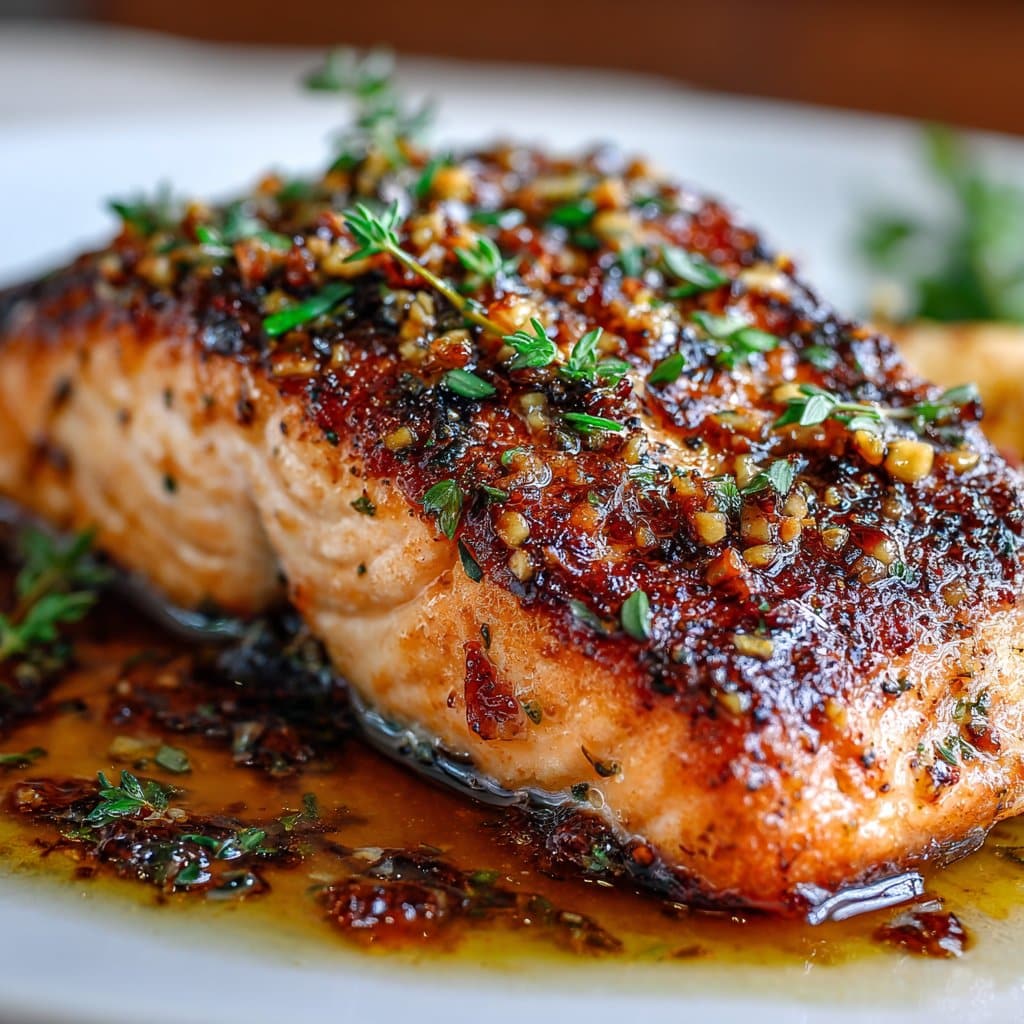
- Pour in the glaze. Watch out—it bubbles up fast. Spoon it over the salmon as it thickens (this is where I get a bit impatient). Let it cook for another 1-2 minutes, just till it’s glossy and coats the fish.
- Serve straight away. Or, if you’re like me, you’ll be picking at the crispy bits left in the pan. Those are gold.
Notes From the School of Hard Knocks
- Don’t crowd the pan or you’ll steam the fish and wonder why it’s kinda sad looking. Learned that last Christmas, oops.
- If your glaze gets too thick, just splash in a bit of water—but do it slowly, I once made salmon soup by accident.
- I think this tastes better the next day—if you can wait. I rarely can.
Stuff I’ve Tried (Some Worked, Some… Not So Much)
- Swapping in brown sugar for the honey—eh, it was fine, but missed that floral note. Maple syrup actually worked a charm.
- Tried it with trout once. Pretty good, but the skin stuck even worse!
- Once added fresh ginger. Not my best idea—kinda overpowered everything.
Equipment (But Don’t Panic If You Don’t Have It)
- Non-stick skillet (cast iron is dreamy, but I sometimes just use my old battered pan and it works okay)
- Fish spatula, but a regular one does the trick. Or just use a spoon if you’re careful.
- Bowl for the glaze (Actually, I’ve mixed it up right in a mug when I’m in a rush—works fine, less washing up!)
Storage (Not That You’ll Have Leftovers)
I keep leftovers in a lidded container in the fridge for up to 2 days, though honestly, in my house it never lasts more than a day! Cold salmon flaked over salad is my idea of a lazy lunch. Here’s a handy guide on leftovers if you’re worried about food safety.
How I Like to Serve It (And a Weird Family Quirk)
I love this with a big pile of steamed rice and some broccoli or green beans (my kids call them “crunchy trees”). Actually, my brother insists on eating it with buttery mashed potatoes—try it, it’s oddly comforting. Sometimes, I scatter on a few toasted sesame seeds, if I remember.
Things I Wish I Knew Sooner (Pro Tips)
- I once tried rushing the sear and regretted it because the skin stuck like super glue. Just let it sit, don’t poke at it.
- Don’t walk away when you add the glaze—it goes from perfect to burnt in about 15 seconds (I learned this the hard way on my birthday, of all days).
FAQ: Questions I’m Always Getting (And My Rambling Answers)
- Can I make this with frozen salmon? Yep, just thaw it properly first—don’t try to cook it straight from frozen unless you want a weird texture.
- What if I don’t have honey? Maple syrup works, agave is fine, or check this sweetener comparison for more ideas. Just tweak the amount to taste.
- My glaze burned! Now what? Honestly, just scrape off the worst bits, drizzle a little fresh lemon on top, and soldier on. Or start over—it happens to the best of us.
- Is it okay to leave the skin on? Oh, absolutely! I love it crispy, but if you’re not a fan, just peel it off after cooking. (Actually, my youngest calls it “fish bacon” and steals everyone’s bits.)
- Can I use this glaze on other fish? For sure. I’ve tried it on chicken too, and while it’s not exactly gourmet, it’s a decent weeknight fix.
Wait, Did I Mention…?
Sometimes, after dinner, if there’s even a spoonful of glaze left, I’ll stir it into cooked veggies or even drizzle it on roasted sweet potatoes. Not traditional, but hey, you only live once. Oh, and if you want to up your fish-cooking confidence, this BBC Good Food guide is genuinely helpful.
Ingredients
- 4 salmon fillets (about 6 oz each), skin-on
- 2 tablespoons olive oil
- 3 tablespoons honey
- 3 cloves garlic, minced
- 2 tablespoons soy sauce
- 1 tablespoon fresh lemon juice
- Salt and black pepper, to taste
- 1 tablespoon chopped fresh parsley (optional, for garnish)
Instructions
-
1Pat the salmon fillets dry with paper towels and season both sides with salt and black pepper.
-
2Heat olive oil in a large nonstick skillet over medium-high heat. Place the salmon fillets skin-side down and cook for 4-5 minutes until the skin is crispy.
-
3Flip the salmon fillets and cook for another 2-3 minutes, or until nearly cooked through. Remove salmon from the skillet and set aside.
-
4In the same skillet, add minced garlic and sauté for 30 seconds until fragrant. Stir in honey, soy sauce, and lemon juice. Simmer for 1-2 minutes until slightly thickened.
-
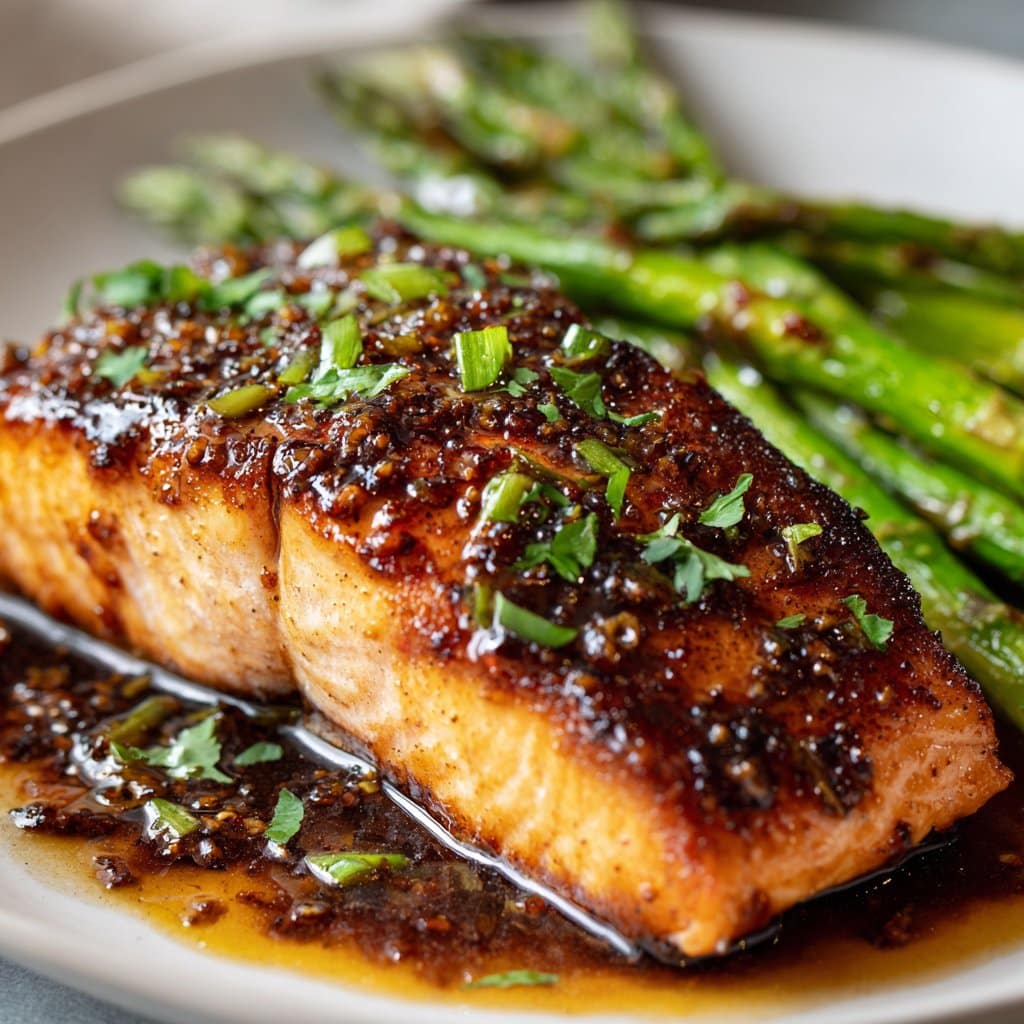
5Return the salmon fillets to the skillet and spoon the honey garlic glaze over the top. Cook for another 1-2 minutes until the salmon is glazed and cooked through.
-
6Garnish with chopped fresh parsley if desired and serve immediately.
Approximate Information for One Serving
Nutrition Disclaimers
Number of total servings shown is approximate. Actual number of servings will depend on your preferred portion sizes.
Nutritional values shown are general guidelines and reflect information for 1 serving using the ingredients listed, not including any optional ingredients. Actual macros may vary slightly depending on specific brands and types of ingredients used.
To determine the weight of one serving, prepare the recipe as instructed. Weigh the finished recipe, then divide the weight of the finished recipe (not including the weight of the container the food is in) by the desired number of servings. Result will be the weight of one serving.
Did you make this recipe?
Please consider Pinning it!!